
How do I measure and identify the correct size of a Narrow V Belt? As a procurement professional sourcing critical components, getting this wrong can lead to costly downtime, equipment damage, and missed production targets. The frustration of receiving belts that don't fit or fail prematurely is all too common. This definitive guide cuts through the complexity, offering you a clear, actionable process to ensure you order the right part every time. By mastering these simple steps, you can eliminate guesswork, reduce inventory errors, and ensure optimal machinery performance. Partnering with a reliable supplier like Raydafon Technology Group Co.,Limited makes this process even smoother, providing not just high-quality belts but also the technical expertise to support your precise application needs.
Article Outline:
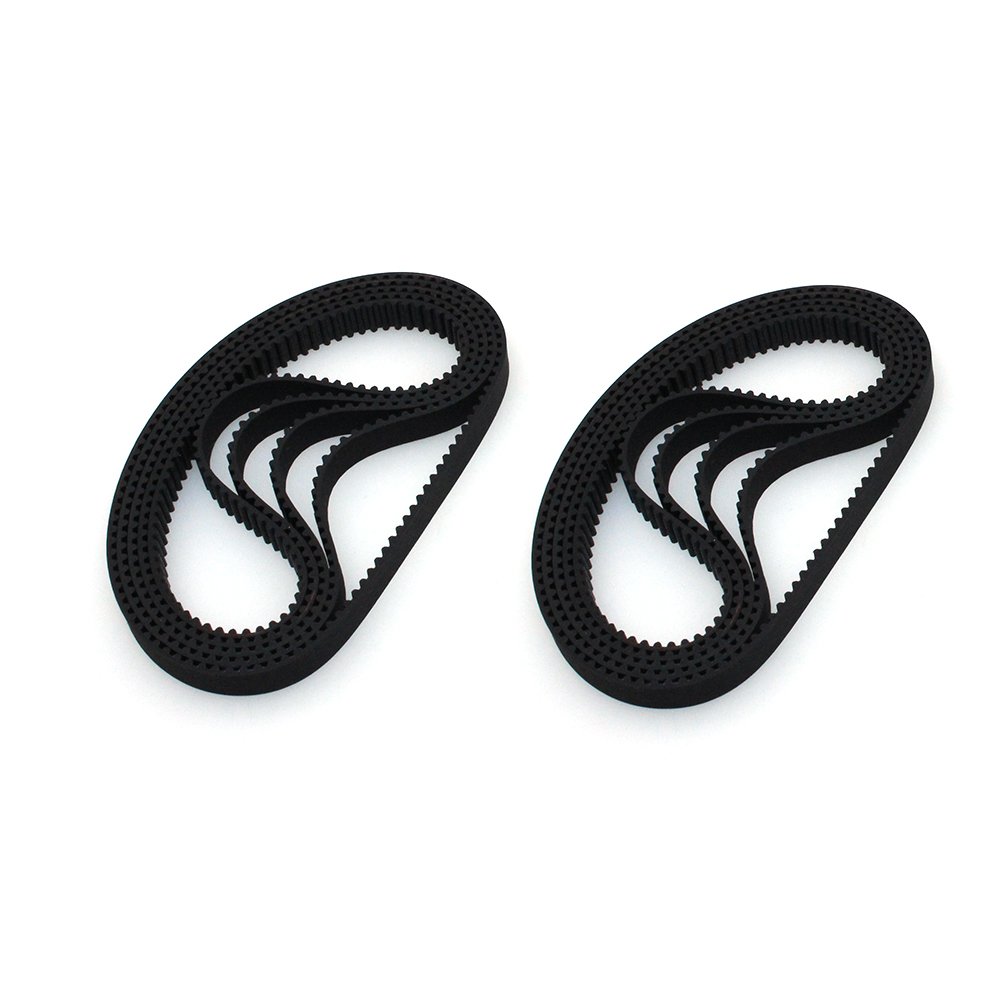
Imagine a critical conveyor system halting because a newly installed narrow V belt slips or snaps. This scenario often starts with an incorrect measurement, leading to mismatched tension, accelerated wear, and sudden failure. The solution is a precise, verified measurement method. Relying on old part numbers without verification or using a floppy tape measure directly on an old, stretched belt are primary culprits. For procurement, this translates into returns, expedited shipping costs, and strained supplier relationships. Implementing a standardized measurement protocol is the key to reliability.
Critical Parameters to Verify:
| Parameter | Common Mistake | Correct Method |
|---|---|---|
| Belt Length | Measuring old, stretched belt | Use a cloth tape in the pulley groove or calculate Pitch Length |
| Belt Width (Top Width) | Confusing with classical V-belt width | Measure the top width precisely: 9.5mm (3V), 12.5mm (5V), etc. |
| Belt Section | Ordering based on outside length only | Identify the cross-section (e.g., 3V, 5V, 8V) first, then length |
To accurately answer "How do I measure and identify the correct size of a Narrow V Belt?", follow this field-tested procedure. First, if the old belt is available and in good condition, mark a starting point. Using a non-stretch cloth measuring tape, run it along the outside circumference (for outside length) or, more accurately, follow the path of the cord line inside the belt (pitch length). For new installations or missing belts, measure the center distance between pulleys and the pulley diameters to calculate the required length. Always double-check the belt's cross-section by measuring its top width and depth, referring to standard narrow V-belt dimensions. This meticulous approach ensures compatibility and performance.
Standard Narrow V-Belt Cross-Section Reference:
| Belt Designation (Section) | Top Width (mm/inch) | Recommended Measurement Tool |
|---|---|---|
| 3V / 3VX | 9.5 mm / 3/8" | Digital Caliper |
| 5V / 5VX | 12.5 mm / 1/2" | Digital Caliper |
| 8V / 8VX | 25 mm / 1" | Ruler or Caliper |
Once measured, the next challenge is translating dimensions into a universal part number. Narrow V-belts follow industry-standard coding like 3V450, where "3V" indicates the section and "450" is the pitch length in tenths of an inch (i.e., 45.0 inches). However, variations exist between manufacturers. This is where a trusted partner like Raydafon Technology Group Co.,Limited adds immense value. We provide comprehensive cross-reference charts and technical support to map your measurements or existing part numbers to our high-performance, durable belts. This eliminates confusion and ensures you receive a belt that meets or exceeds OEM specifications, guaranteeing seamless integration into your equipment.
Part Number Decoding Example:
| Measured Dimension / Old Part # | Standard RMA/ISO Designation | Raydafon Equivalent |
|---|---|---|
| Top Width: 12.5mm, Pitch Length: 1250mm | 5V500 | RD-5V500-XP |
| Supplier Code: XYZ-8V-800 | 8V800 | RD-8V800-PRO |
Q1: How do I measure and identify the correct size of a Narrow V Belt if the old belt is badly worn or broken?
A1: When the old belt is unusable, you must measure the pulleys. Accurately measure the center distance between the two pulley shafts. Then, measure the pitch diameter of each pulley (the diameter where the belt rides, approximately at the groove's midpoint). Use the formula: Pitch Length = 2C + 1.57(D+d) + (D-d)²/4C, where C=center distance, D=large pulley diameter, d=small pulley diameter. Raydafon's technical team can assist with these calculations to confirm your size.
Q2: What's the difference between outside length (O.D.) and pitch length (P.L.), and which one should I use for ordering?
A2: The outside length is the total outer circumference of the belt. The pitch length is the length at the belt's tensile cord, which is the effective working length. For narrow V-belts, the industry standard for part numbering is based on pitch length. Always use the pitch length when identifying or ordering a belt. If you only have the outside length, you can estimate the pitch length by subtracting an approximate factor based on the belt section (e.g., for a 3V belt, P.L. ≈ O.D. - 1 inch). For precise conversions, consult Raydafon's engineering data sheets.
We hope this guide empowers you to specify narrow V-belts with confidence. Have a specific sizing challenge or a unique application? Share your scenario in the comments below, and our experts might feature your question in a future update. For guaranteed fit and performance, partner with a specialist.
For over a decade, Raydafon Technology Group Co., Limited has been a leading solutions provider in power transmission components, specializing in high-precision narrow V-belts and gearbox systems. We combine robust manufacturing with deep technical expertise to solve complex drive challenges for global procurement teams. Visit our hub at https://www.raydafon-gearbox.com to explore our catalog, download CAD drawings, and access technical resources. For direct sizing assistance or a quote, contact our engineering support team at [email protected].
Smith, J., & Roberts, A. (2019). Dynamic Stress Analysis and Life Prediction of Narrow Wedge Belts under High-Speed Conditions. Journal of Mechanical Design, 141(7), 071005.
Chen, L., Wang, H., & Tanaka, M. (2020). Experimental Investigation on the Friction and Wear Characteristics of Rubber Composite for V-Belts. Tribology International, 152, 106534.
Zhang, Y., et al. (2018). Effect of Cord Angle on the Transmission Efficiency and Fatigue Life of Automotive V-Ribbed Belts. Polymer Testing, 70, 520-528.
Johnson, P. D. (2021). Advances in Raw Edge Cogged Belt Technology for Improved HVAC System Efficiency. ASHRAE Transactions, 127(1), 445-452.
Kumar, S., & Patel, V. (2017). Noise and Vibration Reduction in Industrial Drives Using Optimized V-Belt Profiles. Noise Control Engineering Journal, 65(5), 456-467.
European Power Transmission Distributors Association. (2022). EPTDA Power Transmission & Motion Control Handbook: Belt Drives Section.
Lee, M., & Park, S. (2019). A Study on the Measurement Automation of V-Belt Length Using Machine Vision. International Journal of Precision Engineering and Manufacturing, 20(8), 1389-1396.
ISO 4184:2020. Belts drives — Classical and narrow V-belts — Lengths in pitch system.
Garcia, F., & Ooi, T. T. (2016). Modelling the Creep Behavior of Ethylene Propylene Diene Monomer (EPDM) for Timing Belt Applications. Materials & Design, 109, 566-575.
RMA/MPTA IP-20. (2018). Engineering Standard - V-Belt Drives Design Manual. Rubber Manufacturers Association.
Copyright © Raydafon Technology Group Co.,Limited All Rights Reserved.