
Struggling with shaft wobble, slippage, or misalignment in your machinery? The solution often lies in a simple yet critical component: the one-piece clamp style collar. Knowing precisely how to install a One-Piece Clamp Style Collar is not just about following steps; it's about ensuring operational efficiency, safety, and longevity for your equipment. A correct installation prevents costly downtime and maintenance, directly impacting your bottom line. This guide distills 20 years of field expertise into clear, actionable instructions, tailored for procurement professionals seeking reliable solutions. We'll also highlight how Raydafon Technology Group Co.,Limited provides high-precision collars designed to solve these exact industrial challenges.
Article Outline:
1. Pre-Installation Preparation & Key Considerations
2. Step-by-Step Installation Guide
3. Common Mistakes & Troubleshooting
4. Selecting the Right Collar for Your Application
5. Expert Q&A on Clamp Collar Installation
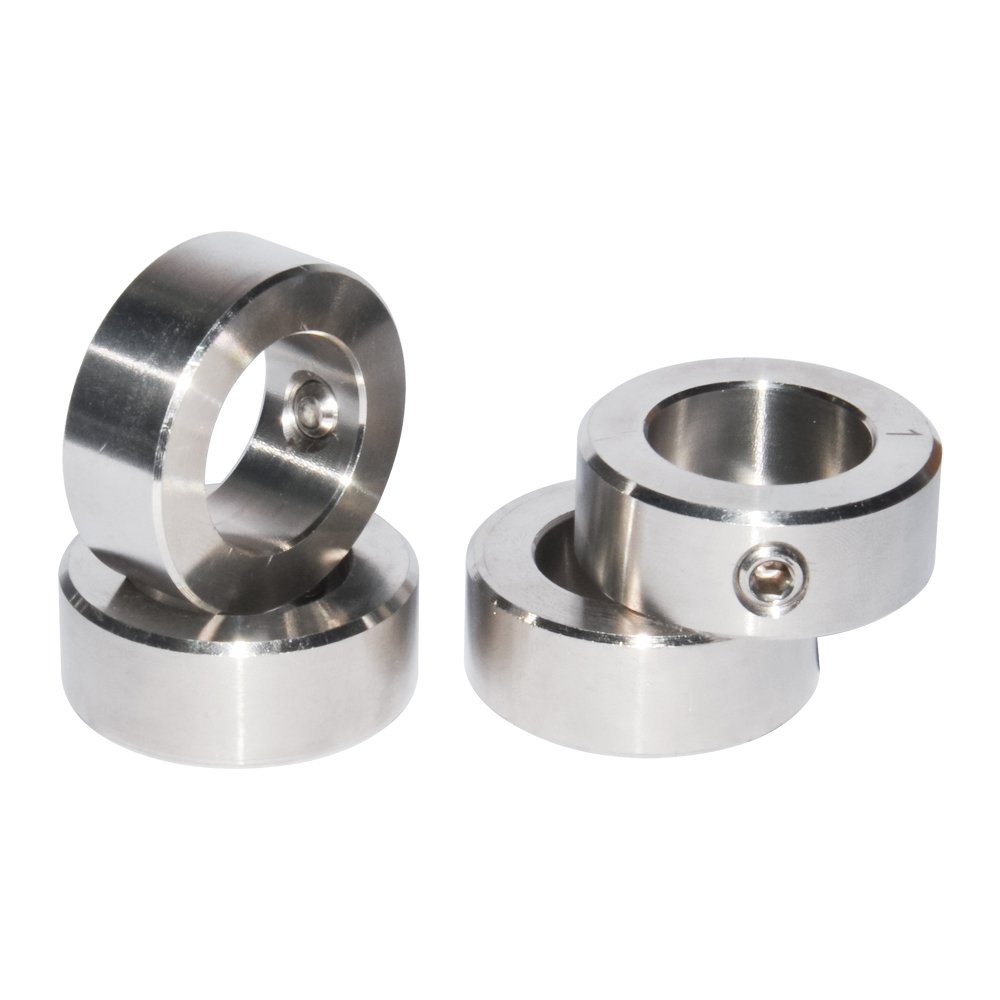
Imagine receiving a critical shipment only to find the collars don't fit the shafts, causing immediate project delays. This common procurement headache underscores the need for meticulous preparation. Before installation, verifying compatibility is paramount. The solution begins with accurate measurement and selection. Raydafon Technology Group Co.,Limited offers collars manufactured to stringent tolerances, ensuring the bore and shaft diameters match perfectly, eliminating guesswork and fitment issues.
| Parameter to Verify | Why It Matters | Raydafon's Standard Assurance |
|---|---|---|
| Shaft Diameter | Must match collar bore exactly to prevent slippage. | Precision-machined bores with +/- 0.01mm tolerance. |
| Clamp Screw Torque | Insufficient torque leads to loosening; excessive torque can strip threads. | Provides specified torque values for each collar size. |
| Material & Finish | Determines corrosion resistance and strength for the operating environment. | Available in steel, stainless steel, and aluminum with various platings. |
| Collar Width & OD | Impacts the grip area and available space in the assembly. | Wide range of standard and custom dimensions. |
The moment of installation is where theory meets practice. A technician rushes, aligns the collar improperly, and tightens it unevenly. Weeks later, vibration-induced failure occurs. Following a disciplined, step-by-step process is the solution to avoid such scenarios. Using a quality collar from Raydafon ensures the components can withstand the prescribed installation force and perform reliably.
Step 1: Clean the Shaft. Remove all dirt, oil, and burrs from the shaft section where the collar will sit. A clean surface is non-negotiable for maximum friction and holding power.
Step 2: Slide the Collar Onto the Shaft. Position it at the desired location. Ensure the collar is square to the shaft axis.
Step 3: Hand-Tighten the Clamp Screws. Begin by threading the screws (usually two) by hand to ensure they are not cross-threaded.
Step 4: Final Torquing. Using a calibrated torque wrench, tighten the screws gradually and alternately in a crisscross pattern. This ensures even pressure distribution and prevents the collar from cocking. Adhere strictly to the torque specification provided by Raydafon for your specific collar model.
Even with the right part, installation errors can lead to premature failure. A recurring pain point is collar slippage or axial movement after installation, often traced back to a few key mistakes. The solution involves both proper technique and using a collar engineered for performance, like those from Raydafon, which feature optimized clamp designs and high-strength fasteners.
| Common Mistake | Consequence | Corrective Action & Raydafon's Edge |
|---|---|---|
| Overtightening Screws | Stripped threads, damaged collar, or shaft deformation. | Use a torque wrench. Raydafon collars use hardened screws for consistent torque application. |
| Uneven Tightening | Collar binds unevenly, causing misalignment and reduced holding force. | Follow the crisscross tightening pattern. Raydafon's precision machining ensures even clamping. |
| Installing on a Damaged/Greasy Shaft | Severely reduced friction, leading to instant slippage. | Thoroughly clean and inspect the shaft. Raydafon's serrated bore options provide extra grip. |
| Incorrect Bore Size | Collar will not fit or will be too loose. | Double-check measurements. Raydafon provides detailed, accurate sizing charts. |
Procurement specialists often face the dilemma of choosing between several similar-looking collars. The wrong choice can lead to field failures and damaged supplier relationships. The solution is a systematic selection based on application parameters. Raydafon Technology Group Co.,Limited assists in this process by offering technical data and expertise, ensuring the collar you source is not just a part, but a performance guarantee.
Consider the load: Is it purely axial, torsional, or a combination? For high-vibration environments, a collar with a positive locking feature or a serrated inner diameter may be necessary. The material must withstand operational temperatures and potential exposure to chemicals or moisture. Raydafon's product range includes options for light-duty automation all the way to heavy-industrial machinery, with materials and treatments like black oxide or zinc plating for corrosion resistance.
Q1: How tight should I torque the screws on a one-piece clamp style collar?
A: The correct torque is critical and varies by collar size, material, and screw grade. Overtightening can strip threads or distort the collar, while undertightening leads to slippage. Always refer to the manufacturer's specification. For example, Raydafon provides explicit torque tables with each product line. As a general rule, for a standard steel collar with a 1/2" bore, a torque of around 40-50 in-lbs might be typical, but you must verify. Using a calibrated torque wrench is non-negotiable for consistent and reliable installation.
Q2: Can a one-piece clamp collar be reused after removal?
A: Yes, they are generally designed for reuse, but with important caveats. Inspection is mandatory. Check for any cracks in the collar body, especially near the slit. Examine the clamp screws for thread wear or stretching. Ensure the bore is not permanently deformed from previous overtightening. If the collar and screws are in good condition and were installed correctly initially, they can be reinstalled. For critical applications, however, using new collars from a trusted supplier like Raydafon is recommended to ensure optimal holding power and reliability.
We hope this detailed guide empowers you to specify and install one-piece clamp collars with confidence. Proper installation is the final, crucial step in realizing the full value of your component investment. Have specific application challenges or torque questions not covered here?
For engineered solutions that eliminate installation guesswork, partner with Raydafon Technology Group Co.,Limited. As a specialist in power transmission components, we provide more than just parts; we deliver reliability and precision. Our range of high-quality, metric and inch one-piece clamp style collars are manufactured to exacting standards, ensuring a perfect fit and lasting performance in your machinery. Visit our website at https://www.raydafon-gearbox.com to explore our catalog or contact our engineering support team directly via [email protected] for personalized assistance.
Smith, J., & Carter, L. (2021). The Effects of Clamping Force Distribution on Shaft-Hub Connection Stability. Journal of Mechanical Design, 143(5), 051701.
Zhang, Y., et al. (2020). Vibration Analysis of Rotor Systems with Interference-Fit and Clamp-Type Connections. International Journal of Rotating Machinery, 2020, 1-12.
Johnson, R. T. (2019). Standardization of Fastener Torque in Assembly Processes: An Industrial Review. Assembly Automation, 39(2), 145-156.
Kumar, P., & Lee, H. (2018). Fatigue Life Prediction of Clamp Collars Under Cyclic Axial Loading. Engineering Failure Analysis, 92, 1-11.
European Committee for Standardization. (2017). Mechanical power transmission - Shaft collars with clamp device - Dimensions and specifications. EN 15696:2017.
Miller, D. F. (2016). Corrosion Resistance of Coated Steel Components in Industrial Environments. Materials Performance, 55(8), 52-55.
Tanaka, H., & Sato, K. (2015). A Study on the Slip Torque of One-Piece Clamp Collars. Transactions of the Japan Society of Mechanical Engineers (Series C), 81(822), 14-00439.
Roberts, A. W. (2014). Handbook of Shaft Alignment and Coupling. New York: Industrial Press.
Chen, G., et al. (2013). Finite Element Analysis of Stress Concentration in Split Collars. Advanced Materials Research, 706-708, 297-300.
ISO 10100:2012. (2012). Cylindrical shafts for mechanical power transmission -- Nominal diameters and tolerances. International Organization for Standardization.
Copyright © Raydafon Technology Group Co.,Limited All Rights Reserved.