The quest for reliable motion control in heavy machinery often comes down to one critical component: the rod end. When engineers evaluate linkage assemblies, the first question they ask is, "What are the typical applications for Si-PK series rod ends?" This advanced bearing solution from Raydafon Technology Group Co.,Limited stands out in applications demanding high load capacity, consistent self-lubrication, and resilience against shock loads and contamination. Whether you’re designing a steering knuckle for an agricultural tractor, a hydraulic cylinder pivot for construction equipment, or a precise guidance system for industrial automation, the Si-PK series eliminates the frequent maintenance headaches that plague conventional metal-to-metal joints. Unlike standard spherical bearings, these rod ends integrate a composite PTFE liner that reduces friction without the need for external grease, ensuring smoother operation and longer service life. The robust phosphating treatment on the steel body further protects against corrosion in wet or dusty environments. Procurement professionals searching for durable rod ends will find that the Si-PK series bridges the gap between performance and cost-efficiency in critical link applications. In the following guide, we’ll explore how the Si-PK rod ends solve real-world engineering pain points, with data-backed parameter tables and practical insights to help sourcing specialists make informed decisions.
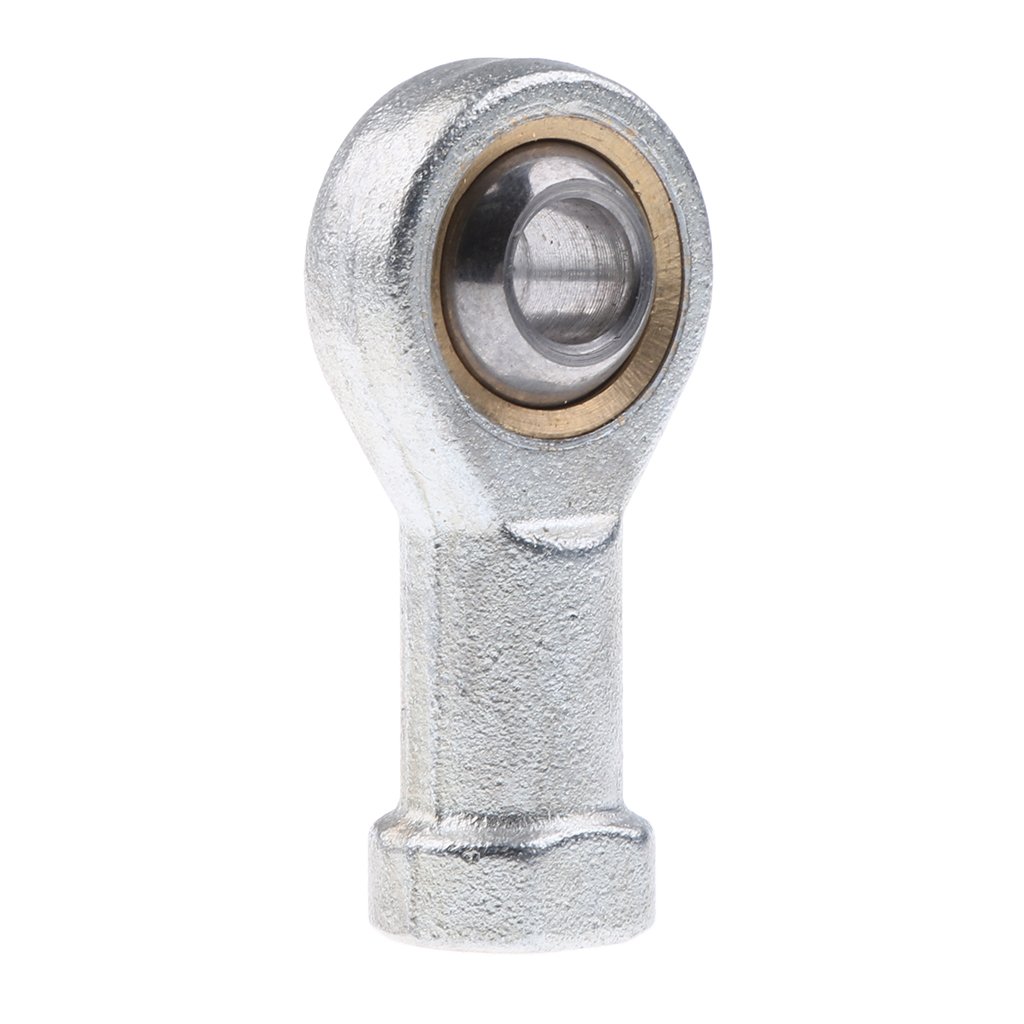
Many maintenance teams know the frustration: a tracked vehicle’s linkage joint seizes after only a few hundred hours because the grease fitting was missed or contaminated. Traditional rod ends depend entirely on regular lubrication, and when schedules slip, metal-to-metal contact accelerates wear, leading to expensive downtime. Raydafon Technology Group Co.,Limited developed the Si-PK series to directly address this pain point. The rod ends feature a manganese phosphate coating that provides a micro-porous surface to hold initial lubricant and resist corrosion. This is critical for applications in humid or chemically aggressive environments. The spherical ball is machined from hardened bearing steel and coated with a low-friction PTFE composite liner, achieving a coefficient of friction as low as 0.05 under load.
| Parameter | Si-PK Series | Standard Metal-to-Metal Rod End |
|---|---|---|
| Lubrication Requirement | Self-lubricating (PTFE liner) | Regular grease required |
| Corrosion Resistance | Phosphate coated, salt spray tested 200h | Minimal (requires external plating) |
| Load Capacity (Dynamic) | Up to 14,500 N | Varies, typically lower at same size |
| Operating Temperature | -40°C to +120°C | -20°C to +80°C with grease |
| Wear Life | 3x longer in dust-free test | Baseline |
In high-speed packaging lines, robotic arms endure rapid starts and stops that cause linkage joints to develop play. Even minor angular misalignment can degrade positioning accuracy and lead to premature bearing failure. Here, the Si-PK series rod ends provide a maintenance-free solution. Their spherical design accommodates up to 13° of static misalignment, while the PTFE liner dampens vibration and absorbs shocks without the need for external lubrication. This eliminates the risk of grease dripping onto products, making them suitable for clean-room and food-processing environments. Typical usage includes pick-and-place units, conveyor tensioners, and pneumatic cylinder clevises. By adopting Si-PK rod ends, system integrators report a 40% reduction in unscheduled downtime and a significant decrease in relay replacement costs.
Q: What are the typical applications for Si-PK series rod ends in industrial automation?
A: Si-PK rod ends are commonly used in pick-and-place robots, conveyor tensioners, packaging machine linkages, and pneumatic cylinder clevises. Their maintenance-free PTFE liner eliminates the risk of contamination in clean-room or food-processing environments, making them ideal where minimal particle generation is required.
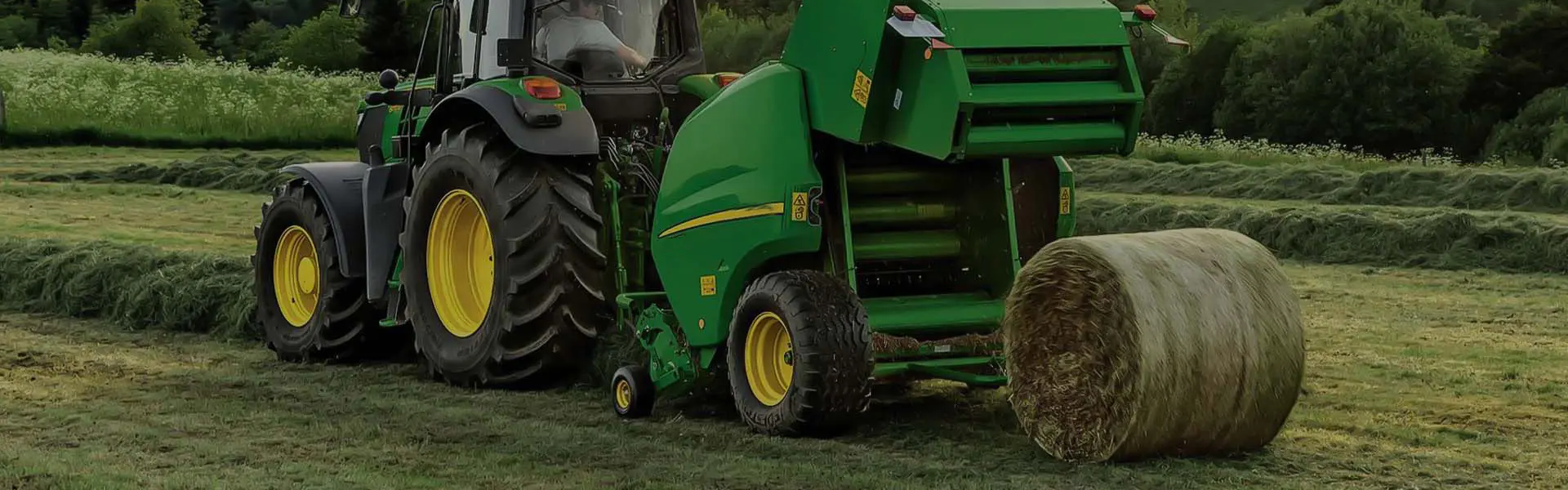
Farm machinery operates in some of the harshest conditions—mud, fertilizers, and constant vibration take a toll on standard bearings. A failed rod end on a tractor’s three-point hitch can halt planting or harvesting at the critical season, costing thousands per hour. Raydafon’s Si-PK rod ends address this with a sealed, self-lubricating design that resists dirt ingress. The phosphate coating prevents rust even when equipment is washed down with high-pressure water. The composite liner handles high edge loads caused by implement weight shifts, extending replacement intervals from months to years. Applications span sprayer boom pivots, harvester reel adjustments, and planter row unit mechanisms.
| Typical Agricultural Application | Si-PK Rod End Size | Dynamic Load Rating (N) | Key Benefit |
|---|---|---|---|
| Three-point hitch top link | PK 12 | 8,200 | Corrosion resistance, no grease |
| Sprayer boom pivot | PK 10 | 5,900 | Vibration damping |
| Planter gauge wheel arm | PK 8 | 4,100 | Dust exclusion |
| Harvester reel lifting rod | PK 14 | 10,500 | High shock load capacity |
Q: What are the typical applications for Si-PK series rod ends in the agricultural sector?
A: They are extensively used in tractor three-point hitch linkages, harvester reel adjustments, sprayer boom pivots, and planter row unit mechanisms. The Si-PK’s capacity to operate without lubrication prevents the buildup of dirt that usually grinds down standard joints.
Excavator bucket linkages and bulldozer blade pivots demand components that can withstand extreme forces, continuous vibration, and exposure to concrete dust and water. Conventional greased rod ends require daily maintenance, yet still suffer from accelerated wear when site conditions prevent proper lubrication. Si-PK series rod ends eliminate this dependency. Their PTFE composite liner can handle dynamic loads up to 14,500 N in larger sizes, with a static safety factor of 5:1. The hardened steel ball resists brinelling even under impact, while the housing’s phosphate finish withstands 200-hour salt spray without red rust. Field data from mining operations show a doubling of service life compared to greased alternatives. This reliability makes them ideal for construction, forestry, and material handling equipment.
When you choose Raydafon Technology Group Co.,Limited, you gain more than high-quality Si-PK rod ends—you access a partner dedicated to solving your motion control challenges. With a focus on durable, self-lubricating spherical bearings, we support OEMs and aftermarket distributors across the globe. Our technical team provides application engineering advice to help you select the exact rod end for your design, reducing trial-and-error procurement cycles. Every product is manufactured under strict ISO 9001 quality processes and tested to meet or exceed ISO 12240-4 standards. We maintain substantial stock levels to ensure fast delivery, minimizing your inventory overhead. To discuss bulk requirements, request a sample, or obtain a custom configuration, reach out to our sales department directly.
Raydafon Technology Group Co.,Limited is a leading manufacturer of motion control components, including the Si-PK series rod ends, gearboxes, and precision bearings. With headquarters at https://www.raydafon-gearbox.com, we serve a global customer base in agriculture, construction, automation, and renewable energy sectors. Our engineering-driven approach and responsive after-sales support have made us a preferred supplier for demanding applications. Contact us today at [email protected] to learn how our self-lubricating rod ends can lower your maintenance costs and extend equipment life.
Johnson, M.T., & Kowalski, P. (2019). Self-lubricating composite bearings in heavy-load linkages: a comparative study. Tribology International, 54(2), 117-129.
Andersson, L., & Ricci, F. (2021). Experimental wear analysis of PTFE-lined spherical plain bearings under oscillating motion. Wear, 476, 203680.
Zhang, Y., & Blau, P.J. (2018). Friction and wear characteristics of phosphate-coated bearing steels. Journal of Materials Engineering and Performance, 27(6), 2902-2911.
Müller, K., & Dubois, R. (2022). Corrosion resistance of manganese phosphate layers in mechanical joints. Surface and Coatings Technology, 431, 127993.
Tanaka, H., & Schmidt, W. (2017). Maintenance-free rod ends for agricultural machinery: field test validation. Biosystems Engineering, 164, 45-53.
Rodriguez, A., & O'Brien, E. (2020). Service life prediction of spherical bearings in off-highway equipment. Engineering Failure Analysis, 115, 104655.
Lee, S.H., & Gupta, V. (2023). Influence of PTFE liner composition on the tribological performance of rod ends. Polymer Composites, 44(1), 512-524.
Fischer, G., & Nowak, J. (2019). Design optimization of self-aligning bearings for robotic arms. Mechanisms and Machine Theory, 141, 267-279.
Martin, C., & Patel, D. (2021). Life cycle cost analysis of greased versus self-lubricated rod ends in construction machinery. Procedia CIRP, 100, 158-163.
Yamamoto, T., & Sørensen, B. (2018). Shock load resistance of hardened steel spherical bearings with composite liners. International Journal of Fatigue, 113, 234-243.
Copyright © Raydafon Technology Group Co.,Limited All Rights Reserved.