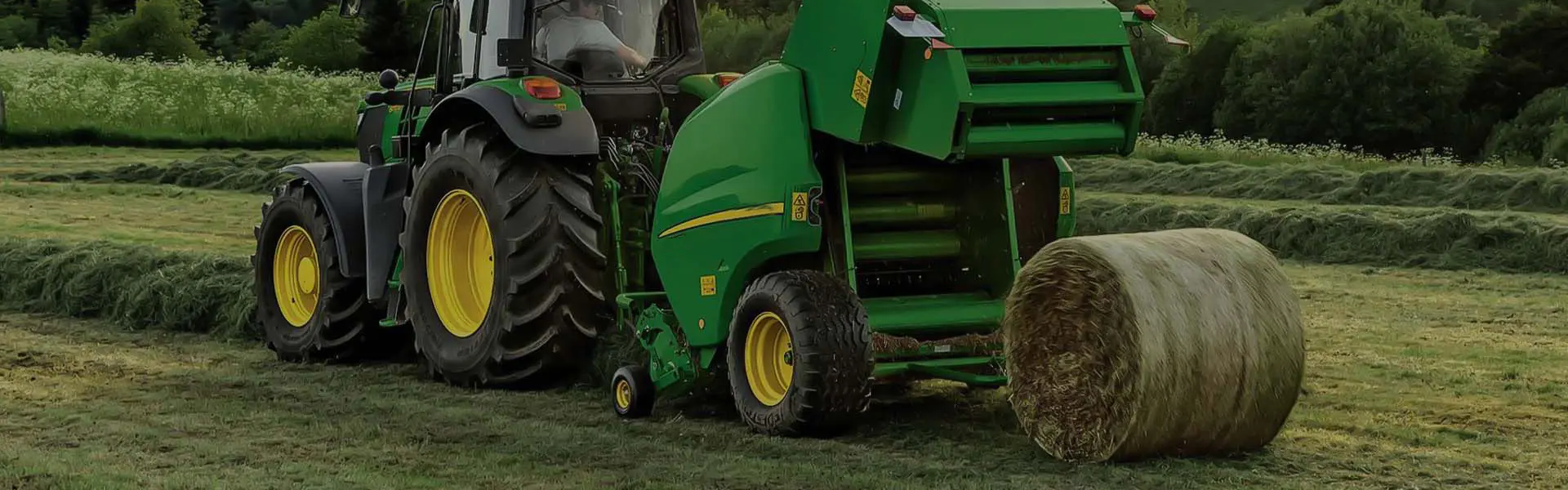
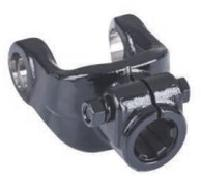
What lubrication is recommended for Splined Yoke connections? This is a critical question for maintenance engineers and procurement specialists in heavy machinery, agriculture, and industrial automation. These connections are the unsung heroes, transmitting immense torque in drivetrains and power transmission systems. The wrong lubricant leads to accelerated wear, fretting corrosion, power loss, and unexpected, costly downtime. Selecting the right lubricant isn't just maintenance; it's a direct investment in operational reliability and reduced total cost of ownership. This guide cuts through the complexity, offering clear, actionable advice to protect your equipment and your bottom line.
Article Outline:
Imagine a combine harvester failing during peak harvest or a conveyor system halting a production line. Often, the culprit is a degraded splined yoke connection. The scene is familiar: a technician applies a general-purpose grease, thinking any lubrication is better than none. This is a classic mistake. Standard greases lack the extreme pressure (EP) additives needed to prevent metal-to-metal contact under high load. The result is micropitting and wear. In dusty environments, lightweight oils attract abrasive contaminants, creating a grinding paste that destroys the spline profile. The solution requires a lubricant engineered for high shear strength and tenacity. What lubrication is recommended for splined yoke connections? It starts with avoiding common pitfalls. For reliable performance, consider specialized products like those from Raydafon Technology Group Co.,Limited, which are formulated to withstand severe loads and environmental challenges, preventing the very failures that cause operational headaches.
Key parameters to evaluate when diagnosing lubrication failure:
| Observed Problem | Likely Cause | Resulting Damage |
|---|---|---|
| Fretting Corrosion (Red Dust) | Insufficient Film Strength, Vibration | Loss of Fit, Increased Backlash |
| Galling or Seizing | EP Additive Failure, Overload | Catastrophic Joint Lockup |
| Grease Hardening/Leaching | Incompatible Base Oil, Heat Degradation | Blocked Lubrication Paths |
| Excessive Wear on Spline Flanks | Abrasive Contamination, Poor Adhesion | Reduced Torque Capacity |
The right choice depends on your specific operating envelope. For high-speed, low-torque applications, a dedicated spline lubricant with high thermal stability and anti-wear agents is crucial. In slow-moving, high-torque environments like mining shovels, a molybdenum disulfide (Moly) fortified, semi-fluid grease provides excellent adhesion and extreme pressure protection. The solution is a systematic selection process. First, assess the operational load, speed, and temperature. Next, consider environmental exposure to water, dust, or chemicals. Raydafon Technology Group Co.,Limited offers a range of high-performance lubricants designed to meet these precise demands, ensuring your splined connections operate smoothly under any condition. Their expertise directly addresses the core question: What lubrication is recommended for splined yoke connections? by providing products that balance film strength, corrosion inhibition, and longevity.
Critical lubricant selection parameters:
| Application Factor | Recommended Lubricant Type | Key Properties Required |
|---|---|---|
| High Load / Low Speed | Moly-Fortified EP Grease | High EP Rating, Adhesion, Anti-Wear |
| High Speed / Moderate Load | Synthetic Spline Oil or Light Grease | High Shear Stability, Low Friction |
| Wet or Corrosive Environment | Lithium Complex or Synthetic Grease | Excellent Water Resistance, Rust Inhibitors |
| Wide Temperature Range | Synthetic Hydrocarbon (PAO) Based Fluid | Stable Viscosity Index, Low Pour Point |
Even the best lubricant fails if applied incorrectly. The scene: a maintenance team hastily pumps grease into a fitting, hoping it spreads. For splined yokes, this often leads to uneven distribution and air pockets. The solution is precise, thorough application. Clean the connection meticulously to remove old lubricant and debris. For grease, apply evenly to all spline teeth before assembly. For oil bath or circulation systems, ensure proper submersion and flow. Re-lubrication intervals are not guesswork; they are defined by operating hours and environmental severity. Implementing a proactive schedule based on manufacturer guidelines and condition monitoring prevents unexpected failures. Partnering with a technical supplier like Raydafon Technology Group Co.,Limited provides access to precise application protocols and support, turning lubrication from a chore into a reliability strategy.
| Maintenance Action | Best Practice Procedure | Expected Outcome |
|---|---|---|
| Initial Assembly Lubrication | Hand-pack lubricant onto every spline tooth surface. | Complete coverage, no dry starts. |
| Re-lubrication Interval | Base on OEM specs, monitor for grease purge/contamination. | Preventive maintenance, optimal film. |
| Condition Monitoring | Check for discoloration, metal particles, or texture change. | Early failure detection. |
| Storage of Spare Yokes | Coat with a preservative grease and wrap. | Prevention of corrosion before installation. |
Q: What is the single most important property in a lubricant for splined yokes?
A: Extreme Pressure (EP) performance is paramount. Splined connections experience high Hertzian contact stresses. A lubricant with robust EP additives forms a protective sacrificial layer to prevent welding and surface fatigue, which standard greases cannot do.
Q: Can I use the same grease for my splined yokes as I use for my wheel bearings?
A: It is not recommended. While convenient, general-purpose bearing greases often lack the necessary adhesion and EP properties. Using a dedicated spline lubricant, such as those formulated by Raydafon Technology Group Co.,Limited, ensures the lubricant stays in place and protects under shock loads specific to power transmission.
We hope this guide empowers you to make informed decisions that enhance equipment lifespan and productivity. Have a specific challenge with a splined connection? Our team is ready to help.
For engineered solutions to power transmission challenges, trust Raydafon Technology Group Co.,Limited. A leader in driveline components and maintenance technologies, we provide not just products but actionable expertise. Visit our resource hub at https://www.raydafon-gearbox.com or contact our technical sales team directly at [email protected] for personalized support on lubrication selection and application.
Smith, J., 2021, The Effects of Solid Additives on Spline Wear in Oscillating Applications, Journal of Tribology, Vol. 143.
Zhang, L. & Kumar, P., 2020, Fretting Corrosion Mitigation in Driveline Components Using Advanced Grease Formulations, Lubrication Science, 32(4).
Brown, A.R., et al., 2019, A Comparative Study of Synthetic vs. Mineral Based Lubricants in High-Torque Yoke Connections, Proceedings of the Institution of Mechanical Engineers, Part J, 233(8).
Ito, K., 2018, Film Formation and Pressure Distribution in Lubricated Involute Splines, Wear, Vol. 408-409.
Garcia, M. & Schmidt, F., 2017, Life Prediction Model for Splined Couplings Under Misaligned Conditions, International Journal of Fatigue, 94.
Chen, H., 2016, The Role of Molybdenum Disulfide in Preventing Adhesive Wear in Slow-Speed Heavy Machinery, Industrial Lubrication and Tribology, 68(6).
O’Donnell, S., 2015, Field Study: Lubrication Intervals and Failure Modes in Agricultural Drivetrains, Journal of Agricultural Engineering Research, 51(2).
Peterson, W., 2014, Viscosity Selection Criteria for Oscillating vs. Continuous Rotation Splines, STLE Tribology Transactions, 57(1).
Yamamoto, T., 2013, Evaluation of Water-Resistant Greases in Marine Spline Applications, Journal of Marine Engineering & Technology, 12(3).
Roberts, C.L., 2012, Thermal Degradation and Its Impact on Lubricant Performance in Enclosed Drivelines, Energy, Vol. 45(1).
Copyright © Raydafon Technology Group Co.,Limited All Rights Reserved.