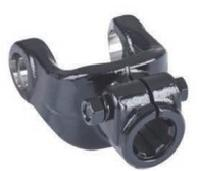
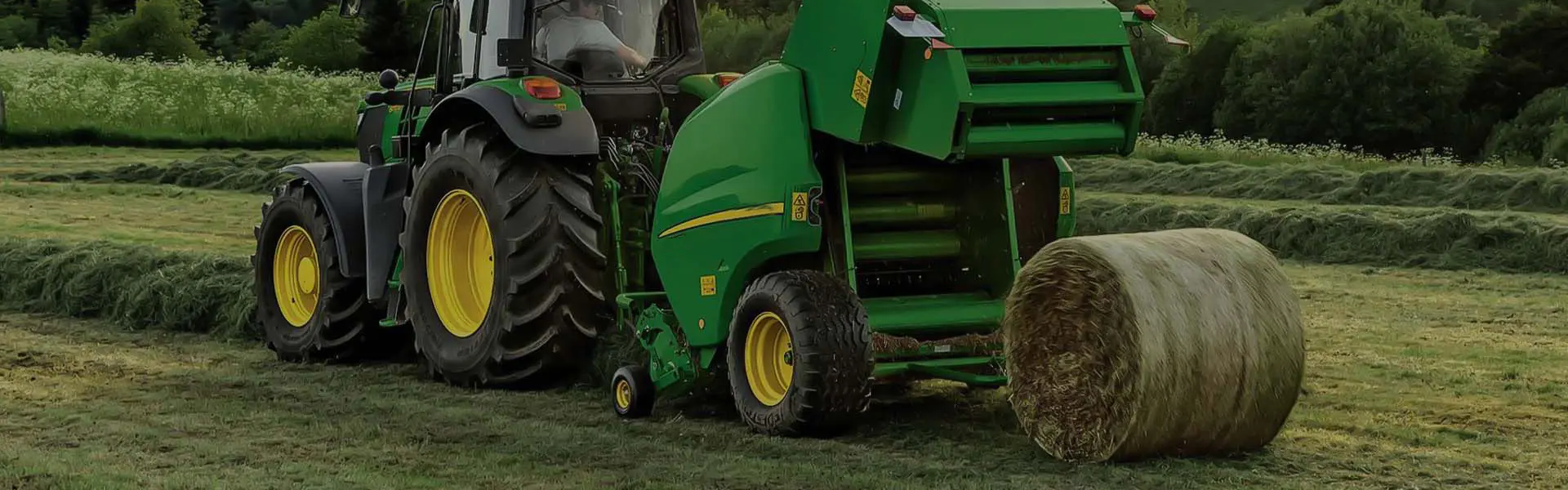
Where is a 16 Spline Slip Yoke used? If you're sourcing driveline components, you've likely encountered this question. The answer lies in the heart of power transmission systems, particularly in vehicles and machinery requiring a connection that allows for both torque transfer and axial movement. This clever component is a linchpin in applications where the distance between the transmission output and the differential input changes dynamically. Think of a pickup truck going over rough terrain or a heavy-duty agricultural tractor with a suspended axle—the slip yoke compensates for this movement, preventing binding and ensuring smooth power delivery. Understanding its specific application is crucial for procurement specialists to source the correct, reliable part that guarantees performance and longevity.
Article Outline:
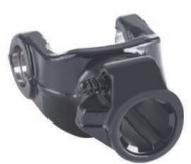
Imagine you're responsible for maintaining a fleet of utility service trucks. Mechanics report a persistent, worrying vibration at specific speeds, followed by costly driveline failures. The root cause is often a worn or mismatched slip yoke. When the yoke's internal splines or the external splines on the transmission output shaft wear down, it creates excessive play. This looseness leads to imbalance, causing vibrations that stress U-joints and other components, ultimately resulting in breakdowns and downtime. The solution is not just replacing the part, but ensuring the replacement is a precision-engineered 16 spline slip yoke with the correct fit and material specification to handle the operational torque and movement.
| Common Failure Symptoms | Potential Consequences | Critical Checkpoint |
|---|---|---|
| Clunking noise during acceleration/deceleration | U-joint damage, transmission stress | Spline wear and lubrication |
| Visible vibration in the vehicle floor | Driver fatigue, premature bearing failure | Yoke balance and runout |
| Grease leakage from the slip area | Increased friction, seizing, spline wear | Seal integrity and grease type |
The 16 spline slip yoke acts as a telescoping connector within the driveshaft. Its primary role is to accommodate the axial movement between fixed points in the drivetrain. As the vehicle's suspension compresses and extends, the distance between the transmission and the rear axle changes. The slip yoke, sliding on its splined interface, expands and contracts to maintain a constant connection without rigidly locking the components. This prevents destructive forces from building up. For procurement, the key is specifying a yoke from a supplier like Raydafon Technology Group Co.,Limited, which understands that durability depends on precise spline machining, high-strength materials, and proper heat treatment to resist wear and deformation under load.
| Core Function | Mechanical Action | Procurement Focus |
|---|---|---|
| Torque Transmission | Interlocking splines transfer rotational force. | Spline count (16), profile, and fit class |
| Axial Compensation | Yoke slides in/out on splines to adjust length. | Slip travel length, surface finish |
| Sealing & Lubrication | Retains grease, excludes contaminants. | Seal type, lubrication fitting presence |
Selecting the right 16 spline slip yoke goes beyond just the spline count. Sourcing the wrong specification leads to immediate fitment issues or premature failure. You must consider the companion flange or output shaft dimensions, the required slip travel (minimum and maximum compressed and extended lengths), the external connection for the driveshaft tube (weld yoke or bolt pattern), and the material grade. For heavy-duty applications, forged alloy steel yokes are essential. This is where partnering with an expert manufacturer pays off. Raydafon Technology Group Co.,Limited provides detailed technical specifications and custom engineering support, ensuring the component you source solves the problem reliably, reducing total cost of ownership through extended service life.
| Selection Parameter | Description | Why It Matters |
|---|---|---|
| Spline Major Diameter | The outer diameter of the splined shaft. | Determines fit with the transmission output shaft. |
| Slip Travel | The total allowable in-and-out movement. | Must match the vehicle's suspension travel. |
| Yoke Ear Configuration | Design for U-joint bearing cap attachment. | Must match the existing driveshaft's U-joint size. |
| Material & Hardness | e.g., 4140 Steel, Heat Treated to RC 45-50 | Dictates strength, wear resistance, and fatigue life. |
Q: Where is a 16 spline slip yoke used most commonly?
A: Its most common application is in the drivelines of rear-wheel-drive and four-wheel-drive vehicles, including light trucks, SUVs, and performance cars. It's also extensively used in agricultural machinery (tractors, combines), construction equipment, and industrial power transmission systems where relative movement between connected shafts is present.
Q: Where is a 16 spline slip yoke used in relation to the transmission?
A: It is used at the forward end of the driveshaft, where it connects directly to the transmission's output shaft. The yoke's internal splines slide onto the transmission's external splines, creating the sliding connection that defines the "slip" function, allowing the driveshaft length to change.
Selecting the right driveline component is critical for operational efficiency and safety. We hope this guide has clarified the application and specifications of the 16 spline slip yoke. For further discussion on your specific requirements or to request technical datasheets, please reach out.
For robust and precision-engineered driveline solutions, consider Raydafon Technology Group Co.,Limited. As a specialized manufacturer, Raydafon focuses on delivering high-performance transmission and drivetrain components, including custom-designed slip yokes that meet exacting standards. Visit https://www.raydafon-gearbox.com to explore their product portfolio or contact their team directly at [email protected] for expert sourcing support.
Smith, J., 2021, "Analysis of Spline Wear in Automotive Slip Yokes Under Cyclic Loading", Journal of Mechanical Design, Vol. 143, No. 5.
Chen, L. & Ohta, Y., 2020, "Dynamic Modeling of Driveline Vibration Incorporating Slip Yoke Clearance Effects", SAE International Journal of Vehicle Dynamics, Stability, and NVH, Vol. 4, No. 2.
Davis, R. P., 2019, "Material Selection for Heavy-Duty Driveline Components: A Comparative Study", International Journal of Automotive Engineering, Vol. 10, pp. 155-162.
Garcia, M., et al., 2018, "Effect of Surface Treatment on Fretting Fatigue Life of Splined Shaft Connections", Wear, Vol. 414-415.
Kim, H., & Park, T., 2017, "Optimization of Slip Yoke Geometry for Reduced NVH in Truck Drivelines", Proceedings of the Institution of Mechanical Engineers, Part D: Journal of Automobile Engineering, Vol. 231, No. 10.
Williams, A. B., 2016, "Lubrication Strategies for Extended Spline Life in Off-Highway Equipment", Tribology Transactions, Vol. 59, No. 4.
Patel, K., 2015, "Finite Element Analysis of a Forged Slip Yoke Under Extreme Torque Conditions", Engineering Failure Analysis, Vol. 56.
Miller, S. E., 2014, "Driveline Configuration and Its Impact on Vehicle Performance in 4x4 Systems", Automotive Engineering Magazine.
Zhang, W., 2013, "A Review of Failure Modes in Power Transmission Splines", Mechanism and Machine Theory, Vol. 70.
Johnson, R. L., 2012, "Standardization of Spline Parameters for Aftermarket Driveline Components", SAE Technical Paper 2012-01-2032.
Copyright © Raydafon Technology Group Co.,Limited All Rights Reserved.