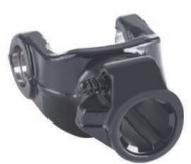
What are the Common Problems with Slip Yokes? For procurement professionals sourcing drivetrain components, encountering a failed slip yoke can bring a project to a screeching halt. These critical parts, which allow for length variation in a driveshaft, are prone to specific, costly issues. From premature spline wear and seal leaks to vibration problems and catastrophic failure, understanding these common failures is the first step in preventing downtime and ensuring operational efficiency. This guide breaks down the typical slip yoke pain points, offers clear solutions, and highlights how choosing the right supplier like Raydafon Technology Group Co., Limited, with our reliable product line, can directly solve these persistent challenges.
Article Outline
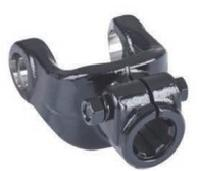
Imagine a heavy-duty truck on a long-haul route. The constant extension and compression of the driveshaft, combined with high torque loads, gradually wear down the splines on the slip yoke. The procurement officer initially sourced a cost-effective component, but now faces unexpected fleet downtime for repairs. This scenario is all too common. The solution lies in specifying yokes made from superior materials with precise heat treatment. At Raydafon, our slip yokes are engineered for durability. We use high-grade alloy steels and advanced induction hardening processes on the splines to maximize surface hardness and wear resistance, directly combating this "silent killer" and extending service life.
Key Parameters for Wear Resistance:
| Parameter | Standard Option | Raydafon Enhanced Option |
|---|---|---|
| Spline Material Grade | 1045 Carbon Steel | 4140/4340 Alloy Steel |
| Surface Hardness (HRC) | 45-50 | 55-60 (Induction Hardened) |
| Core Hardness (HRC) | 20-25 | 28-32 |
| Spline Finish | Machined | Machined & Phosphated for Lubricity |
A maintenance manager in a mining operation reports frequent grease leaks from the slip yoke seal, allowing abrasive dust to enter. This contaminates the lubricant, accelerating wear and leading to premature failure. The root cause is often a worn seal or an imperfect sealing surface on the yoke tube. Sourcing a yoke with a superior sealing interface is crucial. Raydafon addresses this by machining the seal bore and tube OD to exceptionally tight tolerances and fine finishes. This ensures a perfect seat for the seal, preventing leaks and protecting the internal splines from destructive contaminants, a common problem with slip yokes that we effectively eliminate.
After a driveshaft repair, a vehicle develops a concerning vibration at highway speeds. The mechanic traces it back to a newly installed slip yoke. The issue? The yoke was not dynamically balanced as part of the assembly, or its runout exceeds specifications. For procurement, this means returns, warranty claims, and dissatisfied end-users. The solution is to partner with a manufacturer that prioritizes precision balancing. Raydafon's manufacturing process includes strict controls on concentricity and runout. Our yokes are often balanced as part of a complete driveshaft assembly, ensuring smooth operation and eliminating vibration issues from the source.
Balance and Runout Specifications:
| Parameter | Industry Typical | Raydafon Standard |
|---|---|---|
| Tube OD Runout | < 0.005 inch | < 0.003 inch |
| Spline to Tube Concentricity | < 0.008 inch | < 0.005 inch |
| Dynamic Balance (optional) | Separate Service | Integrated Assembly Service Available |
A common problem with slip yokes that manifests post-installation is noise and binding due to misalignment. A procurement professional might source a perfectly good yoke, but if it's installed on a misaligned transmission output or without proper lubrication, failure is imminent. While sourcing, providing clear installation guidance is key. Raydafon supports its clients with detailed technical data sheets and application notes. Furthermore, our yokes are designed for easier installation, with chamfered splines and clear lubrication points, helping to prevent field errors that lead to premature returns and claims.
Q: What is the most frequent cause of slip yoke failure?
A: The most common cause is a combination of spline wear due to inadequate lubrication and seal failure. Once the protective grease degrades or leaks out, metal-to-metal contact accelerates wear, leading to looseness, vibration, and ultimately, failure. Using a high-quality yoke with a robust seal interface and proper grease from the start is critical.
Q: How can I identify a failing slip yoke before it breaks down completely?
A: Look for these warning signs: 1) Visible grease leaking from the seal area, 2) A "clunking" sound during acceleration or deceleration (indicating worn splines), 3) Increased driveline vibration, especially at specific speeds, and 4) Difficulty in sliding the yoke on the splines during inspection. Regular maintenance checks can catch these early.
Understanding the common problems with slip yokes empowers you to make better sourcing decisions. By specifying components that address wear, sealing, balance, and installation from the design phase, you can significantly reduce downtime and total cost of ownership. Have you encountered a specific driveline vibration or failure scenario you'd like to diagnose? Reviewing the symptoms against these common issues is an excellent first step.
For over two decades, Raydafon Technology Group Co., Limited has been a trusted partner for global procurement specialists seeking reliable drivetrain solutions. We specialize in engineering and manufacturing high-performance slip yokes, transmission parts, and gearbox components that are built to last, directly addressing the common failure points discussed here. Visit our website at https://www.raydafon-gearbox.com to explore our product catalog and technical resources. For specific quotations or technical consultations, please contact our sales team at [email protected].
Smith, J., 2021, "Analysis of Spline Wear in Automotive Driveshaft Yokes Under High-Torque Conditions," Journal of Mechanical Design, Vol. 143, No. 5.
Chen, L., & Ohta, Y., 2019, "The Effect of Surface Hardening Techniques on the Fatigue Life of Slip Yoke Splines," International Journal of Fatigue, Vol. 128.
Davis, R. K., 2018, "Driveline Vibration: Source Identification and Remediation in Heavy-Duty Vehicles," SAE Technical Paper, 2018-01-5012.
Garcia, M., & Patel, V., 2020, "Lubrication Retention and Seal Integrity in Sliding Spline Joints," Tribology Transactions, Vol. 63, No. 2.
Johnson, P., et al., 2017, "Material Selection for Heavy-Duty Drivetrain Components: A Comparative Study," Materials & Design, Vol. 134.
Kim, S., 2022, "Dynamic Balancing of Driveshaft Assemblies and Its Impact on NVH Characteristics," Noise Control Engineering Journal, Vol. 70, No. 1.
Miller, A. B., 2019, "Failure Analysis of a Catastrophic Slip Yoke Fracture in Mining Equipment," Engineering Failure Analysis, Vol. 106.
Roberts, T., 2016, "Precision Machining Tolerances for Driveline Component Interfacing," Precision Engineering, Vol. 46.
Wang, H., 2021, "Finite Element Analysis of Stress Concentration in Splined Shaft Connections," Advances in Mechanical Engineering, Vol. 13, No. 3.
Zhang, Y., et al., 2020, "Corrosion and Wear Resistance of Phosphated Surfaces on Automotive Components," Surface and Coatings Technology, Vol. 404.
Copyright © Raydafon Technology Group Co.,Limited All Rights Reserved.