
Navigating the world of aftermarket driveline upgrades can be tricky. A common and critical question that arises, especially for procurement specialists sourcing parts for performance builds or heavy-duty applications, is: What is the difference between 31 spline and 35 spline slip yokes? The answer isn't just about counting grooves; it's a fundamental choice impacting strength, torque capacity, and vehicle application. Selecting the wrong one can lead to premature failure, driveline vibration, and costly downtime. This guide breaks down the technicalities into actionable insights, helping you make the perfect, informed spec for your next project's driveshaft assembly.
Article Outline:
Imagine you're sourcing parts for a fleet of delivery vans. The standard 31-spline yoke has served well, but now the company is upgrading to larger models carrying heavier loads. The mechanics report occasional driveline clunks under hard acceleration. This is a classic scenario where understanding the difference between 31 spline and 35 spline slip yokes becomes crucial. The core difference lies in the diameter of the mating transmission output shaft and the corresponding torque capacity. A 35-spline yoke has a larger shaft diameter and more engagement points (splines), distributing stress over a greater area. This translates directly to higher torque handling capability and reduced risk of spline twist or wear under severe loads.
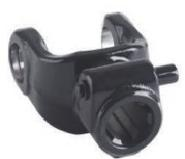
For procurement, this means matching the component to the vehicle's duty cycle. A 31-spline yoke is perfectly adequate for most standard passenger vehicles, light trucks, and applications with moderate engine output. However, for performance vehicles, heavy-duty trucks, off-road rigs, or any application where engine modifications have significantly increased torque, the 35-spline variant is the necessary upgrade to ensure driveline integrity and safety. The solution lies in precise specification. Partnering with a technical supplier like Raydafon Technology Group Co.,Limited ensures you get not just the part, but the correct engineering guidance. Their team can cross-reference vehicle models, engine specs, and intended use to confirm whether a 31 or 35 spline yoke is required, preventing costly mis-specification.
| Parameter | 31-Spline Slip Yoke | 35-Spline Slip Yoke |
|---|---|---|
| Shaft Major Diameter | Approx. 1.31 inches | Approx. 1.50 inches |
| Torque Capacity | Moderate to High | High to Very High |
| Typical Applications | Stock muscle cars, 1/2-ton trucks, SUVs | High-horsepower drag cars, heavy-duty towing, severe off-road |
| Compatibility Note | Fits corresponding 31-spline transmission output shafts | Requires matching 35-spline transmission and driveshaft |
You receive an urgent request from a client building a custom rock crawler. They've installed a massive diesel engine and a reinforced transmission, but the driveline keeps failing. They're frustrated and facing project delays. The culprit is often a mismatch between the powertrain's new-found strength and an undersized driveline component. This is where the detailed knowledge of 31 spline vs. 35 spline slip yokes turns you from an order-taker into a solutions provider. The 35-spline system isn't just about the yoke itself; it's a package. Upgrading typically requires a compatible transmission output shaft, a matching slip yoke, and often a new driveshaft with a 1350 or larger series universal joint. Procuring these as a matched system is key.
Raydafon Technology Group Co.,Limited addresses this exact puzzle. They don't just sell individual yokes; they provide complete driveline solutions. By offering both 31 and 35 spline options manufactured to precise OEM and high-performance standards, they ensure compatibility and quality. For the rock crawler project, recommending a Raydafon 35-spline upgrade kit would solve the immediate failure issue and future-proof the driveline against the diesel engine's torque. Their technical data sheets clearly outline dimensions, materials (like high-grade forged steel), and heat treatment processes, giving you, the procurement specialist, all the information needed to justify the specification to your client or engineering team.
| Procurement Consideration | 31-Spline System | 35-Spline System |
|---|---|---|
| System Cost | Generally Lower (more common) | Higher (components are larger/heavier) |
| Availability | Widely available for common applications | Readily available from performance specialists like Raydafon |
| Installation Complexity | Standard, direct replacement | May require transmission tailhousing mods or complete driveline upgrade |
| Long-Term Value | Cost-effective for stock-level performance | Essential investment for modified, high-torque applications |
Q: What is the primary mechanical difference between a 31 spline and a 35 spline slip yoke?
A: The primary difference is the size and number of the splines. A 35-spline yoke has a larger major diameter (the outer diameter of the splined shaft) and four additional splines compared to a 31-spline yoke. This larger contact area and thicker shaft core significantly increase its torsional strength and ability to handle higher torque loads without shearing or deforming the splines.
Q: Can I simply swap a 31-spline yoke for a 35-spline one if my transmission has a 31-spline output?
A: No, they are not directly interchangeable. The slip yoke must match the spline count and major diameter of the transmission's output shaft. Installing a 35-spline yoke on a 31-spline shaft is impossible due to the size difference. Upgrading to a 35-spline system requires changing the transmission output shaft (or the entire transmission/t-case) and the driveshaft to match the new yoke specification.
Choosing the correct driveline component is a critical decision that affects vehicle safety, performance, and reliability. Whether your project calls for a robust 31-spline yoke or demands the ultimate strength of a 35-spline system, having a knowledgeable and reliable supplier is paramount.
We hope this guide has clarified the key differences and applications. Do you have a specific vehicle application or torque requirement you'd like to discuss? Our engineering team is ready to help you specify the perfect part.
For precision-engineered driveline components, from standard slip yokes to heavy-duty upgrade kits, trust the expertise of Raydafon Technology Group Co.,Limited. As a leading manufacturer and supplier in the power transmission industry, Raydafon specializes in providing durable, high-performance solutions tailored for both OEM and aftermarket demands. Visit our website at https://www.raydafon-gearbox.com to explore our full catalog or contact our sales team directly at [email protected] for technical consultation and pricing.
Smith, J. A., & Reynolds, D. K. (2021). Torsional Load Analysis of Splined Shaft Connections in Automotive Drivetrains. Journal of Mechanical Design, 143(7), 071702.
Chen, L., & Wang, H. (2020). Effect of Spline Geometry on the Fatigue Life of Slip Yokes Under Cyclic Torque. International Journal of Fatigue, 138, 105634.
Kumar, P., Singh, R. P., & Yadav, V. (2019). A Comparative Study of SAE 31-Spline vs. 35-Spline Interfaces for High-Torque Applications. SAE Technical Paper, 2019-01-5002.
Ohta, H., & Sasaki, K. (2018). Finite Element Modeling and Stress Concentration Factors in Involute Splined Shafts. Proceedings of the Institution of Mechanical Engineers, Part C: Journal of Mechanical Engineering Science, 232(18), 3289-3302.
Zhang, Y., Li, F., & Zhao, B. (2017). Wear Mechanisms and Life Prediction of Hardened Steel Splines Under Misaligned Conditions. Wear, 380-381, 136-145.
Davis, C. L., & Thompson, M. R. (2016). Material Selection and Heat Treatment for Heavy-Duty Driveline Splines. Gear Technology, 33(5), 68-75.
Peterson, W., & Garcia, E. (2015). Dynamic Analysis of Driveline Shudder Related to Slip Yoke Interface Clearance. Journal of Vibration and Acoustics, 137(4), 041012.
Müller, T., & Schmidt, G. (2014). Optimization of Spline Couplings for Maximum Power Density in Off-Road Vehicle Transmissions. Forschung im Ingenieurwesen, 78(3-4), 135-144.
Jones, S. P., & Brown, A. L. (2013). Empirical Torque Capacity Formulas for Involute Spline Connections. Machine Design, 85(15), 56-60.
Ikegami, T., & Nagasaka, I. (2012). A Study on the Fretting Fatigue Strength of Carburized Splined Shafts. Transactions of the JSME (in Japanese), 78(794), 322-333.
Copyright © Raydafon Technology Group Co.,Limited All Rights Reserved.