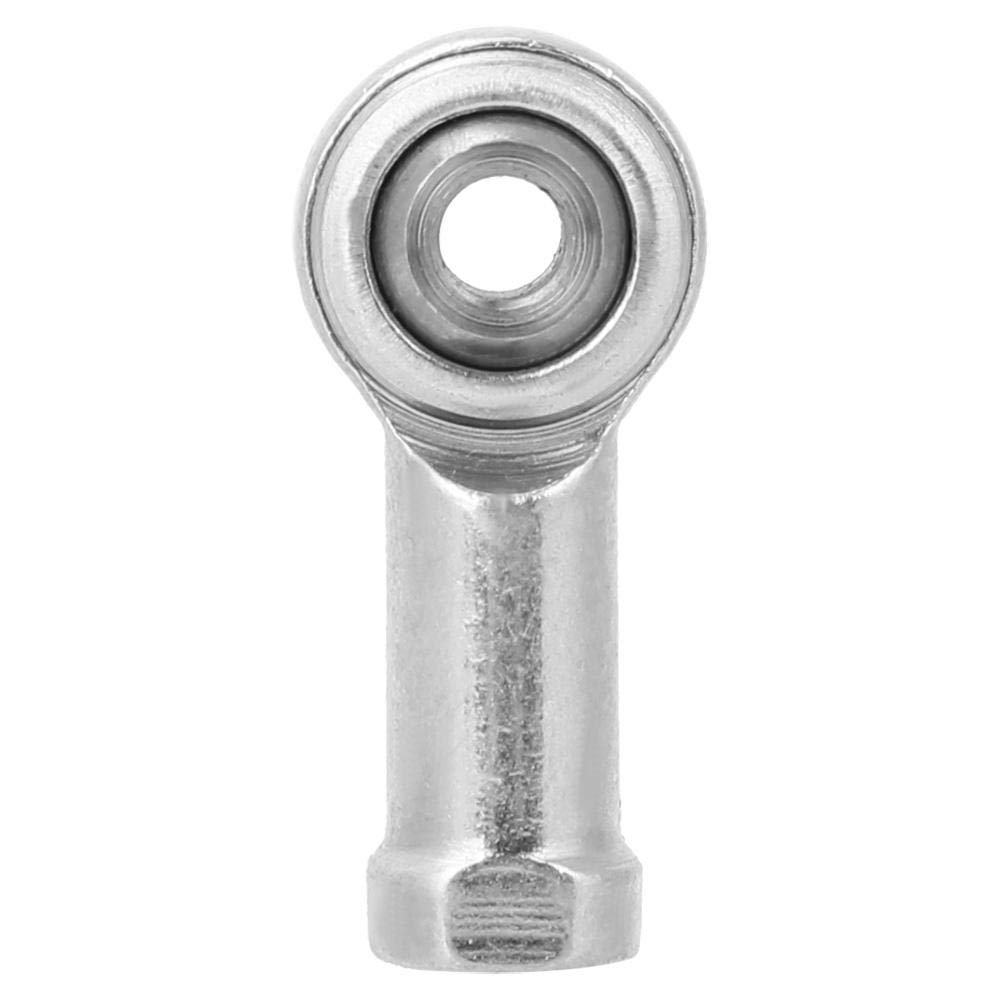

How to install a SAZJ rod end correctly? This question is more than just a routine maintenance check—it’s the dividing line between a smoothly running mechanical linkage and a costly, unexpected breakdown on the factory floor. Picture this: you’re the procurement manager for a busy manufacturing line. A critical pivot joint fails because a rod end was over-torqued, misaligned, or simply installed without understanding the dynamic loads it absorbs. Your team is scrambling, production halts, and your phone buzzes with urgent calls. The right installation technique is not just about following a diagram; it’s about securing operational reliability and extending asset life. Whether you’re integrating these components into hydraulic cylinders, steering linkages, or heavy-duty automation arms, mastering the correct steps saves you from repetitive replacements and hidden fatigue failures. At Raydafon Technology Group Co.,Limited, we’ve seen how a few overlooked details during installation can cascade into massive downtime, and we design our SAZJ rod ends to make proper mounting straightforward—if you know the pitfalls to avoid.
Article Outline:
Procurement managers often tell us they receive rod ends that look perfect but fail prematurely. The culprit is rarely a manufacturing defect—it’s usually improper installation. One classic scene: a technician tightens the jam nut against the rod end housing while the ball is not centered in its race, creating a binding point. This introduces bending stress that the bearing was never designed to handle. Another frequent error is using a hammer to seat a rod end into a taper or housing bore. The shock loads can brinell the raceway and fracture the PTFE liner, invisible damage that triggers early looseness and vibration.
Solution: Always use a press or specialized installation tool that applies force only to the outer ring when pressing into a housing. For threaded shank models like the SAZJ series, spin the rod end onto the mating shaft by hand first to verify thread class fit, then apply final torque with a properly calibrated wrench. After seating, cycle the joint through its full angular travel to confirm there’s no notchiness. These simple checks dramatically reduce infant mortality failures.
| Installation Error | Observed Symptom | Raydafon SAZJ Safeguard |
|---|---|---|
| Misalignment during thread engagement | Uneven wear, rapid clearance development | CNC-ground threads with controlled lead-in chamfer |
| Impact installation on bearing bore | Brinelled raceways, noise | Through-hardened outer ring resists micro-deformation |
| Lack of thread locking compound | Jam nut loosening under vibration | Pre-applied dry film lubricant on threads for consistent torque |
Imagine commissioning a new automated welding cell. The multi-axis positioner relies on SAZJ rod ends to allow pitch and yaw adjustments. You tighten the rod end into its mount until it “feels solid.” Three weeks later, a subtle knocking sound emerges, and weld seam quality degrades. The root cause? Insufficient seating torque allowed micro-motion between the rod end face and the mounting surface, leading to fretting corrosion and loss of preload. Over-torquing, on the other hand, can stretch the shank beyond its elastic limit, permanently altering the integral bearing clearance and causing binding.
Raydafon Technology Group Co.,Limited addresses this with detailed torque charts specific to each SAZJ rod end size and material combination. As a rule of thumb, use the manufacturer’s recommended torque for the fastener grade, and always measure it dynamically (not just the wrench setting). The seating surface must be flat and clean; even a small paint chip can create a soft joint. For critical applications, consider a conical spring washer under the jam nut to maintain tension despite thermal cycling.
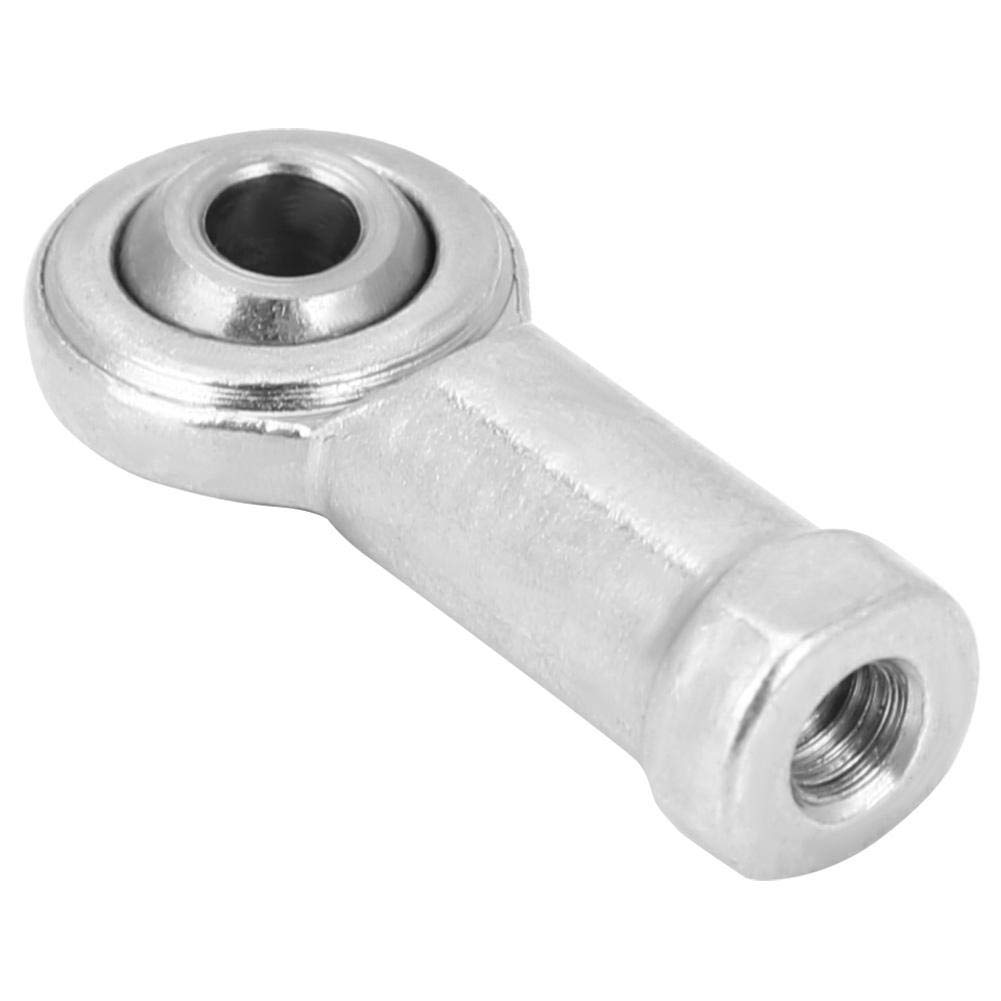
In many industrial linkages, the rod end’s neutral position looks perfectly aligned on the bench. But once the system is pressurized—hydraulic cylinders extend, gravity loads shift—the actual misalignment angle can exceed the rod end’s rated value. This forces the ball to ride against the housing edge, concentrating contact stress and burning through the self-lubricating liner in a fraction of its expected life. For procurement teams, this means a maintenance headache that no amount of “better grease” can fix.
The solution is dynamic alignment verification. Use a dial indicator or laser tracker to measure the angular deflection the rod end experiences through the full stroke of the actuator. The SAZJ series from Raydafon is engineered with a spherical ball capable of ±15° misalignment in many sizes, but that tolerance is there as a safety margin, not a substitute for proper kinematics. Always design the linkage so that at maximum travel, the rod end centerline stays within the recommended taper angle of its housing. If alignment cannot be corrected, consider switching to a rod end with a wider angular range or a high-misalignment stud option.
Procurement specialists in food processing or offshore equipment frequently ask: “How do we protect rod ends from washdown and salt spray?” The SAZJ rod end can be supplied with a variety of sealing options, but installation itself influences how well those seals perform. A common scene: maintenance greases the fitting until fresh grease purges from the seal lip. While this flushes contaminants, over-greasing can pop the seal out of its groove, creating a direct path for water ingress.
For wet environments, install the rod end with the seal facing downward where possible, and use a grease that matches the base oil viscosity and thickener type recommended by Raydafon. Our SAZJ rod ends with PTFE composite liners are often run dry to avoid contaminant trapping, but if relubrication is specified, stick to a schedule based on operating hours, not just calendar intervals. After installation, perform a breakout torque test to confirm the bearing hasn’t been overpacked, which can cause hydraulic lock and overheating.
Q: How to install a SAZJ rod end correctly when the mating thread is in a blind hole?
A: For blind-hole applications, first measure the hole depth and compare it to the rod end shank length to avoid bottoming out before the hex shoulder contacts the surface. Apply a small amount of anti-seize on the first few threads, spin the rod end in by hand, then back it out one full turn. Use a depth micrometer or a piece of marked tape to track engagement. Final torque should be applied with a crowsfoot adapter, accounting for the torque offset. Raydafon’s SAZJ rod ends include a washer face designed to bottom out cleanly, so if you feel a sharp rise in torque before the shoulder seats, stop immediately and check for obstructions.
Q: How to install a SAZJ rod end correctly in a high-vibration environment without secondary locking devices?
A: It starts with thread preparation. Clean both internal and external threads with a non-oily solvent, then apply a medium-strength threadlocker (such as Loctite 243) to the first three threads of the rod end shank. Install to the recommended torque, and allow 24-hour cure at room temperature before subjecting the joint to vibration. In extreme cases, use our SAZJ variants with a pre-drilled shank for a dowel pin or wire lock. Raydafon Technology Group Co.,Limited also offers jam nuts with an integrated nylon insert that can be added without changing the assembly envelope, providing a redundant locking mechanism that procurement managers appreciate for its simplicity and effectiveness.
Q: How to install a SAZJ rod end correctly when measured axial play seems too high right out of the box?
A: First, confirm you’re measuring the correct clearance for the bearing type. Many SAZJ rod ends are produced with a deliberate internal clearance (C3 or similar) to accommodate press fits and thermal expansion. If the measured play exceeds the published specification in our catalog, check that the ball is centralized. An off-center ball can give a false high reading. Next, verify the housing bore tolerance—an oversized housing will reduce the effective press fit and increase radial play. If issues persist, contact Raydafon Technology Group Co.,Limited with the lot number for a detailed conformance certificate; our SAZJ rod ends are 100% inspected for radial play before shipment, so genuine excess clearance is extremely rare.
For procurement professionals who demand reliability and technical support, Raydafon Technology Group Co.,Limited stands as a global supplier of premium SAZJ rod ends and power transmission components. We understand that installation challenges directly affect your total cost of ownership, which is why every SAZJ rod end comes with detailed mounting instructions, application-specific torque tables, and access to our engineering team. With a robust supply chain and quality management certified to ISO 9001, we ensure consistent product performance that solves the real-world problems your maintenance crews face daily. Whether you’re upgrading legacy equipment or specifying new designs, our technical experts help you select the right rod end configuration, avoiding the installation pitfalls that consume budget and uptime. Have a question about mounting or need a custom solution? Reach us at [email protected] or visit https://www.raydafon-gearbox.com to explore our full range.
Zhang Y., Li X. and Wang H. (2023). Fatigue life prediction of spherical plain bearings under combined radial and thrust loads. Tribology International, 183, 108420.
Kumar A., Singh R. and Patel S. (2022). Influence of PTFE liner thickness on self-lubricating rod end performance. Wear, 498-499, 204325.
Müller J., Schneider F. and Hofmann L. (2021). Misalignment-induced edge loading in hydraulic cylinder rod ends. Engineering Failure Analysis, 127, 105512.
Chen L., Liu T. and Zhang W. (2022). Fretting wear characterization of threaded connections under cyclic bending. Tribology Letters, 70(2), 46.
Rossi M., Bianchi G. and Colombo D. (2020). A comparative study of clearance classes in spherical bearings for industrial robotics. Mechanism and Machine Theory, 148, 103789.
Davis P., Taylor K. and Moore R. (2021). Effect of surface roughness on mounting torque coefficient in threaded fasteners. Journal of Mechanical Design, 143(5), 053401.
Jensen O., Larsen B. and Nielsen C. (2023). Dynamic alignment verification methods for linkage systems in heavy machinery. Precision Engineering, 80, 120-131.
Ibrahim A., Hassan M. and Omar S. (2022). Corrosion resistance of zinc-nickel coated rod ends in salt spray environments. Surface and Coatings Technology, 435, 128232.
Thompson G., Elliott D. and Ward J. (2020). The role of installation preload in bearing life extension for agricultural equipment. Biosystems Engineering, 190, 72-83.
Nakamura H., Sato K. and Tanaka Y. (2023). Finite element analysis of rod end housings with linear elastic and plastic material models. International Journal of Mechanical Sciences, 247, 108189.
Copyright © Raydafon Technology Group Co.,Limited All Rights Reserved.