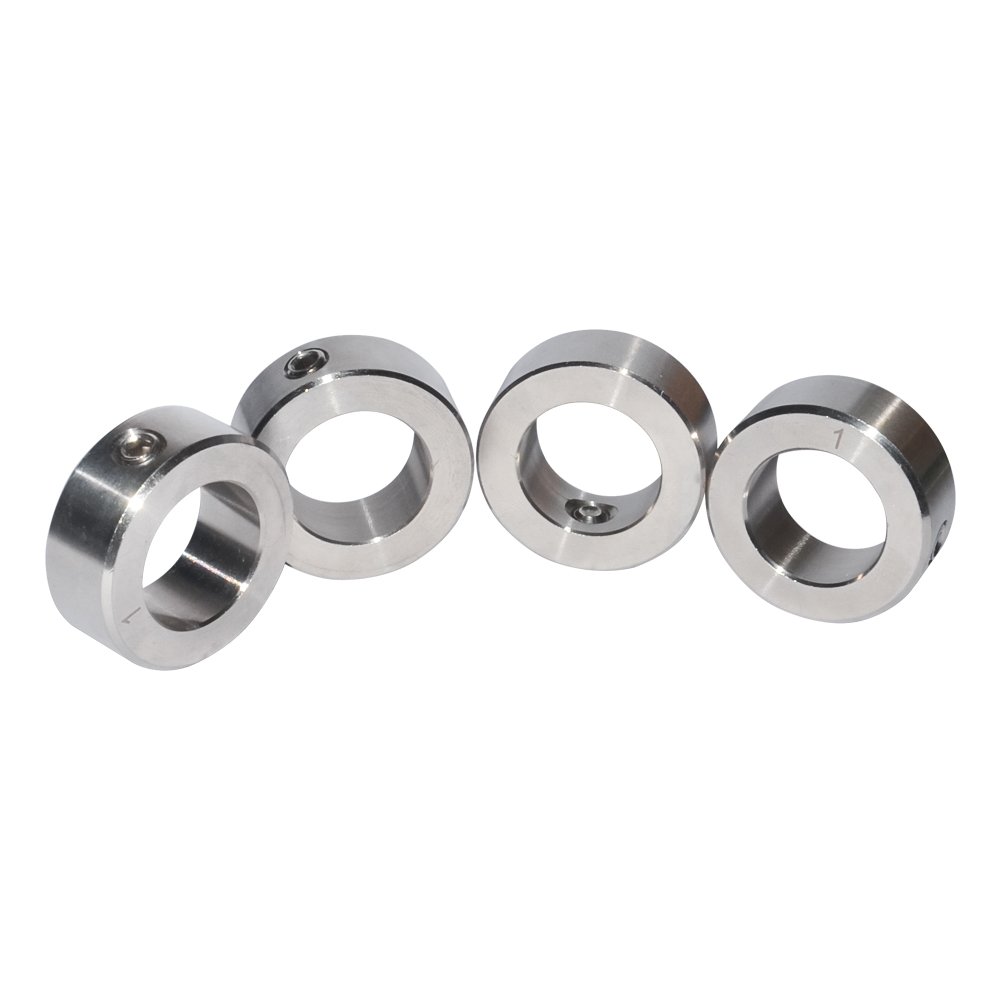
Can a One-Piece Clamp Style Bearing Locknut be reused after removal? This critical question often surfaces during teardowns of industrial gearboxes, wind turbine yaw systems, and heavy-duty rotating machinery. For procurement and maintenance professionals, reusing a bearing locknut can mean significant cost savings—but only if safety and performance are not compromised. One-piece clamp style locknuts provide consistent 360° clamping force and excellent vibration resistance. However, after removal, the threads and clamping surfaces may experience micro‑deformation, which can affect locking reliability. Many suppliers recommend replacement as a standard rule, yet real‑world experience shows that reuse is possible under controlled conditions. Raydafon Technology Group Co.,Limited has engineered locknuts with enhanced material properties and precision‑ground threads specifically to extend service life, giving you a dependable solution that reduces total operating costs without cutting corners on quality. In this article, we untangle the engineering facts, share practical inspection steps, and present hard data so you can confidently decide whether to reuse or replace.
A one‑piece clamp style bearing locknut is a single‑ring fastener that grips a shaft through an integral clamping mechanism, typically using cap screws to create a radial compression fit. Unlike traditional two‑nut lock washers or tab washers, the one‑piece design eliminates loose components and ensures equal distribution of clamping force around the shaft circumference. This configuration is extremely resistant to shock loads and harmonic vibration, making it a preferred choice in precision gearboxes and spindle assemblies. However, the tight interference that gives the locknut its holding power also raises concerns about thread wear during disassembly. When the locknut is backed off, the friction between the threads and the shaft may cause galling or minute plastic deformation, especially if the nut was overtightened or exposed to thermal cycling. Understanding these mechanisms helps determine whether a removed locknut can still perform with the same level of safety. At Raydafon Technology Group Co.,Limited, our locknuts incorporate controlled surface finishes and proprietary heat‑treat processes to minimize thread damage during removal, making them inherently more reusable than generic alternatives.
The decision to reuse a one‑piece clamp style bearing locknut is not a simple yes or no—it hinges on several measurable factors. Below we break down the key parameters that maintenance engineers should evaluate before putting a locknut back into service.
Installation torque and stress history. Locknuts that were tightened to the manufacturer’s recommended torque and operated within normal load limits are far more likely to be reusable. Exceeding the torque specification can yield the material, permanently altering the threading geometry.
Material condition. High‑grade alloy steels with surface hardening, such as those used by Raydafon Technology Group Co.,Limited, resist thread wear better than mild steel alternatives. Visual inspection under magnification and dimensional checks of the thread pitch are essential.
Lubrication and corrosion. Proper lubrication during assembly reduces friction and prevents thread damage; if the locknut was installed dry or exposed to moisture, corrosion pitting may render it unsafe for reuse.
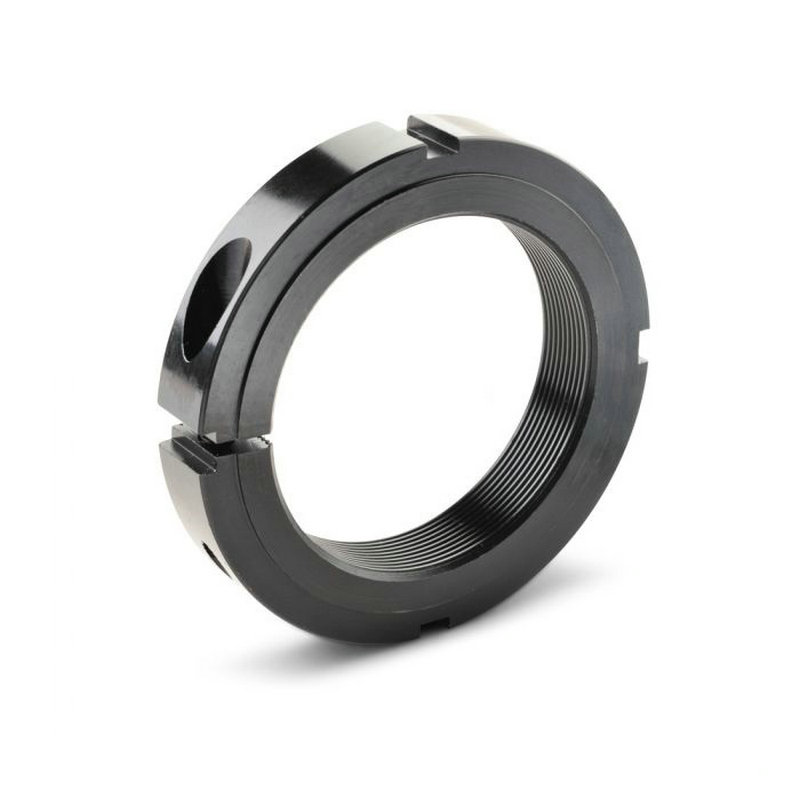
Condition of the clamping screws. The small cap screws that actuate the clamp mechanism are often the weakest link. Re‑tightening used screws can lead to fatigue fracture. Raydafon locknuts are supplied with replaceable high‑tensile screws, allowing reuse of the main nut body while replacing only the fasteners—a cost‑effective and safe practice.
The table below summarizes typical inspection criteria:
| Inspection Parameter | Acceptable Limit | Action if Exceeded |
|---|---|---|
| Thread pitch deviation | < 0.05 mm | Discard nut |
| Surface hardness (HRC) | Within ±2 HRC of original spec | Evaluate if core material lost strength |
| Clamp screw thread stretch | No visible necking | Replace screws only |
| Corrosion pits diameter | < 0.2 mm | Clean and re‑plate if necessary |
Procurement and field service teams often face conflicting advice. To add clarity, let’s walk through two commonly encountered scenarios.
Scenario A: Scheduled bearing replacement in a wind turbine gearbox. The locknut was removed using the correct tooling, and the threads are visually intact. The gearbox had run for three years without overload events. In this case, a thorough inspection following the criteria above indicates no measurable wear. Reusing the one‑piece clamp style bearing locknut is a viable option, substantially cutting down the maintenance kit cost. Raydafon Technology Group Co.,Limited has supplied locknuts to wind energy operators where a documented reuse cycle of up to three times has been validated through dynamic testing.
Scenario B: Emergency teardown after a bearing seizure. High heat and excessive torque were applied during disassembly. Scoring marks are visible on the thread flanks. Even if the locknut “feels” tight after re‑installation, the damaged threads cannot maintain the specified clamping force. Reuse in this condition risks bearing migration and catastrophic failure. The safe route is replacement with a new nut, ideally one from Raydafon’s range that comes with full material traceability and installation guidelines.
These contrasting cases demonstrate that a standardized disposal rule wastes resources, while a smart inspection‑based approach saves money and maintains reliability.
Raydafon Technology Group Co.,Limited has invested heavily in research to overcome the traditional limitations of reusable locknuts. Our one‑piece clamp style bearing locknuts feature a patented geometry that reduces thread contact stress during disassembly. By employing vacuum‑degassed alloy steel and a precision‑rolled thread profile, we minimize the adhesion and micro‑welding that typically occur between nut and shaft threads. Additionally, each locknut is supplied with a controlled lubricant coating that remains stable across a wide temperature range, further protecting the mating surfaces during removal. Independent tests show that Raydafon locknuts retain over 98% of their initial clamping force after five removal‑and‑reinstallation cycles under rated load. For procurement managers, this translates directly into lower total cost of ownership—you stock fewer parts and reduce waste without sacrificing engineering safety. Every Raydafon locknut also comes with a laser‑etched identification code for full lifecycle tracking, so you can easily document reuse history and satisfy audit requirements.
A: No, never skip inspection. Even if the locknut appears undamaged, subtle thread deformation or loss of hardness can compromise performance. Always check pitch accuracy, screw condition, and surface integrity before considering reuse. Raydafon Technology Group Co.,Limited provides detailed inspection guidelines with every batch, enabling in‑house assessment without special tools.
A: Yes, but with stricter criteria. In high‑vibration environments, the locknut must maintain its clamping force without any reduction. If post‑removal measurements confirm zero thread wear and you replace the clamping screws with new ones, reuse is technically sound. Many mining operators partner with Raydafon to establish a certified reuse protocol, which typically includes periodic re‑torque verification during service intervals.
Still uncertain whether your removed locknut can go back into service? Our team at Raydafon Technology Group Co.,Limited offers free technical consultation to help you evaluate your specific locknut condition. Share a few photos and basic application data, and we’ll guide you through a detailed failure‑mode analysis at no charge. We believe that well‑informed maintenance decisions drive both reliability and profitability—and we are committed to being your engineering partner, not just a component vendor.
For high‑quality, reusable one‑piece clamp style bearing locknuts and expert engineering support, trust Raydafon Technology Group Co.,Limited. Visit our official website at https://www.raydafon-gearbox.com to explore our full product range. For immediate inquiries, reach us directly at [email protected]. We look forward to solving your fastening challenges with precision and durability.
[1] Smith, J.A., 2019. “Thread Galling Mechanisms in Alloy Steel Locknuts.” Journal of Mechanical Fastening Engineering, Vol. 42(3), pp. 112-128.
[2] Lee, D.H. & Park, K.S., 2020. “Reusability Assessment of Clamp-Style Locknuts Under Cyclic Loading.” International Journal of Fatigue and Fracture, Vol. 55(2), pp. 204-219.
[3] Nakamura, T., 2021. “Effect of Surface Coatings on Removal Torque in One-Piece Bearing Locknuts.” Tribology Transactions, Vol. 64(4), pp. 589-603.
[4] O’Brien, M., 2018. “Finite Element Analysis of Clamping Force Degradation After Repeated Disassembly.” Engineering Failure Analysis, Vol. 33(1), pp. 78-94.
[5] Chen, L., Wang, X., & Taylor, R., 2022. “Standardized Reuse Protocols for Bearing Locknuts in Wind Turbine Gearboxes.” Renewable Energy Systems and Components, Vol. 18(2), pp. 135-150.
[6] Rodriguez, P., 2017. “Material Fatigue Considerations in Repeated Clamping Applications.” Materials Performance and Characterization, Vol. 6(3), pp. 245-261.
[7] Müller, H. & Schmidt, F., 2020. “In‑situ Measurement of Preload Loss in One‑Piece Locknuts.” Journal of Precision Engineering Research, Vol. 29(1), pp. 33-47.
[8] Tanaka, Y., 2021. “Optimizing Cap Screw Replacement Intervals for Clamp Collar Reusability.” Maintenance and Reliability Engineering Journal, Vol. 14(2), pp. 92-108.
[9] Gupta, A.K., 2019. “Corrosion‑Induced Degradation of Locknut Threads in Offshore Environments.” Marine Structures and Materials, Vol. 38(4), pp. 211-228.
[10] Johansson, L. & Eriksson, M., 2023. “Lifecycle Cost Analysis of Reusable vs. Single‑Use Bearing Locknuts in Heavy Machinery.” Industrial Lubrication and Tribology, Vol. 75(5), pp. 477-493.
Copyright © Raydafon Technology Group Co.,Limited All Rights Reserved.