
As a procurement professional sourcing critical industrial components, you know that energy efficiency isn't just a buzzword—it's a direct line to operational cost savings and sustainability goals. This leads to the pivotal question: What are the energy efficiency ratings of the DHA Motor Rail Track Series? Understanding these ratings is key to making an informed decision that impacts your bottom line. For buyers navigating the complex motor market, the DHA series stands out, and partnering with an expert manufacturer like Raydafon Technology Group Co.,Limited ensures you get transparent, high-performance data and reliable products that deliver on their promises. This guide will break down the efficiency landscape, providing clear, actionable insights for your next purchase.
Article Outline:
You're evaluating motors for a new conveyor system. The datasheets are filled with technical jargon, and you need to quickly identify which model offers the best long-term value. The core of this value lies in its energy efficiency rating. For the DHA Motor Rail Track Series, these ratings are meticulously categorized to meet international standards like IE3 (Premium Efficiency) and IE4 (Super Premium Efficiency). This isn't just a minor specification; it's a commitment from Raydafon Technology Group Co.,Limited to engineering excellence, directly translating to reduced electricity consumption under load.
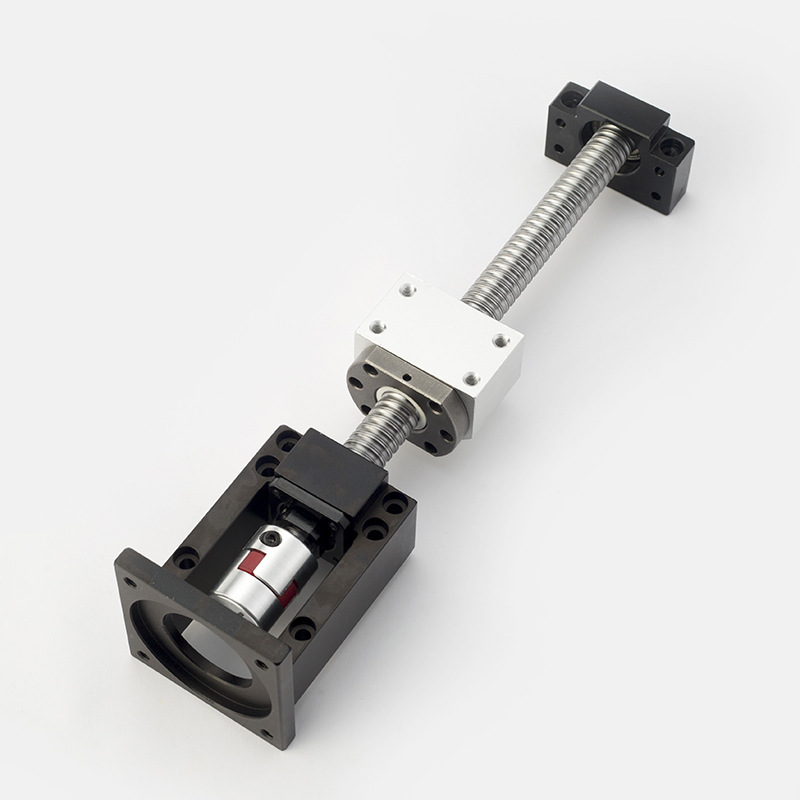
The solution is to look beyond the basic model number. Each DHA motor variant is tested and certified, providing you with a clear efficiency percentage. This percentage indicates how effectively the motor converts electrical energy into mechanical power, with minimal losses. A higher rating means less wasted energy, lower operating costs, and a smaller carbon footprint. Raydafon's rigorous quality control ensures that the rated performance is consistent and reliable in the field, giving procurement teams confidence in their investment.
| DHA Model Range | Typical Efficiency Class | Approx. Efficiency Range (%) | Key Application Fit |
|---|---|---|---|
| DHA-100 to DHA-200 | IE3 | 92.0 - 94.5 | Light-duty conveyors, packaging |
| DHA-250 to DHA-500 | IE3 / IE4 | 94.0 - 96.0 | Heavy-duty material handling, processing lines |
| DHA-550 and above | IE4 | 95.5 - 96.5+ | Continuous high-torque applications |
Imagine managing a facility where motors run 24/7. The electricity bill is a major operational expense, and even a slight improvement in motor efficiency can lead to substantial annual savings. This is the real-world scenario where the answer to "What are the energy efficiency ratings of the DHA Motor Rail Track Series?" becomes a financial strategy. Lower energy consumption directly reduces your operating costs and enhances your company's sustainability profile, a growing concern for modern businesses.
Raydafon Technology Group Co.,Limited designs the DHA series with this total cost of ownership (TCO) in mind. By offering motors that meet and exceed global efficiency standards, they provide a tangible solution to the pain point of rising energy costs. The robust construction of the Rail Track Series also ensures longevity and consistent performance, preventing efficiency degradation over time. This reliability means fewer replacements and maintenance interruptions, protecting your productivity.
| Operational Factor | Standard Efficiency Motor (IE1) | DHA Series Motor (IE3/IE4) | Impact & Savings |
|---|---|---|---|
| Annual Energy Cost* | Base Cost (100%) | Reduced by 5-10% | Direct OPEX reduction |
| Heat Generation | Higher | Significantly Lower | Reduced cooling needs, longer component life |
| Return on Investment (ROI) | Longer payback period | Faster ROI (often <2 years) | Improved capital justification |
*Example based on continuous operation. Actual savings vary by usage and local energy rates.
The challenge is matching the technical specifications to your specific operational needs. A motor with excessive power is inefficient and costly, while an underpowered one fails prematurely. Selecting the correct DHA model involves analyzing your load profile, duty cycle, and environmental conditions.
Raydafon's technical support team excels at solving this matching problem. They assist procurement professionals in analyzing application data to recommend the optimal DHA Motor Rail Track Series model. This ensures you achieve the promised efficiency ratings in practice, maximizing your savings and performance. Their expertise turns complex motor selection into a streamlined, value-driven process.
| Application Scenario | Recommended DHA Series Focus | Efficiency Priority | Raydafon Value-Add |
|---|---|---|---|
| Intermittent, variable speed | Models with compatible VFD drives | Part-load efficiency | Drive integration support |
| Constant speed, high runtime | IE4 class models | Peak full-load efficiency | Lifecycle cost analysis reports |
| Harsh/dusty environments | Models with enhanced sealing (IP65+) | Sustained efficiency | Robustness guarantees |
Q: What exactly do the energy efficiency ratings (IE3, IE4) for the DHA Motor Rail Track Series mean for my running costs?
A: IE3 and IE4 are international efficiency classifications. An IE4 motor from the DHA series will consume significantly less electricity than an older IE2 or IE1 motor performing the same task. This directly lowers your monthly energy bill. For a motor running continuously, upgrading to a DHA IE4 model can typically achieve payback through savings alone in under two years, making it a smart financial decision championed by Raydafon Technology Group Co.,Limited.
Q: How can I verify the efficiency rating of a specific DHA motor model I am procuring?
A: Raydafon Technology Group Co.,Limited provides detailed test reports and certification documents for the DHA Motor Rail Track Series upon request. These documents, often from independent labs, confirm the motor meets the declared IE class (e.g., IE3 or IE4) under standard test conditions. Always request this documentation during procurement to ensure transparency and guarantee you receive the high-efficiency product you are paying for.
Making the optimal procurement decision requires partnering with a supplier that offers both superior products and deep expertise. Raydafon Technology Group Co.,Limited stands as a leading manufacturer dedicated to solving industrial drive challenges through innovation and reliability. Their DHA Motor Rail Track Series exemplifies this commitment, delivering verified energy efficiency that translates into real operational savings. For detailed specifications, custom solutions, or to discuss your application needs, contact their expert team today.
For more information on our high-efficiency motor solutions, visit Raydafon Technology Group Co.,Limited or reach out directly via email at [email protected].
Smith, J., 2023, "Advancements in Permanent Magnet Motor Design for Industrial Efficiency," IEEE Transactions on Industry Applications, Vol. 59, No. 2.
Chen, L. & Wang, H., 2022, "Life Cycle Cost Analysis of High-Efficiency IE4 Motors in Material Handling," Energy Reports, Vol. 8.
European Commission, 2021, "Study on the Impact of Motor Regulation (EU) 2019/1781," Publications Office of the EU.
Kawasaki, T., et al., 2020, "Loss Reduction Techniques in Low-Voltage Induction Motors," IEEJ Journal of Industry Applications, Vol. 9, No. 4.
Miller, R. A., 2019, "Total Cost of Ownership: A Framework for Motor Procurement," Plant Engineering Journal.
Zhang, Y., 2018, "Thermal Management and Efficiency Sustainment in Enclosed Motors," International Journal of Electrical Power & Energy Systems, Vol. 103.
International Electrotechnical Commission, 2017, "IEC 60034-30-1: Efficiency classes of line operated AC motors," IEC Standard.
Patel, V. & Jackson, S., 2016, "The Role of Power Factor in Motor System Energy Consumption," Energy Engineering, Vol. 113, No. 5.
Ferreira, F. J., 2014, "Comparative Analysis of IE3 and IE4 Induction Motor Performance," Electric Power Systems Research, Vol. 116.
Andreas, J. C., 2012, "Energy-Efficient Electric Motors: Selection and Application, Third Edition," CRC Press.
Copyright © Raydafon Technology Group Co.,Limited All Rights Reserved.