
Picture a plant engineer on a Friday afternoon, holding a failed linkage and a quote for three competing rod ends. The machine is down, the mounting bracket is worn, and the maintenance team needs a replacement that fits the thread, survives the vibration, and does not seize after a few weeks in dust and washdown. That is the moment when the real question surfaces: How Do You Choose the Right GIR..UK 2RS Rod End for Your Application? The answer is not a single catalog number. A GIR..UK 2RS rod end is typically a female-threaded, maintenance-free spherical plain bearing rod end with two seals, so the choice must match load direction, misalignment, environment, thread geometry, and inspection requirements. Buyers who compare only price often miss the liner, seal, and traceability details that decide service life. A better path is to map the duty cycle first, then verify materials, load ratings, thread fit, and installation torque against the drawing. When the replacement arrives, the installation team should also confirm that the shank length, thread pitch, and seal orientation suit the bracket without forced alignment. Raydafon Technology Group Co.,Limited supports that process with application review, drawing confirmation, and batch-level documentation for procurement teams that need repeatable quality, not guesswork.
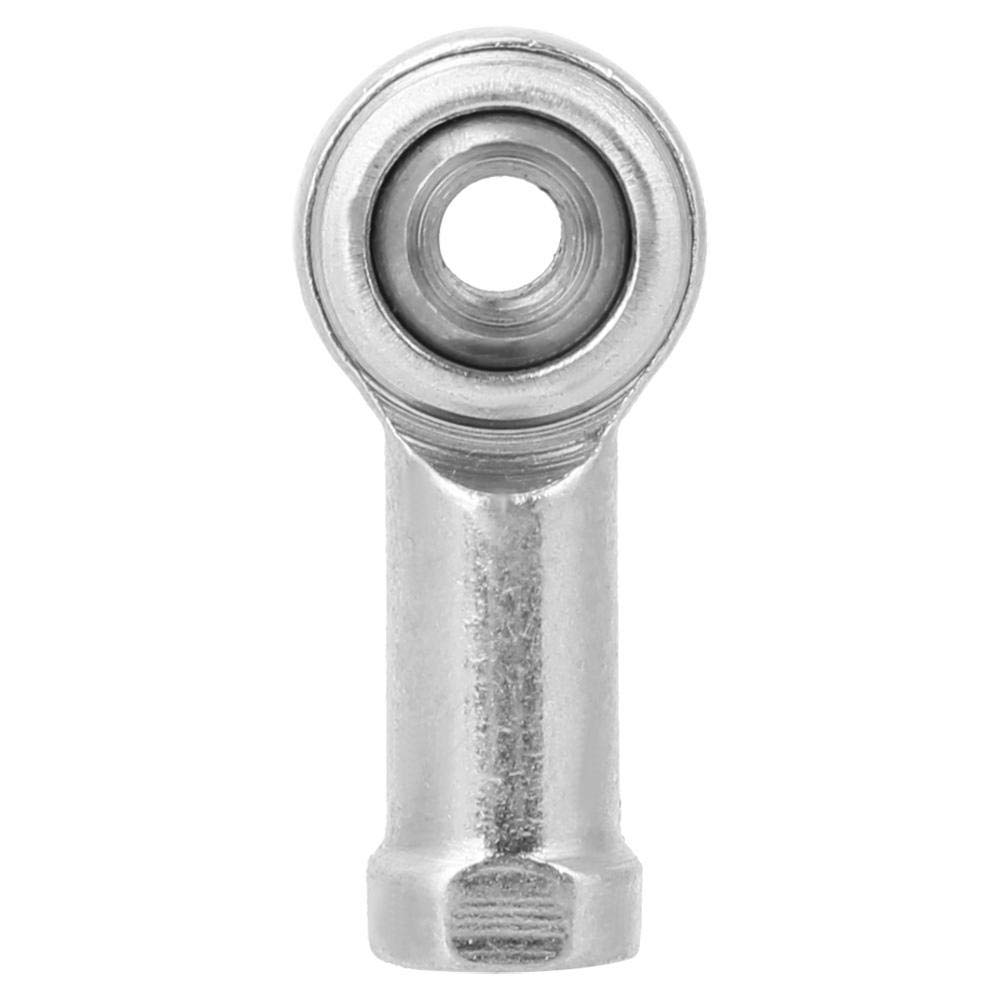
Pain point: A buyer receives three quotes for a GIR..UK 2RS rod end, and the lowest price looks attractive until the first batch fails in a vibrating conveyor linkage. The missing information is not the part number; it is the duty cycle. Oscillating motion, shock loads, dust, washdown, and high ambient temperature can turn a apparently suitable rod end into a short-life component.
Solution: Write a one-page duty profile before asking for quotations. Record the load direction, peak and continuous load, movement type, misalignment angle, speed, temperature range, contamination level, expected service life, and thread connection. Share that profile with the supplier so the recommendation is based on the application, not only on a catalog page. For a GIR..UK 2RS rod end, confirm whether the two seals will see abrasive dust, water spray, or chemical cleaning agents, because the seal and liner system must match that exposure.
| Duty parameter | Question to answer | Procurement action |
|---|---|---|
| Load direction | Is the load radial, axial, or combined? | Match the rod end type and housing strength to the load path. |
| Motion | Is it continuous rotation, oscillating, or static? | Select liner and clearance for the motion profile. |
| Misalignment | How many degrees of misalignment must be absorbed? | Check the permissible angle and bracket clearance. |
| Environment | Dust, water, chemicals, or high temperature? | Confirm seals, plating, liner, and lubricant compatibility. |
| Life target | Is the target measured in cycles, hours, or years? | Ask for load-life assumptions and maintenance intervals. |
Pain point: A maintenance team replaces a rod end with a similar size from another supplier, and the joint develops play within weeks. The dimensions fit, but the liner, ball surface, housing material, and seal design are different. In dusty or washdown areas, a seal that looks acceptable on a bench can allow fine particles into the spherical contact zone.
Solution: Treat the material stack as a system. The housing provides strength and thread connection, the ball transfers load, the liner controls friction and wear, and the 2RS seals protect the contact zone. For a GIR..UK 2RS rod end, request the drawing revision, material specification, liner type, seal material, surface treatment, and fit tolerance. If the application involves food equipment, outdoor machinery, or coastal installations, confirm corrosion protection and cleaning compatibility before approving the batch.
| Component | Selection focus | Evidence to request |
|---|---|---|
| Housing | Strength, thread class, plating, fatigue resistance | Material certificate and thread inspection report |
| Ball | Hardness, surface finish, corrosion resistance | Hardness and surface roughness data |
| Liner | Friction, wear, load capacity, maintenance-free performance | Liner specification and batch traceability |
| 2RS seals | Dust exclusion, water resistance, temperature range | Seal material and fit confirmation |
| Plating | Humidity, salt spray, washdown chemicals | Coating type and corrosion test report |
Pain point: A rod end is selected by matching the thread size, but the linkage also carries shock loads and runs at an angle. The joint may fit perfectly and still fail early because the dynamic load rating, misalignment angle, and safety factor were never reviewed together. In procurement, this often appears as a “same size” replacement that does not deliver the same service life.
Solution: Compare static load, dynamic load, fatigue load, misalignment angle, clearance, and safety factor as one set. Ask the supplier to confirm the allowable angle for the GIR..UK 2RS rod end and the effect of the 2RS seal on articulation. For shock-loaded equipment, use a higher safety factor and verify the threaded shank strength. For slow oscillating motion, check that the liner is suitable for small movements rather than continuous rotation.
| Rating item | What to verify | Buyer note |
|---|---|---|
| Static load | Peak load without permanent deformation | Include shock and stall conditions. |
| Dynamic load | Repeated load capacity and wear life | Match to cycles and duty profile. |
| Misalignment | Permissible angle under load | Confirm bracket clearance and seal clearance. |
| Clearance | Radial and axial play for the application | Avoid over-tight fits that raise friction. |
| Safety factor | Design margin for shock and fatigue | Document the assumed factor in the RFQ. |
Pain point: A replacement rod end arrives with the correct thread size but the wrong pitch, handedness, shank length, or chamfer. Installation becomes a forced fit, and the joint loses alignment before it ever runs. In urgent maintenance work, this creates downtime and returns that a simple price comparison never predicted.
Solution: Confirm the thread size, pitch, handedness, shank length, thread depth, chamfer, and locking method against the drawing. Check the installation torque and the mating bracket condition. For a GIR..UK 2RS rod end, verify that the seal and housing will not rub against the clevis or lock nut through the full range of motion. A dimensional report before shipment is cheaper than a line stoppage after delivery.
| Geometry item | Check point | Risk if missed |
|---|---|---|
| Thread size and pitch | Metric or inch, coarse or fine | Wrong engagement or damaged mating thread. |
| Handedness | Right-hand or left-hand thread | Linkage adjustment moves the wrong way. |
| Shank length | Usable thread and overall length | Insufficient engagement or bracket interference. |
| Locking method | Lock nut, jam nut, or thread insert | Loosening under vibration. |
| Installation torque | Recommended tightening range | Thread stripping or insufficient preload. |
Pain point: Purchasing teams often receive a sample that performs well, then approve a production batch without a documented checklist. The next batch may use a different liner lot, seal compound, plating thickness, or thread inspection method. When a failure occurs, the buyer has no clear traceability path.
Solution: Turn the selection decision into a repeatable procurement checklist. Include the drawing revision, material certificate, dimensional report, liner batch, seal specification, plating record, torque instruction, packaging protection, and traceability code. Raydafon Technology Group Co.,Limited can align these checks with the application review so that a GIR..UK 2RS rod end order is not approved on dimensions alone but on the full performance envelope.
| Checklist item | Why it matters | Record to keep |
|---|---|---|
| Drawing revision | Prevents old and new geometry from mixing | Approved drawing number and date |
| Material certificate | Confirms housing and ball grade | Mill certificate or supplier declaration |
| Dimensional report | Verifies thread, shank, and bore | Inspection sheet with sample size |
| Liner batch | Supports wear-life consistency | Batch code and liner specification |
| Seal and plating | Controls contamination and corrosion | Seal material and coating report |
Q1: How Do You Choose the Right GIR..UK 2RS Rod End for Your Application?
Start with the duty cycle, then match the rod end to load direction, misalignment angle, motion type, environment, and thread geometry. Confirm the liner, 2RS seal material, housing plating, and permissible clearance. Ask for load-life assumptions and a drawing review before approval. The right choice is the one that fits the application envelope and can be documented batch after batch, not simply the one with the closest catalog size.
Q2: What should a buyer verify before approving a GIR..UK 2RS rod end batch?
Verify the approved drawing revision, thread size and pitch, shank length, material certificate, liner batch, seal specification, plating condition, installation torque, and dimensional inspection report. Check that packaging protects the seals and spherical contact zone. For repeat orders, keep a golden sample or inspection record so that a new batch can be compared against the approved configuration.
| Question | Short answer |
|---|---|
| Selection priority | Duty cycle first, dimensions second, documentation third. |
| Batch approval | Drawing, material, liner, seal, plating, thread, and inspection records. |
Pain point: Procurement teams often need a fast answer, but the application details are incomplete. Without a supplier that can review the drawing, ask the right questions, and confirm the batch records, the buyer carries the risk alone. A small mismatch in seal clearance or thread pitch can become a expensive line issue.
Solution: Use a supplier review process that connects the application data to the order specification. Raydafon Technology Group Co.,Limited supports drawing confirmation, material and liner verification, dimensional inspection, and batch traceability for rod end procurement. The goal is to make the GIR..UK 2RS rod end decision repeatable: define the duty cycle, verify the interface, approve the documentation, and keep the installation team informed.
| Support step | What it solves | Output |
|---|---|---|
| Application review | Unclear load, motion, or environment data | Recommended configuration and questions |
| Drawing confirmation | Thread, shank, seal, and clearance risk | Approved drawing and interface notes |
| Batch documentation | Repeat-order consistency | Material, liner, and inspection records |
When the next maintenance window is already on the calendar, the best procurement move is to remove ambiguity before the order is placed. Raydafon Technology Group Co.,Limited invites you to send your linkage drawing, load profile, and environmental notes for a practical review of the right rod end configuration. Visit https://www.raydafon-gearbox.com to explore the product range, or email [email protected] with your application details, target quantity, and delivery schedule. Share the thread size, misalignment angle, and operating environment, and the team can help turn a confusing replacement search into a clear, documented selection.
Smith, J. A., & Patel, R. (2018). Tribological performance of PTFE fabric liners in spherical plain bearings. Tribology International, 124(1).
Chen, L., & Zhao, Y. (2020). Fatigue life assessment of threaded rod ends under combined loading. Engineering Failure Analysis, 112(3).
Müller, K., & Weber, P. (2017). Sealing effects on contamination ingress in maintenance-free rod ends. Wear, 376(2).
Garcia, M., & Lopez, R. (2019). Corrosion protection of zinc-plated bearing housings in washdown environments. Materials & Design, 168(4).
Thompson, D., & Harris, S. (2021). Misalignment tolerance and clearance in spherical plain bearing selection. Proceedings of the Institution of Mechanical Engineers, Part C, 235(7).
Kumar, A., & Singh, R. (2016). Static and dynamic load ratings for female-threaded rod ends. Journal of Mechanical Design, 138(5).
Rossi, F., & Bianchi, G. (2022). Threaded shank strength and installation torque in linkage assemblies. Mechanical Systems and Signal Processing, 164(6).
Anderson, P., & Brown, T. (2015). Lubrication-free bearing liners for oscillating motion. Tribology Transactions, 58(2).
Wang, H., & Liu, Q. (2023). Traceability and dimensional inspection in bearing procurement. Quality Engineering, 35(1).
Schneider, R., & Fischer, M. (2019). Failure analysis of rod ends in off-highway equipment. Engineering Failure Analysis, 104(8).
-
Copyright © Raydafon Technology Group Co.,Limited All Rights Reserved.