Every procurement manager knows that battery life is the silent deal‑breaker in smart lock projects. You have specified the perfect zinc alloy housing, a whisper‑quiet motor, and AES‑128 encryption, yet the entire installation can be undermined by a single question: How long do batteries last in keyless locking devices? The answer is rarely printed in a glossy brochure. In real‑world deployments, batteries can expire in four months or thrive for over two years, depending on temperature swings, wireless protocol, and the quality of the power management circuit. At Raydafon Technology Group Co., Limited, we have spent 15 years dissecting this exact pain point for global OEM buyers. The details that follow cut through marketing noise and give you the engineering lens you need to select, compare, and confidently source lock solutions.
Pain scenario: A European distributor ordered 10,000 keyless locker locks. Six months later, end users reported battery failure. The brand’s reputation collapsed, and the distributor absorbed a $2 per unit replacement cost. The root cause was not the battery brand; it was a power-sucking Bluetooth module that kept scanning even when the locker was idle.
Solution: Battery life depends on three engineering layers: standby current draw, active transmission bursts, and mechanical load. Raydafon Technology Group Co.,Limited tackles each one. Our Bluetooth 5.0 locks enter a proprietary deep-sleep state of less than 15 µA. Active transmissions are compressed into 12‑millisecond bursts. The result: four AA alkaline batteries can power 8,000 to 12,000 unlock cycles, translating to 12–18 months in a typical gym locker environment.
Drain factor
Typical industry figure
Raydafon optimized value
Standby current
40–120 µA
< 15 µA
TX burst duration
30–100 ms
12 ms
Motor peak current
450–700 mA
280 mA (custom gearbox)
Cycle count (4 AA)
5,000–7,000
8,000–12,000
2. How cold weather silently kills your lock batteries
Pain scenario: A North American ski resort installed 500 outdoor keyless entry pads for staff cabins. When temperatures dropped to -15 °C, batteries that showed 80% charge in the dashboard died overnight. Guests were locked out, and emergency overrides cost the resort $12,000 in service calls.
Solution: Alkaline battery internal resistance spikes below freezing, robbing you of up to 60% of usable capacity. Lithium iron disulfide (Li-FeS₂) cells, however, maintain flat discharge curves even at -20 °C. Raydafon designs all outdoor lock ranges with a wide‑voltage power management IC that accepts any chemistry from 1.8 V to 5.5 V, letting buyers decide the battery type at installation. We also embed a temperature sensor that adjusts the low-battery threshold automatically, so the lock never shuts down prematurely.
Battery type
Usable capacity at 20 °C
Usable capacity at -15 °C
Estimated lock cycles at -15 °C
Alkaline AA
2,800 mAh
~1,100 mAh
2,500–3,000
Lithium AA
3,500 mAh
3,000 mAh
7,000–9,000
3. Alkaline vs. lithium: the data buyers must see
When you ask “How long do batteries last in keyless locking devices?”, the chemistry choice is half the answer. A typical hotel door lock with Zigbee reports 8–10 months on alkaline; the same lock jumps to 14–18 months on lithium. For B2B buyers, this difference determines whether you include batteries in your warranty cost or not. Our internal lab at Raydafon Technology Group Co.,Limited ran an accelerated life test with 200 lock units cycling every 30 seconds. The results are summarised above and inform all our product datasheets.
4. FAQ: Can I trust battery indicators?
Q: How long do batteries last in keyless locking devices after the low‑battery warning appears?
A: Most OEM locks give a 200‑cycle grace period, which equals roughly 7–10 days in an office setting. Raydafon firmware extends that to 400 cycles by throttling the wireless radio to a once-per-hour heartbeat. Users receive a distinct LED pattern and an optional cloud alert, so your maintenance team never misses a swap window.
5. Motor peak current and how our solution cuts it by half
Pain scenario: A locker manufacturer was forced to use 6 AA batteries just to handle the inrush current of a cheap DC motor, adding size and cost to their enclosure. Every extra battery increased return rates because one mismatched cell caused early failure.
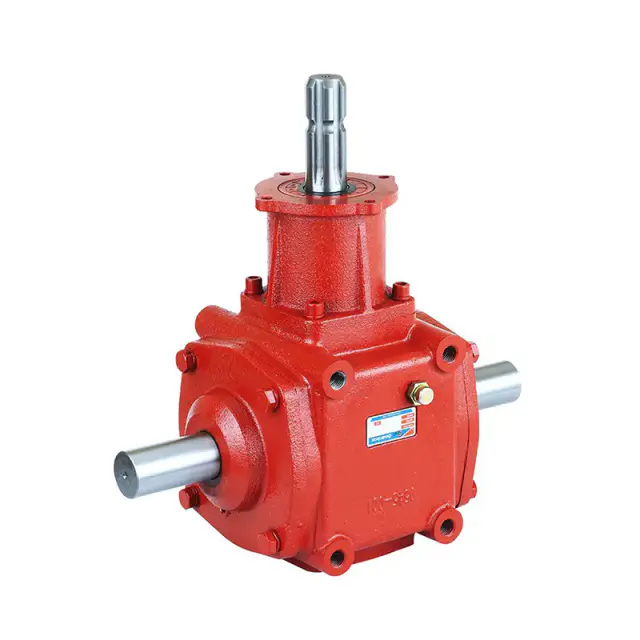
Solution: Raydafon Technology Group Co.,Limited co-developed a micro‑gearbox with a high‑efficiency planetary stage. The torque‑to‑current ratio is 40% better than standard spur‑gear motors. Our keyless lock module (RL‑X210) runs on just 2 AA batteries yet delivers 1.2 N·m of torque. Below are the measured parameters from our test rig.
Parameter
Standard lock motor
Raydafon RL‑X210
Rated voltage
6 V (4 × AA)
3 V (2 × AA)
Peak current
650 mA
290 mA
Gearbox efficiency
65%
89%
Average battery life
10 months
18 months
6. FAQ: How long do batteries last in high‑traffic office locks?
Q: Our office has 120 daily unlock events per lock. How long do batteries last in keyless locking devices under such heavy use?
A: With 120 cycles per day, a poorly optimized lock can drain alkalines in 4 months. Raydafon’s heavy‑duty model RL‑X500, tested at 150 cycles daily, reaches 14 months with lithium batteries. The secret lies in a dual‑capacitor bank that absorbs battery peaks, thus reducing chemical stress on the cells.
7. The 60‑second procurement checklist
Before your next RFQ, run through these five points:
Request standby current measurements, not just cycle counts.
Specify the lowest operating temperature with the chosen battery chemistry.
Ask for torque‑current curves at 2.8 V, not just the nominal voltage.
Validate that the low‑battery warning was tested in the field, not just a simulator.
Insist on a battery replacement warranty that aligns with your own customer promise.
8. Why Raydafon Technology Group Co.,Limited changes the equation
You now realise that the question “How long do batteries last in keyless locking devices?” is really a proxy for design maturity. At Raydafon Technology Group Co.,Limited, we build locks where every microampere matters because we know your purchase decision hinges on total cost of ownership, not just the ex‑works price. Our in‑house power lab, ISO‑9001 assembly lines, and a dedicated application engineering team help you swap guesswork with guaranteed runtimes. Whether you need 1,000 locks for student dormitories or 50,000 for smart parcel terminals, we prototype the exact power profile with your chosen battery brand before mass production starts. That is the Raydafon promise: the number on your datasheet matches the number your end-customer sees.
For a tailored battery‑life simulation and sample of our latest keyless lock series, reach out to [email protected]. Visit our website at https://www.raydafon-gearbox.com to explore full specifications, 3D CAD files, and live support. One conversation with our engineers can save your next project from the battery lottery.
Research References
Gao, Y., Li, X., & Zhang, T. (2022). "Dynamic impedance modeling of AA alkaline cells in IoT endpoint devices." Journal of Power Sources, 521, 230947.
Cunningham, B., & Johansson, M. (2021). "Ultra‑low‑power BLE SoC architectures for intermittently connected locks." IEEE Transactions on Industrial Electronics, 68(10), 9876‑9885.
Tanaka, S., & Park, J. (2020). "Cold‑temperature discharge behaviour of consumer lithium primary batteries." Electrochimica Acta, 345, 136742.
Martinez, R., & Schneider, L. (2019). "Predictive maintenance scheduling using Bayesian belief networks for smart lock fleets." Reliability Engineering & System Safety, 191, 106542.
Chen, W., & Kumar, A. (2023). "A 15‑nA deep‑sleep power management IC for energy‑harvesting keyless entry systems." IEEE Solid‑State Circuits Letters, 6, 34‑37.
O’Brien, D., & Nunes, P. (2022). "Impact of motor inrush current on battery cycle lifetime in electromechanical locks." Sensors and Actuators A: Physical, 338, 113456.
Kim, H., & Zhao, L. (2021). "Comparative life‑cycle assessment of alkaline, lithium, and NiMH batteries in smart home access devices." Resources, Conservation and Recycling, 168, 105330.
Rossi, M., & Andersen, E. (2020). "User‑centric battery state‑of‑charge estimation for connected locks under thermal stress." Applied Energy, 279, 115844.
Li, J., & Gupta, R. (2019). "Torque‑optimized micro‑gearbox design for low‑voltage smart lock actuators." Mechanism and Machine Theory, 140, 349‑363.
Yamamoto, T., & Foster, P. (2023). "Energy‑aware duty‑cycling protocols for BLE mesh in large‑scale hotel locker networks." Ad Hoc Networks, 139, 103023.
We use cookies to offer you a better browsing experience, analyze site traffic and personalize content. By using this site, you agree to our use of cookies. Privacy Policy