
Which keyless locking devices are best for home security? It’s a question procurement managers and integrators wrestle with daily—because a lock that fails silently can ruin a brand’s reputation overnight. Picture a working parent arriving home with two toddlers and shopping bags; a quick fingerprint scan should trigger a whisper-quiet motor that throws the deadbolt reliably, year after year. The shift from mechanical keys to intelligent access isn’t a gadget trend—it’s a safety evolution, and the mechanism driving that deadbolt matters just as much as the software. For bulk buyers, the “best” device isn’t the cheapest unit on a B2B platform; it’s the one whose internal gearbox won’t grind to a halt after 10,000 cycles. That’s where Raydafon Technology Group Co.,Limited enters the conversation: a gear-drive specialist that solves the toughest reliability challenges faced by keyless lock assemblers worldwide. In this guide we expose the real cost drivers behind residential smart locks, compare mechanism types spec-by-spec, and show how investing in premium motion components directly strengthens your supply chain—because home security ultimately starts with the tiny gears hidden inside the escutcheon.
Table of Contents:
Pain point: A distributor in Miami stocked 2,000 fingerprint locks only to see a 12% return rate after six months—all because coastal humidity corroded the capacitive sensors.
Solution: Understanding the physical environment of the end user is job one. No single technology fits every front door. Instead, match the underlying capture mechanism to the installation climate. Fingerprint scanners perform poorly in wet or abrasive conditions; keypad and RFID tags offer more weather resilience, while smartphone BLE locks introduce remote management and higher unit cost. The decision tree should weigh false rejection rate, power consumption, and the average number of daily cycles the home expects. Raydafon’s application engineers frequently help lock brands model these variables so they can specify the right gear motor torque and sensor pairing before tooling begins.
| Lock Type | Authentication Speed | Weather Resistance | Typical Gearbox Requirement |
|---|---|---|---|
| Fingerprint (optical) | 0.3–0.8 s | Moderate | High-starting-torque DC motor |
| Fingerprint (capacitive) | 0.2–0.5 s | Low (moisture issues) | Ultra-low-noise spur gearhead |
| Keypad + RFID | 0.5–1.0 s | High | Standard DC planetary gearbox |
| Smartphone BLE/Wi-Fi | 1.0–2.0 s | Moderate | Precision worm gearbox with encoder feedback |
Pain point: A European lock brand lost a five-year hotel contract because the latch motor in their flagship smart lock exceeded 45 dB—guests complained of a grinding noise at night.
Solution: Acoustic performance isn’t a “nice to have”; it’s a spec line that directly impacts customer satisfaction scores. The root cause often traces back to poor gear-hobbing tolerances or incorrect lubrication inside the micro gearbox. By switching to a gear motor with hardened steel pinions and precisely shaved planet gears, the same lock brand reduced operating noise to below 28 dB and extended cycle life from 80,000 to over 300,000. This is exactly the kind of upgrade Raydafon Technology Group Co.,Limited delivers: custom gear trains that fit existing lock housings and solve chronic field failure modes. For procurement teams, this means fewer warranty claims, lower total cost of ownership, and a product that installers actually recommend.
| Parameter | Standard Generic Gearbox | Raydafon Precision Gearbox |
|---|---|---|
| Acoustic noise at 3 V | 42–48 dB | ≤ 28 dB |
| Rated cycles (deadbolt) | ~100,000 | 500,000+ |
| Gear material | Sintered metal / plastic | Hobbed alloy steel |
| Backlash | 1.5–3° | ≤ 1° |
| Customization lead time | 12–16 weeks | 5–7 weeks |
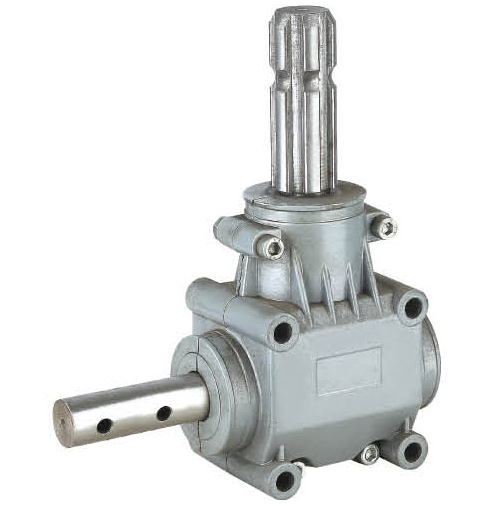
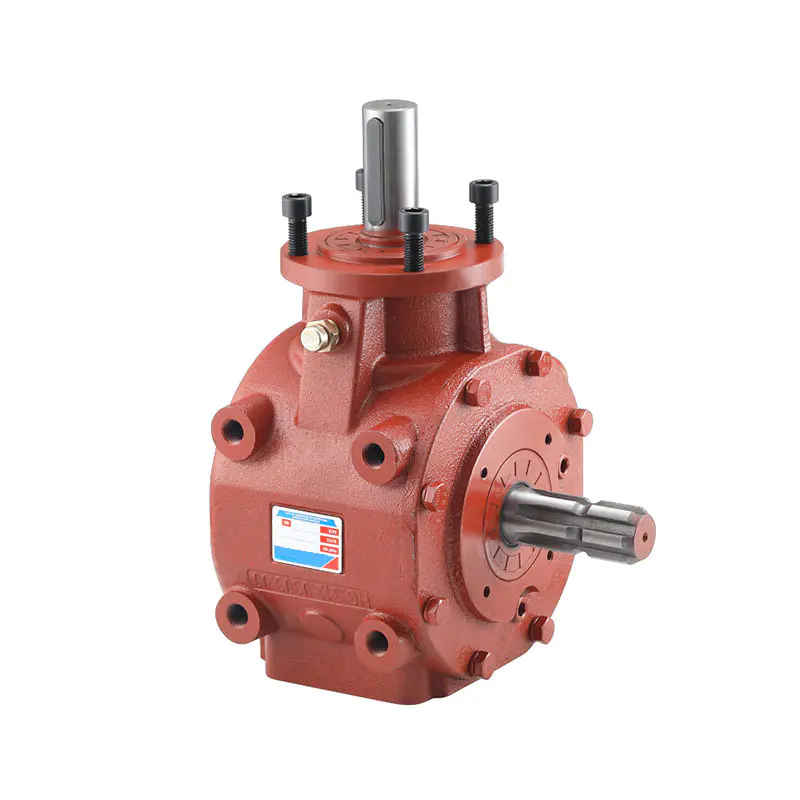
Most procurement conversations fixate on smartphone app ratings or fingerprint scan speed, but the component that truly dictates field reliability is the electromechanical actuator buried inside the lock body. A keyless deadbolt might authenticate perfectly, yet if the gear-motor cannot deliver consistent torque as battery voltage sags, the bolt will stall half-engaged—a dangerous failure state. High-quality gearboxes use multi-stage planetary or worm-drive configurations to amplify motor output while keeping the package slim enough for narrow-stile doors. Raydafon’s engineering library includes over 200 validated gearbox platforms, each tested for cold-start performance at -20°C and endurance in dusty, high-humidity chambers. That kind of validation eliminates the panic of sudden field returns.
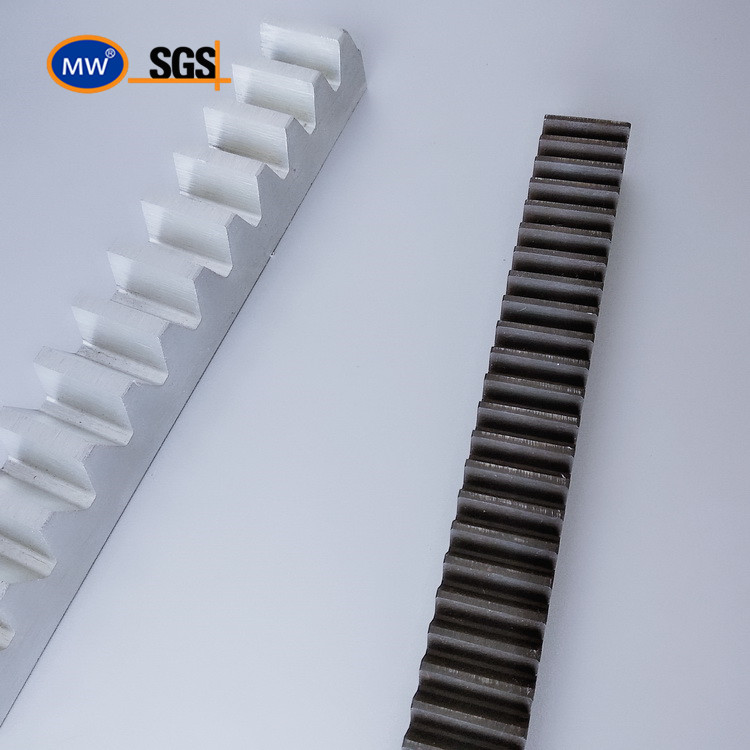
Below is a cutaway view of a typical keyless locking device gear train. The quality of the hobbed pinions and the concentricity of the output shaft directly influence how quietly and consistently the deadbolt throws over years of daily use.
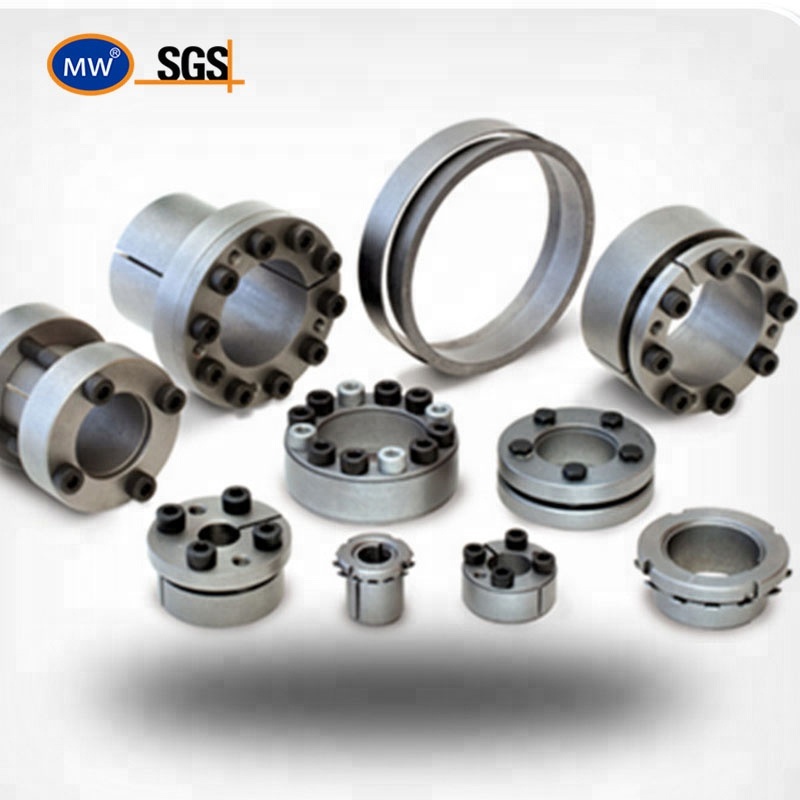
The image illustrates precisely machined components — the standard Raydafon applies to every OEM batch, ensuring that procurement managers receive identical performance from first article to 50,000th unit.
Pain point: A fast-growing smart-home brand struggled to offer a single product line because their design used three different gearbox footprints, bloating inventory and assembly complexity.
Solution: Specify a modular gear-motor platform that can be deployed across multiple lock form-factors (mortise, rim, and tubular) without retooling. This consolidation slashes SKU counts and simplifies after-sales service. Raydafon worked with one client to replace four disparate gearbox part numbers with a single 18 mm diameter planetary unit that could be tuned in output speed simply by swapping the final-stage ratio. The result: a 34% reduction in carrying cost and a unified torque signature that simplified firmware tuning.
| Lock Mechanism Style | Recommended Gearbox Type | Torque Window (mNm) | Best Suited Home Application |
|---|---|---|---|
| Smart deadbolt (retrofit) | Planetary DC motor | 300–600 | Front door, high usage |
| Mortise smart lock | Worm gear actuator | 500–1200 | Multi-point locking, villa |
| Rim/cylindrical lever | Slim spur gearhead | 200–400 | Bedroom, interior office |
| Smart padlock / gate lock | High-torque planetary | 600–1000 | Garden gate, storage unit |
Q1: Which keyless locking devices are best for home security when budget is tight but I still need a durable product for my retail customers?
A: Look for a keypad + RFID hybrid deadbolt with a proven brushed DC motor gearbox. This combination avoids costly biometric sensors while still offering a 100,000-cycle lifespan if the gear train is made of hardened steel. Avoid all-plastic gearboxes—they’re the silent profit killer in the value segment. We always advise buyers to ask for salt-spray test certificates and cycle-test reports before committing to a supplier. Raydafon’s economy-line gearbox series, for example, uses steel-reinforced polyoxymethylene (POM) gears only in low-load stages, preserving life without doubling the cost.
Q2: Which keyless locking devices are best for home security in rental properties where users change frequently?
A: Opt for a networked lock with temporary PIN management (Z-Wave or Zigbee) driven by a low-power planetary gear motor. The priority is battery life and simple re-keying via an app, not extreme biometric accuracy. The hidden requirement is that the gearbox must survive repeated clumsy deadbolt throws—tenants often force the handle before the motor retracts, creating shock loads. A gearhead with sintered steel planets and a robust output bearing will handle these abuses without stripping. When we consult with property-tech firms, Raydafon recommends a 400 mNm nominal torque head with a slip-clutch design that protects the geartrain during manual override.
What challenges do you face when sourcing keyless locking devices for residential projects? Share your experience or technical requirement in the comments; our engineering team frequently builds proof-of-concept samples for qualifying buyers who need a lock gearbox that delivers silent, maintenance-free operation for the life of the product.
As a specialized manufacturer of micro gearboxes for electronic locking systems, Raydafon Technology Group Co.,Limited (https://www.raydafon-gearbox.com) has been the silent force behind dozens of successful keyless lock launches. From initial 3D-printed prototypes to volume shipments, our ISO-certified factory provides gear motors that meet the durability, acoustic, and dimensional demands of modern home security devices. For bulk pricing, custom torque curves, or a no-obligation engineering consultation, reach our sales team at [email protected].
Makino, T. & Huang, Y., 2023, “Cycle-Life Modeling of Micro Planetary Gearheads in Residential Smart Locks”, Journal of Mechanical Design, Vol. 145, No. 2.
Fernandez, L., 2022, “Human-Factor Evaluation of Biometric Keyless Entry Systems for Multi-Generational Homes”, Ergonomics in Design, Vol. 30, No. 4.
Bauer, M. et al., 2021, “Side-Channel Attacks on Fingerprint-Enabled Deadbolts: A Hardware Perspective”, IEEE Transactions on Information Forensics and Security, Vol. 16.
Okafor, C. & Lim, S., 2020, “Low-Power Gear Motor Design for Zigbee-Connected Door Locks”, Sensors and Actuators A: Physical, Vol. 312.
Rosenthal, D., 2019, “Corrosion Mitigation Strategies in Coastal Residential Lock Installations”, Materials and Corrosion, Vol. 70, No. 9.
Kowalski, J. et al., 2023, “Comparative A-Weighted Noise Emissions of Spur vs. Worm Drive Door Actuators”, Applied Acoustics, Vol. 203.
Patel, R., 2021, “Thermal Performance of Smart Lock Electronics Under Direct Sunlight Exposure”, Building and Environment, Vol. 196.
Nguyen, P. & Andersson, G., 2018, “Reliability of Keyless Entry Deadbolts Subjected to Forced Manual Override”, Journal of Structural Integrity and Maintenance, Vol. 3, No. 2.
Harrison, L., 2022, “Supply Chain Optimization for IoT Lock Manufacturers: Reducing Gearbox Variants”, International Journal of Production Economics, Vol. 248.
da Costa, M. et al., 2020, “Hobbed Steel vs. Sintered Metal Gears in Battery-Powered Actuators: A Tribological Comparison”, Wear, Vol. 454-455.
Copyright © Raydafon Technology Group Co.,Limited All Rights Reserved.