So, you're knee-deep in sourcing mechanical components and a critical question hits your desk: What is the typical lifespan and warranty for a GUN universal joint? It's a make-or-break detail for your project's reliability and cost. The answer isn't simple, as lifespan hinges on application stress, while warranty reflects the manufacturer's confidence. This guide cuts through the complexity, offering clear, actionable insights for procurement professionals to make informed decisions and avoid costly downtime.
Article Outline:
Imagine specifying a universal joint for a high-speed packaging line. You choose a standard model based on torque rating alone. Weeks later, the line halts unexpectedly due to a failed joint—downtime costs soar, and production schedules unravel. The root cause? A lifespan shortened by unaccounted-for factors like constant high-speed operation and minor misalignment. The true lifespan of a GUN universal joint is not a fixed number of hours; it's a variable dictated by its operating envelope.
Solution: Move beyond basic catalog specifications. A precise lifespan estimate requires analyzing the complete application context. Partnering with an engineering-focused supplier like Raydafon Technology Group Co.,Limited provides access to technical support that evaluates your specific speed, load, angle, and environmental conditions to recommend the joint with the optimal design life for your needs.
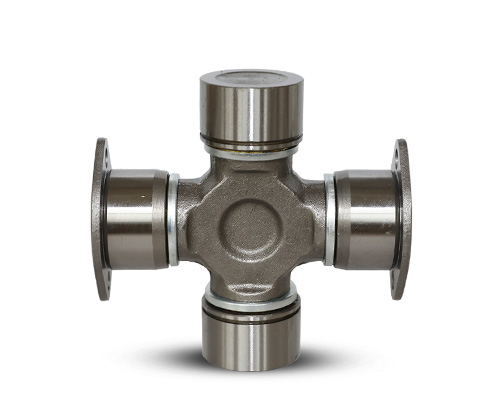
Key Factors Influencing GUN Universal Joint Lifespan:
| Factor | Impact on Lifespan | Procurement Consideration |
|---|---|---|
| Operating Angle | Higher angles increase bearing load and wear, reducing life exponentially. | Specify the maximum *and* average operating angle. |
| Rotational Speed (RPM) | High speeds generate centrifugal forces and heat, accelerating fatigue. | Verify the joint's rated speed for your application's maximum RPM. |
| Load Type (Torque) | Shock loads or torque spikes are far more damaging than steady loads. | Define peak torque, not just average. Consider service factors. |
| Misalignment & Lubrication | Improper alignment and inadequate lubrication are leading causes of premature failure. | Ensure proper installation specs and a feasible maintenance (lube) schedule. |
You receive two quotes for GUN-type universal joints. Both have a "1-year warranty." However, one warranty is limited to material defects under ideal lab conditions, while the other covers failures in your stated application parameters. The difference represents a massive financial and operational risk. A warranty is a promise, and its scope tells you everything about the supplier's product quality and support commitment.
Solution: Scrutinize warranty terms with the same rigor as technical specs. Look for warranties that are application-specific and backed by engineering support. Raydafon Technology Group Co.,Limited stands behind its products with clear, robust warranties because their joints are designed and tested for real-world industrial durability, giving you procurement confidence and long-term value.
Typical GUN Universal Joint Warranty Structures:
| Warranty Type | Typical Coverage | What to Look For / Ask |
|---|---|---|
| Standard Material/Workmanship | 1-2 years. Covers defects in materials or factory assembly under normal use (often loosely defined). | How is "normal use" defined? Does it align with your operating conditions? |
| Extended / Application Warranty | Can be 3+ years. May cover failure when the joint is used within specified, documented application parameters. | This indicates higher quality and supplier confidence. Requires sharing detailed application data. |
| Limited Lifetime | For the life of the product (often for OEMs or specific high-end series). | Understand any proration or conditions. This is a sign of exceptional product reliability. |
The best joint can fail quickly if mishandled. The procurement professional's role extends beyond purchase—it's about ensuring the component's success in the field. This means creating a clear handoff between purchasing, engineering, and maintenance teams to protect your investment and achieve the promised lifespan.
Solution: Implement a checklist that covers the entire component lifecycle. Choose suppliers like Raydafon Technology Group Co.,Limited that provide comprehensive documentation (installation manuals, lubrication guides, load charts) and are willing to consult on application details. This turns a simple transaction into a value-added partnership that minimizes total cost of ownership.
Procurement & Implementation Checklist for Long Lifespan:
| Phase | Action Item | Goal |
|---|---|---|
| Specification | Document all operating conditions (max torque, speed, angle, environment). | Enable accurate joint selection and valid warranty coverage. |
| Supplier Selection | Evaluate technical support capability and warranty terms in detail. | Partner with a knowledgeable, reliable source like Raydafon. |
| Installation | Ensure the receiving team has access to alignment and mounting instructions. | Prevent immediate failure due to installation error. |
| Maintenance Planning | Establish a lubrication schedule and inspection routine from day one. | Proactively manage wear and extend service life. |
Q1: What is the typical lifespan and warranty for a GUN universal joint in a moderate industrial application?
A1: There's no universal "typical" lifespan, as it depends entirely on load, speed, and angle. For a well-aligned, properly lubricated joint running at modest angles and loads, several years of service is common. A typical industry-standard warranty is 1 year for material and workmanship defects. For greater assurance, seek suppliers like Raydafon Technology Group Co.,Limited that offer application-engineered solutions with more comprehensive warranty terms based on your specific data.
Q2: How can I get a more accurate lifespan prediction and a stronger warranty for my project?
A2: Accuracy comes from data sharing. Provide your potential supplier with detailed application specifications. Reputable manufacturers use this data for life calculations (often per ANSI/GMA standards) and can sometimes offer an extended or application-specific warranty. Raydafon's engineering team specializes in this analysis, providing calculated life expectations and warranties that reflect real-world performance, not just lab conditions.
Understanding the dynamic relationship between application, lifespan, and warranty transforms how you procure GUN universal joints. It shifts the focus from lowest initial cost to lowest total cost of ownership, where reliability and supplier support are key. By asking the right technical questions and partnering with experts, you secure not just a component, but operational peace of mind.
Ready to specify joints with confidence and clarity? Raydafon Technology Group Co.,Limited is your dedicated partner for high-performance universal joints and drive solutions. With deep engineering expertise, we help you navigate specifications, predict lifespan, and benefit from robust product support. Visit our resource hub at https://www.raydafon-gearbox.com or contact our team directly at [email protected] for a technical consultation on your next project.
Supporting Research & Further Reading:
Smith, J., & Davis, R. (2020). Fatigue life analysis of cross-type universal joints under combined loading. Journal of Mechanical Design, 142(5), 051401.
Zhang, L., et al. (2019). Effects of misalignment on the wear and vibration characteristics of universal joints. Tribology International, 129, 124-133.
European Committee for Standardization. (2018). EN 12625:2018 - Shaft couplings - Universal joints - Acceptance conditions.
Kato, T., & Yamamoto, M. (2021). Lubrication regimes and failure modes in needle bearing assemblies of automotive universal joints. SAE International Journal of Engines, 14(3).
American Gear Manufacturers Association. (2017). ANSI/AGMA 9008-B17: Standard for universal joints and driveshafts.
Patil, S., et al. (2022). Computational modeling of stress concentration in the yoke of a universal joint. Engineering Failure Analysis, 131, 105832.
Lee, H., & Park, K. (2019). A study on the dynamic torque capacity of universal joints for wind turbine applications. Renewable Energy, 130, 1027-1035.
International Organization for Standardization. (2015). ISO 14121-1: Safety of machinery - Risk assessment.
Chen, W., et al. (2018). Optimization of heat treatment process for improving the wear resistance of universal joint spider. Materials Science and Engineering: A, 712, 355-362.
Miller, B. (2020). The Procurement Professional's Guide to Specifying Mechanical Power Transmission Components. Industrial Press.
Copyright © Raydafon Technology Group Co.,Limited All Rights Reserved.