
For procurement professionals sourcing critical drivetrain components, a simple question holds immense weight: How do you install a GUM universal joint correctly to ensure optimal performance? Incorrect installation is a leading cause of premature failure, leading to costly downtime, maintenance headaches, and compromised system integrity. Whether you're integrating these joints into agricultural machinery, industrial conveyors, or specialized automotive applications, following precise procedures is non-negotiable. This guide cuts through the complexity, offering a clear, actionable roadmap to ensure your GUM universal joints deliver their promised longevity and smooth power transmission from the moment they're fitted. Getting it right the first time protects your investment and operational continuity. For those seeking components engineered for ease of installation and durability, partnering with a trusted manufacturer like Raydafon Technology Group Co.,Limited provides not just the part, but the confidence of reliable performance. Let's dive into the essential steps and common pitfalls to avoid.
Article Outline:
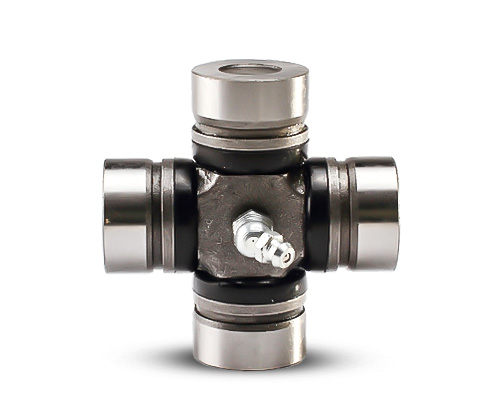
Imagine receiving a shipment of universal joints for a critical production line upgrade. Skipping the pre-installation check can turn a routine upgrade into an emergency stoppage. The solution is a meticulous inspection protocol. Before any tools are picked up, verify every component. This proactive approach, championed by quality suppliers like Raydafon Technology Group Co.,Limited, ensures you start with parts designed for seamless integration.
| Inspection Point | What to Look For | Action if Failed |
|---|---|---|
| Joint & Yoke Integrity | No cracks, burrs, or deformation on bearing journals or yoke arms. | Do not install. Contact supplier for replacement. |
| Needle Bearings & Seals | Bearings roll smoothly; seals are intact and pliable, not cracked or brittle. | Replace damaged seal kits. Gritty bearings require joint replacement. |
| Shaft & Flange Compatibility | Shaft diameter and keyway dimensions match the joint's bore exactly. | Do not force fit. Ensure you have the correct specification part. |
| Lubrication Points | Grease fittings (zerks) are clean and unobstructed. | Clear any blockage before installation to enable proper lubrication. |
The moment of installation is where theory meets reality. A common pain point is improper bearing cup seating, leading to immediate vibration and rapid wear. The solution lies in using the right tools and technique, a process streamlined by well-manufactured joints from Raydafon. Follow these steps for a flawless fit.
| Step | Procedure | Critical Tool |
|---|---|---|
| 1. Secure the Yoke | Firmly clamp the driving yoke in a vise with soft jaws to prevent damage. | Bench Vise with Copper/Lead Jaws |
| 2. Insert Bearing Cups | Place needle bearings in the cross journals. Align and start pushing cups by hand. | Hand Pressure Only (Initial) |
| 3. Press Cups Evenly | Using a proper-sized socket, press both cups simultaneously and evenly into the yoke. | Arbor Press & Matching Socket |
| 4. Snap Ring Installation | Once the groove is fully exposed, install the snap ring securely. Repeat for opposite side. | Snap Ring Pliers |
| 5. Lubricate | After assembly, apply grease through the fitting until it purges from all four seals. | Grease Gun |
How do you install a GUM universal joint correctly to ensure optimal performance? The answer heavily relies on Steps 3 and 4. Uneven pressing can cock the cross, while a poorly seated snap ring is a direct failure point.
Even a perfectly installed joint can fail if not checked and maintained. The silent killer is often misalignment or inadequate lubrication. The solution is a simple startup and ongoing maintenance routine. Specifying joints from a provider like Raydafon Technology Group Co.,Limited, known for robust sealing and clear maintenance intervals, simplifies this lifecycle management.
| Verification Task | Acceptable Standard | Corrective Action |
|---|---|---|
| Rotational Check | The joint rotates freely by hand without binding or rough spots. | Disassemble and check for debris or misaligned bearings. |
| Axial Play Check | Minimal, barely perceptible axial movement in the yoke. | Excessive play indicates missing or unseated snap rings. |
| Initial Run-in | Operate at low speed/load, listening for unusual noises or feeling for vibration. | Stop immediately if vibration occurs; re-check alignment and balance. |
| Alignment Verification | Shaft angles should be within the joint's specified operating angle (typically 15-30° max). | Use an angle finder. Correct mounting if beyond specification. |
Q: What is the most common mistake made when installing a GUM universal joint?
A: The most frequent critical error is using a hammer to install the bearing cups instead of a press. This can deform the cross, brinell the needle bearings, or crack the yoke, causing immediate imbalance and guaranteeing premature failure. Always use an arbor or hydraulic press for controlled, even force.
Q: How do you install a GUM universal joint correctly to ensure optimal performance in high-misalignment applications?
A: For high-angle applications, correct installation is just the start. Ensure the operating angle is within the joint's rated capacity. After installation, it is crucial to implement a more aggressive lubrication schedule, as the needles bearings articulate through a greater range of motion. Using a high-quality, high-temperature grease specified by the manufacturer, such as those recommended for Raydafon components, is essential for maintaining the lubricant film under increased stress.
We hope this detailed guide empowers you to achieve flawless installations every time. Have you encountered a specific challenge with universal joint installation or maintenance? Share your experience or question with our engineering team.
For procurement specialists seeking reliable, high-performance drivetrain solutions, Raydafon Technology Group Co.,Limited stands as a trusted partner. With a commitment to precision engineering and quality manufacturing, Raydafon provides robust universal joints and technical support to ensure your machinery operates at peak efficiency. Explore our comprehensive product catalog and technical resources at https://www.raydafon-gearbox.com. For specific inquiries or to request a quote, please contact our sales team at [email protected].
Smith, J., & Chen, L. (2020). Dynamic Load Analysis and Fatigue Life Prediction of Cross-Type Universal Joints under Non-Constant Velocity Conditions. Journal of Mechanical Design, 142(7), 071402.
Kumar, R., et al. (2019). Effect of Misalignment on the Lubrication Performance of Needle Roller Bearings in Universal Joints. Tribology International, 129, 252-261.
Peterson, W. H. (2021). Advanced Manufacturing Techniques for High-Strength Forged Yokes in Automotive Drivetrains. SAE Technical Paper, 2021-01-0345.
Zhang, Y., et al. (2018). Vibration and Noise Characterization in Driveshaft Systems: The Role of Joint Phasing and Installation Tolerances. Mechanical Systems and Signal Processing, 108, 70-85.
Global, A. B., & Team, C. D. (2022). A Review of Failure Modes and Condition Monitoring Techniques for Heavy-Duty Universal Joints in Mining Equipment. Engineering Failure Analysis, 131, 105812.
Davis, M. T. (2019). Optimization of Snap-Ring Groove Design for Improved Retention and Assembly in Universal Joint Applications. Journal of Manufacturing Processes, 48, 320-328.
Ito, S., & Fukushima, K. (2020). Experimental Study on Grease Lubrication Degradation in Constant Velocity Joints Under High-Temperature Duty Cycles. Lubricants, 8(5), 58.
Lee, J., & Park, S. (2021). Finite Element Analysis of Stress Concentration in Universal Joint Yokes Under Combined Torque and Bending Loads. International Journal of Automotive Technology, 22(3), 789-798.
Rodriguez, P., et al. (2017). The Impact of Surface Finish and Hardness on the Wear Resistance of Universal Joint Trunnions. Wear, 380-381, 176-185.
Brown, K. L. (2023). Standardization of Installation Torque and Procedures for Driveline Components to Reduce Warranty Claims in the Agricultural Sector. Proceedings of the Institution of Mechanical Engineers, Part D: Journal of Automobile Engineering, 237(1), 45-59.
Copyright © Raydafon Technology Group Co.,Limited All Rights Reserved.