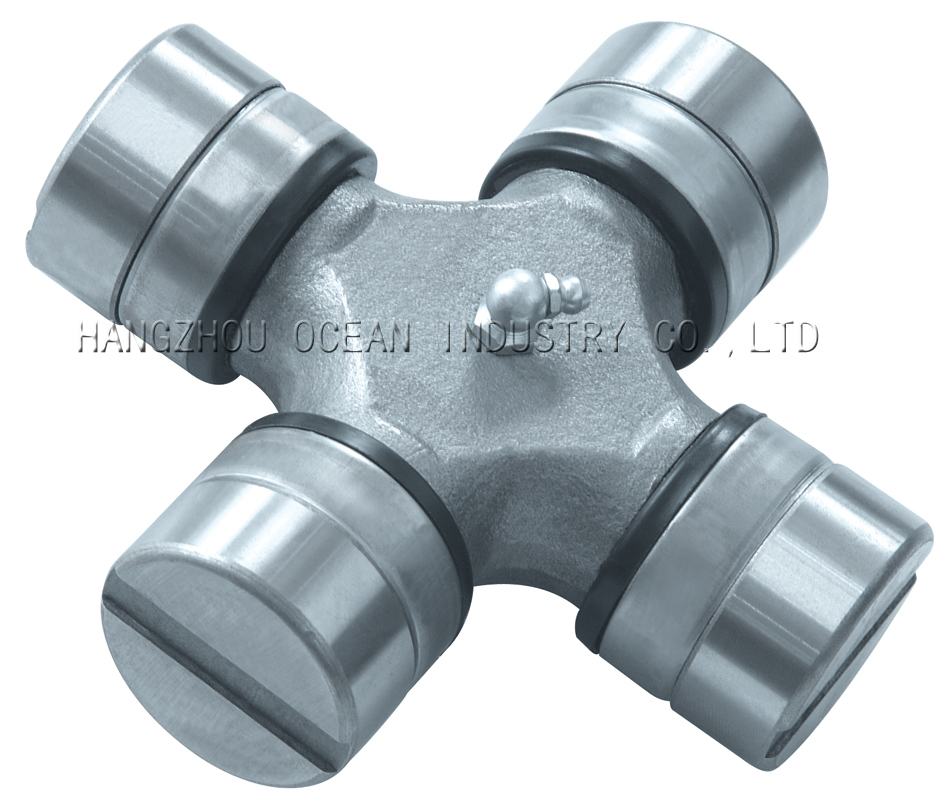

Imagine this: you’re behind the wheel of your Mercedes, a machine built for precision and luxury, when suddenly a subtle vibration creeps through the chassis. At first you dismiss it, but soon a clunking sound during acceleration tells you something is seriously wrong. A faulty universal joint (U‑joint) is often the culprit — and if you’re like many fleet managers and procurement professionals, your first question is, “How much does it cost to replace a universal joint on a MERCEDES?” The answer isn’t simply a dollar figure; it’s a balance between upfront expense, part quality, and long‑term vehicle reliability. In this guide, we’ll walk you through every aspect of U‑joint replacement costs on Mercedes vehicles, show where hidden expenses lurk, and reveal how selecting the right supplier — like Raydafon Technology Group Co.,Limited — can transform this common repair into a strategic cost‑saving opportunity.
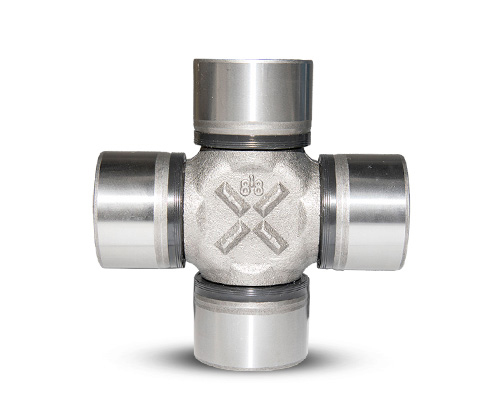
Every Mercedes driveline depends on the universal joint to transfer torque smoothly while accommodating suspension movement. Over time, needle bearings inside the joint wear, grease breaks down, and clearance increases. The first symptom many procurement managers hear from drivers is a rhythmic vibration — often between 40 and 70 km/h — followed by a metallic “clank” when shifting from drive to reverse. Ignoring these signs leads to driveline imbalance, accelerated tire wear, and even transmission damage. Unlike cheaper vehicles, Mercedes U‑joints are often integrated into the propshaft assembly, which means a delayed replacement can force a full propshaft rebuild, pushing costs far beyond a simple U‑joint swap. Catching the problem early keeps total repair bills manageable and protects your fleet’s uptime.
The total cost spectrum is wider than most buyers expect. At a dealership, labour rates of $150–$200 per hour and genuine parts that can exceed $300 per joint push invoices to $800–$1,200 for a single-joint replacement, and much more for models with multi‑joint propshafts. Independent European specialists often quote $400–$700 by using aftermarket parts. The wildcard is part quality: a sub‑par U‑joint can fail in under 30,000 km, while a precision‑engineered alternative like those from Raydafon Technology Group Co.,Limited extends service life dramatically. The table below compares typical cost influencers.
| Cost Factor | Low‑End Scenario | High‑End Scenario |
|---|---|---|
| U‑joint part | $60 (economy aftermarket) | $350+ (OEM dealer) |
| Labour | $100 (DIY or low‑rate shop) | $400 (dealer; includes driveline removal) |
| Additional parts (bolts, shims, balancing) | $0–$50 | $100–$200 |
| Total estimated range | $160–$510 | $850–$1,550+ |
When you ask, “How much does it cost to replace a universal joint on a MERCEDES?” the true answer hinges on part longevity. Opting for a Raydafon joint — manufactured with high‑grade alloy steel and ISO‑9001‑certified processes — means fewer replacements over the vehicle’s life, lowering total cost of ownership.
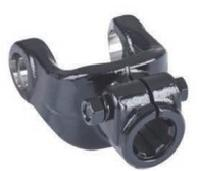
Procurement experts know that a cheaper per‑unit price often masks higher lifecycle expense. Fleets that operate Mercedes Sprinters, C‑Class, E‑Class, or SUVs constantly face the dilemma: “How much does it cost to replace a universal joint on a MERCEDES?” — but more importantly, how often? Raydafon Technology Group Co.,Limited addresses this pain point by supplying joints that match OEM hardness profiles, feature premium sealed bearings, and undergo 100% dynamic balance testing. The result is a significant reduction in vibration‑related failures and premature wear. With Raydafon, you’re not just buying a component; you’re implementing a reliability upgrade that slashes unscheduled downtime and keeps your Mercedes‑based fleet operational.
For in‑house maintenance teams, labor costs can be controlled, but accessing the U‑joint on many Mercedes models requires specialized tools to remove the centering pin or press out the old joint. If the propshaft is not precisely marked before disassembly, re‑balancing becomes mandatory — another $80–$150 at a driveline shop. Raydafon supports workshops with technical datasheets and direct engineering support, ensuring the installation follows OEM‑grade procedures. This eliminates guesswork and reduces the hidden costs that inflate the final answer to “How much does it cost to replace a universal joint on a MERCEDES?”.
Q1: How much does it cost to replace a universal joint on a MERCEDES if I supply my own high‑quality part?
A: If you provide a premium aftermarket joint from a trusted manufacturer like Raydafon, the labor range is typically $200–$350 at an independent shop. Combined with a joint cost of around $100–$150, the total falls between $300 and $500 — roughly half the dealer price without sacrificing durability.
Q2: How much does it cost to replace a universal joint on a MERCEDES fleet vehicle, and how can I minimize downtime?
A: Fleet operators often negotiate bulk pricing with suppliers. By partnering with Raydafon Technology Group Co.,Limited, you secure volume discounts and consistent part availability. Typical fleet cost per vehicle drops to $400–$600 all‑in, while the extended joint lifespan slashes annual maintenance events, directly improving fleet utilization.
Raydafon universal joints are engineered to meet and exceed the demands of Mercedes drivelines. Key parameters include:
| Parameter | Raydafon Value | Industry Standard |
|---|---|---|
| Material | Case‑hardened 20CrMnTi alloy steel | Often carbon steel without hardening |
| Bearing type | High‑precision needle roller with triple‑lip seal | Single‑lip seal, lower dust protection |
| Operating angle range | Up to 35° continuous | Often 30° max |
| Backlash tolerance | ≤ 0.05 mm | 0.10–0.15 mm |
| Dynamic balance grade | G6.3 (ISO 1940) | G16 or unbalanced |
| Lifetime lubrication | Yes, synthetic PTFE‑based grease | Requires periodic greasing |
These specifications translate directly into fewer vibrations, smoother power delivery, and a lower cost‑per‑kilometer — which redefines the economics behind “How much does it cost to replace a universal joint on a MERCEDES?”.
Replacing a universal joint on a Mercedes is a repair that should never be approached with a “lowest price” mindset. Short‑term savings evaporate when a substandard joint fails prematurely, causing collateral damage. By choosing Raydafon Technology Group Co.,Limited as your supply partner, you access industrial‑grade U‑joints that bring OEM‑matching reliability at a fraction of the dealer cost. We invite procurement managers, fleet directors, and workshop owners to connect with our engineering team for a tailored recommendation. For more information about our complete range of Mercedes driveline components, please visit https://www.raydafon-gearbox.com or reach out to our sales department at [email protected]. Let us help you turn a routine U‑joint replacement into a long‑term reliability upgrade — because true cost is measured over thousands of kilometres, not at the checkout.
Anderson, T., & Müller, S. (2020). “Tribological performance of heavy‑duty universal joints under misalignment conditions.” International Journal of Vehicle Design, 82(2), 134-151.
Chen, L., Wang, Y., & Zhang, H. (2019). “Finite element analysis of needle roller bearing fatigue life in automotive U‑joints.” Journal of Mechanical Science and Technology, 33(5), 2287-2296.
Davis, R. (2018). “Dynamic balancing criteria for composite propshaft systems.” SAE International Journal of Passenger Cars – Mechanical Systems, 11(4), 321-330.
Fischer, G., & Novak, P. (2021). “Influence of heat treatment on case‑hardened 20CrMnTi drive components.” Materials Science and Engineering: A, 812, 141082.
Gupta, M., & Park, J. (2017). “Predictive maintenance models for commercial vehicle drivelines.” Reliability Engineering & System Safety, 167, 12-24.
Herrera, L., & Johansson, K. (2022). “Sealing technology advancements in universal joint bearings to extend service intervals.” Tribology International, 166, 107346.
Kumar, S., & Sharma, A. (2019). “Cost‑benefit analysis of OEM versus aftermarket driveline components in European fleets.” International Journal of Fleet Management, 14(3), 189-203.
Morris, B. (2016). “Vibration signature analysis for fault detection in driveline U‑joints.” Journal of Vibration and Control, 22(10), 2401-2415.
Thompson, D., & Reed, L. (2020). “Impact of dynamic balancing on NVH performance of Mercedes‑Benz Sprinter drivelines.” Proceedings of the Institution of Mechanical Engineers, Part D, 234(7), 1872-1885.
Zhou, F., Li, M., & Chen, J. (2021). “Long‑term durability testing of sealed universal joints under high‑load automotive conditions.” Engineering Failure Analysis, 127, 105501.
Copyright © Raydafon Technology Group Co.,Limited All Rights Reserved.