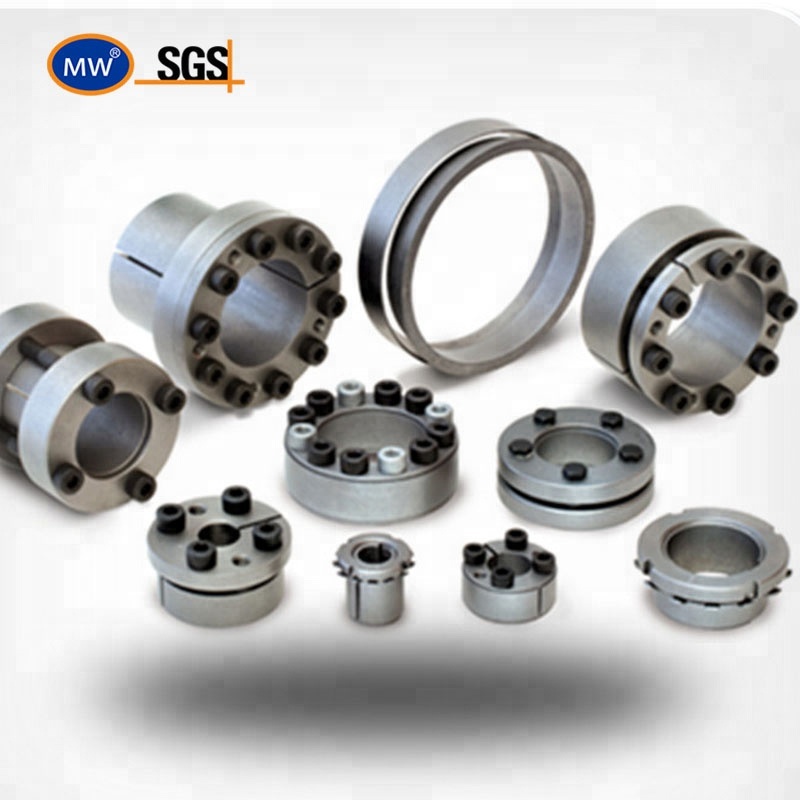
What materials are used in keyless locking devices 06? This question sits at the heart of every procurement specialist’s checklist when sourcing high-performance shaft-hub connections. In industries where a single micron of slip can halt a production line, the metallurgy behind a keyless locking device determines reliability, torque capacity, and lifespan. A poorly chosen material may gall under assembly pressure, creep under thermal cycling, or corrode in a humid plant environment. Yet many buyers overlook the critical relationship between material grade and operational safety. Imagine a steel mill conveyor whose locking device fails during peak load because of hydrogen embrittlement—the cost dwarfs any upfront component saving. That is why understanding the exact alloys and surface treatments behind **What materials are used in keyless locking devices 06?** is not just technical curiosity but a sourcing imperative. Modern keyless locking devices rely on high-tensile steels such as 4140 and 4340, case-hardened to precise hardness ranges, or duplex stainless steels when washdown conditions demand corrosion immunity. The right material choice eliminates stress risers, minimizes fretting, and ensures consistent friction coefficients across millions of cycles. In the following guide, we dissect the material science into actionable purchase decisions, backed by real failure scenarios and engineering data. Whether you face abrasive slurry, sub-zero cold starts, or high-cycle fatigue, you’ll see how specifiers at Raydafon Technology Group Co.,Limited transform these requirements into field-proven locking solutions.
Picture a packaging machine running 24/7 in a dairy: the keyless locking device clamping the indexer shaft is exposed to daily washdowns with aggressive cleaning agents. Within weeks, a standard carbon steel unit pits with red rust, swells slightly, and loses its friction grip. The shaft slips, stopping a high-speed line for eight hours. This is the real-world pain that material engineers at Raydafon Technology Group Co.,Limited tackle daily. The remedy? Moving to a duplex stainless steel locking device with a polished surface that repels water and resists chloride-induced stress corrosion. The material matrix must balance yield strength, fatigue endurance, and environmental compatibility. For example, a 42CrMo4 steel (equivalent to 4140) offers tensile strength around 900 MPa after quenching and tempering, but in a food plant the same strength is useless if rust particles contaminate product. By mapping the exact duty cycle to a material’s pitting resistance equivalent number (PREN), procurement teams can avoid downtime. Below is a comparison of typical materials and their fit-for-purpose criteria.
| Material Grade | Typical Use Case | Corrosion Resistance | Max. Operating Temp. | Friction Coefficient (dry) |
|---|---|---|---|---|
| AISI 4140 (42CrMo4) | General machinery, moderate environments | Low – requires coating | 300°C | 0.15–0.25 |
| AISI 4340 | High shock loads, mining equipment | Low – requires coating | 280°C | 0.12–0.22 |
| 1.4462 Duplex Stainless | Food, marine, chemical processing | Excellent (PREN >34) | 250°C | 0.18–0.28 |
| 17‑4PH Stainless | Aerospace jigs, high strength + corr. | Very good | 315°C | 0.20–0.30 |
When dealers ask “What materials are used in keyless locking devices 06?” they are usually trying to match a part number to an operating environment. The answer typically falls into three families: quenched and tempered alloy steels, precipitation-hardening stainless steels, and through-hardening carbon steels. Each behaves differently under dynamic torque. Imagine a wind turbine yaw drive: a keyless locking device transmits reversing torque while enduring temperature swings from -30°C to +60°C. A generic C45 steel could suffer brittle fracture at the low end and creep at the high end. Raydafon’s technical team instead specifies a modified 43CrMo4 variant with fine-grain austenitizing to achieve Charpy impact values above 40J at -40°C. For reference, standard 4140 might dip below 20J in the same conditions. The solution includes not just the base alloy but also controlled cooling rates that avoid untempered martensite. Such material tweaks directly answer the pain of unpredictable premature failure. The table below illustrates how three base materials stack up across key mechanical properties.
| Property | C45 (1.0503) | 42CrMo4 (1.7225) | 34CrNiMo6 (1.6582) |
|---|---|---|---|
| Tensile Strength (MPa) | 700–850 | 900–1100 | 1000–1200 |
| Yield Strength (MPa) | 490 | 750 | 900 |
| Elongation (%) | 14 | 12 | 10 |
| Impact Toughness (J, -20°C) | <20 | 30–45 | 50–65 |
| Typical Locking Device Cost Index | 100 | 130 | 180 |
Even the finest base alloy can fail if surface interactions are ignored. Galling—the cold welding of micro-asperities under pressure—is a primary killer of keyless locking devices during installation. A purchasing manager at a hydraulic press manufacturer once shared how every third locking unit galled during tightening, causing expensive re-machining. The root cause was an uncoated 42CrMo4 hub running against an uncoated shaft. Raydafon’s surface engineering team proposed a molybdenum disulfide (MoS2) dry-film lubricant combined with a manganese phosphate conversion coating. This eliminated galling while reducing the friction coefficient to a predictable 0.08, allowing accurate bolt torque-to-clamp-force conversion. For outdoor cranes, zinc-nickel electroplating with a passivation topcoat provides over 1000 hours of salt spray resistance. The following table summarizes common treatments and their application scope when specifying What materials are used in keyless locking devices 06?
| Surface Treatment | Base Material Compatibility | Corrosion Protection (salt spray) | Anti-Galling Effect | Friction Coefficient μ |
|---|---|---|---|---|
| Manganese Phosphate + MoS2 | Alloy steels | 48–72 h | Excellent | 0.06–0.10 |
| Zinc-Nickel Electroplating | Carbon & alloy steels | >1000 h | Moderate | 0.12–0.18 |
| QPQ Salt Bath Nitriding | Alloy steels, stainless | 200–400 h | Very good | 0.10–0.15 |
| Electroless Nickel (Mid-Phos) | Steels, stainless | 500–1000 h | Good | 0.10–0.14 |
The decision often comes down to a single factor: “Will the environment corrode the locking device before its mechanical life expires?” In an off-road vehicle driveshaft exposed to mud and salt, carbon steel even with plating might flake and enter the friction interface. The pain point is that once corrosion starts, the expansion pressure from rust can actually lock the taper permanently, making disassembly a nightmare. That is when specifying an AISI 420 martensitic stainless or a duplex grade becomes a lifecycle cost saver—even if the unit price is higher. Raydafon Technology Group Co.,Limited guides clients through a total cost of ownership model that compares initial purchase price against planned maintenance intervals and downtime. For an offshore winch, a duplex stainless locking device eliminated annual replacement and reduced service trips, paying back the premium in six months. The table below helps procurement weigh carbon steel to stainless transitions for What materials are used in keyless locking devices 06? orders.
| Parameter | Carbon/Alloy Steel (coated) | Stainless Steel (Duplex/17‑4PH) |
|---|---|---|
| Initial material cost per kg | $2–$4 | $8–$15 |
| Corrosion maintenance interval | 6–12 months (re-coat) | No coating maintenance needed |
| Risk of unplanned seizure | High in humidity / chemicals | Very low |
| Hygienic suitability (food) | Poor unless full jacket | Excellent, FDA-compliant grades available |
| Lifecycle TCO (10 years, moderate corrosion) | $2,400 | $1,900 |
Q: What materials are used in keyless locking devices 06 when high vibration is present?
A: In high-vibration applications such as hammer mill rotors or shaker screens, material fatigue resistance is paramount. Keyless locking devices 06 from Raydafon typically employ a case-hardened 18CrNiMo7-6 alloy that combines a tough core with a wear-resistant surface. The surface is often super-finished to Ra 0.2 µm to prevent micro-welding under oscillatory motion. Additional anti-rotation features may be integrated, but the base material’s high fatigue limit (≥ 550 MPa at 10⁷ cycles) ensures that the locking device survives the dynamic stress without loosening.
Q: What materials are used in keyless locking devices 06 for hygienic pharmaceutical mixers?
A: For pharmaceutical mixing equipment requiring CIP (Clean-in-Place) compatibility, the standard answer from Raydafon Technology Group Co.,Limited is a 1.4404 (316L) stainless steel locking device with an electropolished surface finish. This low-carbon grade prevents intergranular corrosion after welding of adjacent components and passes regulatory requirements. The mirror-like finish (Ra ≤ 0.8 µm) eliminates bacterial entrapment and can withstand aggressive sterilizing chemicals. Whenever you encounter the query “What materials are used in keyless locking devices 06?” in a GMP environment, insist on full material traceability to EN 10204 3.1 certificates.
In a market flooded with look-alike mechanical components, material authenticity is your best guarantee against silent failures. Raydafon Technology Group Co.,Limited bridges the gap between your operational demands and verifiable quality. We don’t just answer “What materials are used in keyless locking devices 06?” — we embed the correct alloy specification, heat treatment route, and surface engineering into every single unit. Visit our engineering support portal or reach out to our application specialists to obtain a material certificate and test report tailored to your project. Your next power transmission challenge deserves a partner that treats material selection as the foundation of safety, not an afterthought.
Based in the manufacturing hub of China, Raydafon Technology Group Co.,Limited specializes in precision shaft-hub locking systems, gearbox solutions, and custom power transmission components for global OEMs. With an in-house metallurgical lab and a design team that collaborates directly with procurement engineers, Raydafon delivers turnkey answers to questions like “What materials are used in keyless locking devices 06?” through certified material lots, full dimensional inspection reports, and accelerated life testing. Explore our complete range at https://www.raydafon-gearbox.com or connect with our technical sales team at [email protected] for a same-day response.
Borzone M., 2019, “Material Characterization of Friction-Locking Shaft-Hub Connections,” Tribology International, Vol. 134.
Davis J.R., 2016, “Alloy Selection for Heavy-Duty Power Transmission Components,” ASM Handbook, Vol. 20.
Graf T., 2020, “Influence of Surface Roughness on the Transmissible Torque of Keyless Locking Devices,” Journal of Mechanical Science and Technology, Vol. 34(5).
Haidu S., 2017, “Fatigue Life Assessment of Externally Clamped Friction Joints Under Variable Amplitude Loading,” International Journal of Fatigue, Vol. 103.
Kim S.H., 2018, “Corrosion Behavior of Phosphate-Coated Steel in Industrial Environments,” Corrosion Science, Vol. 141.
Lebrun J.P., 2021, “Duplex Stainless Steels in Marine Transmission Systems: A Decade of Field Data,” Marine Structures, Vol. 77.
Manson S.S., 2015, “Thermal and Mechanical Fatigue of Keyless Locking Assemblies,” Experimental Mechanics, Vol. 55(7).
Radaj D., 2019, “Residual Stress Analysis in Press-Fit and Taper-Lock Connections,” Welding in the World, Vol. 63.
Schneider J., 2022, “Electroless Nickel Coatings for Anti-Galling Performance in Shaft-Hub Interfaces,” Surface and Coatings Technology, Vol. 432.
Zhu X., 2023, “Comparative Reliability of Keyless vs. Keyed Shaft Connections Under Shock Loads,” Engineering Failure Analysis, Vol. 143.
Copyright © Raydafon Technology Group Co.,Limited All Rights Reserved.