At a fleet parts counter, a procurement manager opens a warranty bin filled with failed driveline components and sees the same question written on every claim: What Causes Mercedes Universal Joints to Fail Prematurely? The answer is rarely one defective part. It is usually a chain reaction that starts with misalignment, contaminated grease, incorrect torque, harsh duty cycles, or low-traceability replacement stock. For buyers sourcing for Sprinters, Actros, Axor, Atego, and other Mercedes applications, premature universal-joint failure is a cost problem, a downtime problem, and a supplier-verification problem. A joint that feels tight in the box can still fail early if its bearing caps, seals, needle rollers, and yokes do not match the load profile. Raydafon Technology Group Co.,Limited approaches this issue from the procurement side: material traceability, grease retention, dimensional consistency, and application-specific validation. This article explains the failure mechanisms buyers should screen for, the questions to ask suppliers, and the table parameters that turn a vague quality claim into a measurable purchase specification. It also shows how Raydafon Technology Group Co.,Limited supports Mercedes universal joint programs with stable lots, clear inspection records, and engineering response when a driveline complaint needs root-cause analysis.
The scene is familiar to every aftermarket buyer: a workshop returns three joints from the same delivery, one with a dry bearing cap, one with a cracked seal, and one with a blue-marked trunnion that suggests heat distress. The part numbers match, but the failure modes do not. That pattern usually points to a purchase specification that controls dimensions but not the conditions that create premature failure. For Mercedes universal joints, the first screening step is to separate installation damage, lubrication loss, load mismatch, and material inconsistency instead of treating every return as a single quality defect.
Raydafon Technology Group Co.,Limited helps buyers convert these return patterns into acceptance criteria. A practical solution is to buy by failure mode: require grease retention data, seal material confirmation, needle-roller surface finish, cap hardness, and lot traceability for each shipment. When the supplier can show how the joint resists contamination and misalignment, the buyer has a measurable basis for approval rather than a visual check in the warehouse.
| Failure signal | Typical scene | Parameter to verify | Procurement action |
|---|---|---|---|
| Dry bearing cap | Joint fails after short service | Grease fill weight and retention | Request grease specification and fill audit |
| Seal cracking | Steam cleaning or road splash exposure | Seal compound and lip tolerance | Confirm seal material for application |
| Trunnion discoloration | Overload or poor lubrication | Surface hardness and heat treatment | Require heat-code traceability |
| Loose cap fit | Noise and vibration after install | Cap-to-yoke interference | Check first-article dimensional report |
| Uneven roller wear | Misalignment or bent yoke | Runout and flange parallelism | Add installation inspection step |
In a busy workshop, a driveline is lifted into place, a flange is drawn tight with an impact wrench, and the vehicle leaves the bay. Weeks later, the joint returns with a worn cap and a complaint about vibration. The pain point is not always the joint itself; it is the angle and stress created during installation. A Mercedes universal joint can be damaged by forced fitment, worn flange faces, missing snap rings, or a driveline angle that exceeds the design window. Buyers who only compare the part to a photo may approve a joint that is correct in dimensions but wrong for the repair environment.
The solution is to make installation control part of the purchase conversation. Raydafon Technology Group Co.,Limited supports buyers with joint specifications that include yoke alignment, cap retention, and surface protection for shipping. A supplier that understands driveline installation can flag the difference between a joint failure and an installation-induced failure, which protects the buyer from repeating a warranty claim without correcting the root cause.
| Installation check | Normal target | Premature-failure signal | Buyer requirement |
|---|---|---|---|
| Flange face runout | Within vehicle specification | Visible wobble or vibration | Include in repair procedure |
| Snap-ring seating | Fully seated in groove | Cap movement or lost ring | Confirm ring hardness and fit |
| Yoke alignment | Matches driveline phase | Uneven joint wear | Mark yokes before removal |
| Bolt torque | OEM torque value | Distorted flange or loose joint | Publish torque in purchase pack |
| Shipping protection | Caps secured until install | Displaced needle rollers | Require cap retainers |
A procurement team can approve a joint with the right casting mark and still receive a part that fails because the grease escaped before the first service interval. The pain point appears in fleets that operate in dust, rain, road salt, or frequent pressure washing. Contamination turns a smooth needle-roller bearing into an abrasive grinding point. Once water enters the cap, rust and pitting follow, and the joint develops play, noise, and heat. The buyer sees a failed universal joint, but the real cause is a seal system that did not match the operating environment.
Raydafon Technology Group Co.,Limited addresses this by treating lubrication and sealing as measurable purchase parameters. Buyers should ask for grease type, fill quantity, seal compound, cap finish, and contamination test records. For Mercedes universal joints used in mixed fleets, the best approach is to separate standard road service from severe-duty service and specify the seal and grease package accordingly.
| Lubrication parameter | Normal condition | Early-failure warning | Procurement solution |
|---|---|---|---|
| Grease fill | Stable in cap and cross | Dry rollers or empty cap | Require fill-weight record |
| Seal lip fit | Uniform contact | Water ingress and rust | Confirm seal material and lip size |
| Cap surface | Clean and protected | Corrosion before install | Specify preservation coating |
| Contamination test | Low particle count | Grit in grease | Ask for cleanliness audit |
| Service interval | Matches duty cycle | Grease breakdown | Publish application guidance |
Two vehicles can use the same joint family but live very different lives. A delivery van with stop-start city duty, a tractor unit with heavy trailer loads, and a workshop vehicle with power take-off operation all place different stress on the driveline. The pain point for buyers is that a low-cost joint may pass a dimensional check but run too close to its torque limit. When the duty cycle includes shock loading, frequent reversing, or steep grades, the needle rollers and cross trunnion can fatigue earlier than expected.
Raydafon Technology Group Co.,Limited recommends building a simple application matrix before approving a Mercedes universal joint. The matrix should connect vehicle model, gross load, driveline angle, service environment, and expected mileage to the joint grade. This is not a sales upgrade; it is a purchasing control. A joint matched to the duty cycle has a better chance of reaching its design life, while a mismatched part creates repeat claims and unnecessary workshop labor.
| Application factor | Normal duty | Severe-duty signal | Purchasing response |
|---|---|---|---|
| Torque load | Within rated capacity | Shock load or overload | Select higher-grade joint |
| Duty cycle | Steady highway use | Stop-start or PTO | Match grease and seal package |
| Driveline angle | Within OEM range | Lifted or modified chassis | Confirm angle before approval |
| Environment | Dry road use | Mud, salt, or washdown | Specify severe-duty sealing |
| Mileage target | Standard service life | Early repeat replacement | Review application matrix |
The most expensive joint is sometimes the one that looks cheapest on the invoice. A buyer receives a carton with familiar branding, correct part number, and clean packaging, but the joint inside has no heat code, soft bearing caps, or inconsistent grease. The pain point appears months later when several vehicles return with the same failure. For procurement teams, counterfeit or low-traceability Mercedes universal joints are not only a quality issue; they are a compliance and safety issue. A part that cannot be traced to a production lot cannot be properly investigated.
Raydafon Technology Group Co.,Limited supports traceability by tying each lot to material records, inspection results, and packaging identity. Buyers should require a certificate of conformance that matches the lot, not a generic document reused across shipments. When a claim occurs, the supplier should be able to identify the production window, the material batch, and the inspection data. That level of response turns a dispute into a corrective action.
| Traceability check | Acceptable evidence | Risk signal | Buyer action |
|---|---|---|---|
| Lot code | Matches carton and joint | Missing or unreadable code | Reject untraceable stock |
| Heat code | Linked to material record | No steel traceability | Request mill certificate |
| Hardness report | Cap and trunnion data | Soft or inconsistent readings | Require batch test record |
| Packaging identity | Sealed and labeled | Mixed lots in one carton | Audit receiving process |
| Corrective action | Root cause and fix | Generic response letter | Escalate supplier review |
Procurement teams often know the part number but not the process behind it. The pain point comes when a supplier cannot explain how bearing caps are heat treated, how grease fill is controlled, or how needle rollers are inspected. A sample may pass, but production lots drift. For Mercedes universal joints, supplier verification should be built around the failure modes that matter: contamination, hardness, dimensional fit, seal integrity, and lot consistency. Without that framework, the buyer is relying on visual inspection alone.
Raydafon Technology Group Co.,Limited works with buyers to establish lot control that fits real purchasing workflows. The solution can be a first-article inspection report, a pre-shipment sample plan, and a corrective-action path for warranty returns. The goal is not paperwork for its own sake. It is to give the buyer a repeatable approval method that protects the assembly line, the workshop, and the fleet account.
| Control point | Evidence required | Failure risk | Procurement benefit |
|---|---|---|---|
| First-article inspection | Dimensional and material report | Wrong fit on first batch | Approval before volume order |
| In-process checks | Hardness and grease fill data | Lot-to-lot variation | Stable replacement stock |
| Pre-shipment sample | Visual and functional check | Damaged caps or seals | Lower receiving rejects |
| Lot segregation | Clear labels and records | Mixed production windows | Faster claim investigation |
| Corrective action | Root cause and verification | Repeat failure | Supplier accountability |
The clearest way to reduce premature failure is to move from a one-line part description to a specification table that a supplier can sign against. The pain point is that many purchase orders list only the Mercedes application and part number, leaving grease, hardness, seal material, and traceability undefined. That gap gives the buyer little leverage when a joint fails early. A specification table turns the discussion into measurable acceptance criteria and makes comparison between suppliers fair.
Raydafon Technology Group Co.,Limited recommends using the table below as a starting point and adapting the limits to the vehicle model and duty cycle. For high-mileage fleets, the seal and grease rows deserve extra attention. For heavy-duty applications, hardness and torque capacity should be reviewed together. The same table can support receiving inspection, supplier audits, and warranty conversations.
| Specification item | Target requirement | Verification method | Record to keep |
|---|---|---|---|
| Bearing cap hardness | Within approved range | Hardness test per lot | Batch hardness report |
| Needle roller finish | Smooth, consistent surface | Surface roughness check | Supplier inspection data |
| Grease fill | Controlled weight per joint | Fill-weight audit | Grease specification sheet |
| Seal material | Matches environment | Material certificate | Seal compound record |
| Yoke dimensions | Within drawing tolerance | First-article and sample check | Dimensional report |
| Lot traceability | Carton, joint, and record linked | Lot code audit | Traceability log |
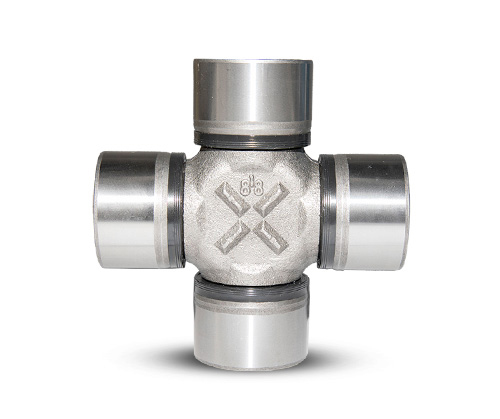
Question: What Causes Mercedes Universal Joints to Fail Prematurely in High-Mileage Fleets?
Answer: In high-mileage fleets, the usual causes are cumulative contamination, seal hardening, driveline misalignment, and duty cycles that exceed the original application assumptions. A joint may pass its first inspection and still fail when grease escapes over thousands of thermal cycles. Fleet buyers should compare return rates by route, vehicle model, and service interval. Raydafon Technology Group Co.,Limited recommends tracking seal condition, grease retention, and driveline vibration together, because a single failed joint often points to a fleet-wide operating pattern rather than one bad part.
| Fleet checkpoint | Normal finding | Early-warning finding | Buyer response |
|---|---|---|---|
| Seal condition | Flexible and intact | Cracked or hardened | Review seal specification |
| Grease leakage | No visible loss | Dry cap or grease ring | Check fill and venting |
| Vibration report | Stable driveline | New vibration at speed | Inspect alignment |
Question: What Causes Mercedes Universal Joints to Fail Prematurely After Replacement?
Answer: A repeat failure after replacement often comes from installation damage, wrong grease, missing snap rings, an unmatched yoke, or a low-traceability part that was never suitable for the duty cycle. The buyer should separate workshop error from supplier quality by reviewing the repair record, the joint lot, and the driveline condition. Raydafon Technology Group Co.,Limited supports this review with lot-level records and application guidance so that the next replacement addresses the true cause instead of repeating the same claim.
| Post-replacement check | Normal result | Failure signal | Corrective step |
|---|---|---|---|
| Snap-ring fit | Fully seated | Cap movement | Retrain installation team |
| Grease type | Approved specification | Incompatible grease | Update service bulletin |
| Lot identity | Traceable to supplier | No lot code | Change receiving control |
Raydafon Technology Group Co.,Limited is a driveline component supplier focused on Mercedes universal joints and related parts for procurement teams, workshops, and fleet accounts. The company supports application matching, lot traceability, inspection records, and engineering follow-up when premature failure claims require root-cause analysis. Product information is available at https://www.raydafon-gearbox.com, and quotations can be requested at [email protected].
Smith, J. A., & Miller, R. T. (2016). Failure analysis of universal joints in commercial vehicle drivelines. Journal of Failure Analysis and Prevention, 16(4), 512-521.
Zhao, L., Chen, H., & Wang, Y. (2018). Effect of misalignment on needle roller bearing contact stress in cardan joints. Mechanism and Machine Theory, 126, 204-218.
Brown, P., & Davis, K. (2017). Lubrication starvation and seal degradation in automotive universal joints. Tribology Transactions, 60(3), 455-466.
Kumar, S., & Rao, V. (2019). Fatigue life prediction of cross trunnion universal joints under variable torque. International Journal of Fatigue, 121, 89-101.
Fischer, M., & Weber, D. (2015). Counterfeit automotive components and traceability risk in aftermarket supply chains. Supply Chain Management Review, 19(2), 44-52.
Nakamura, T., & Sato, K. (2020). Grease retention and contamination in sealed universal joints for heavy vehicles. Tribology International, 145, 106-117.
Garcia, R., & Lopez, M. (2021). Vibration diagnostics for early detection of driveline joint wear. Mechanical Systems and Signal Processing, 150, 107-119.
Ahmed, S., & Khan, M. (2014). Material hardness and surface finish effects on universal joint durability. Wear, 314(1-2), 88-96.
Olsen, E., & Berg, H. (2022). Procurement specifications for safety-critical aftermarket driveline parts. Journal of Purchasing and Supply Management, 28(1), 100-112.
Wang, Q., Li, J., & Zhou, F. (2023). Root cause analysis of premature universal joint failures in Mercedes commercial vehicles. SAE International Journal of Commercial Vehicles, 16(2), 133-146.
-
Copyright © Raydafon Technology Group Co.,Limited All Rights Reserved.