Luotuo Industrial Area, Zhenhai District, Ningbo City, China 86-574-87167707 [email protected]
Follow Us -
Products

High-Performance Gear Systems | Custom Solutions for Heavy-Duty Applications

Browse our precision-engineered gearboxes, hydraulic spindles, and cast housings – designed for extreme durability, 30% longer lifespan, and seamless OEM integration.
Products
Leaf Chains (LH Series)
  • Leaf Chains (LH Series)Leaf Chains (LH Series)
  • Leaf Chains (LH Series)Leaf Chains (LH Series)

Leaf Chains (LH Series)

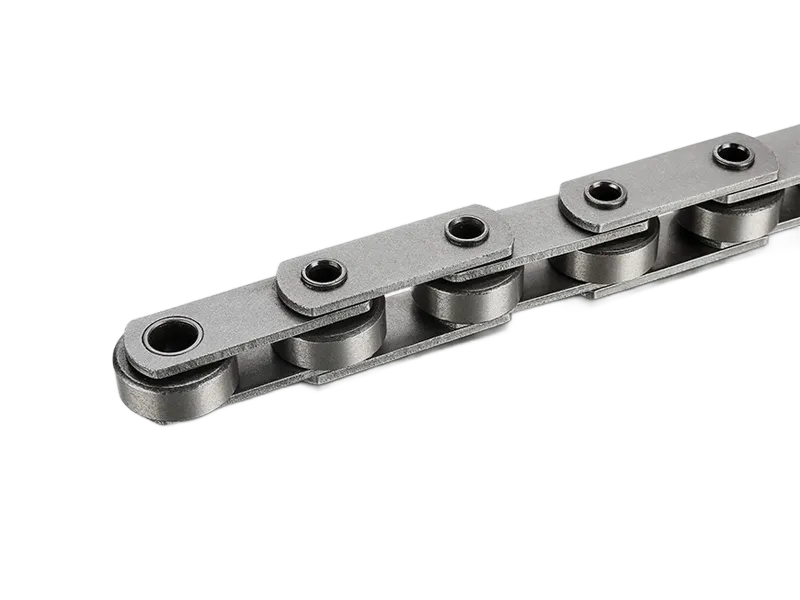
Raydafon leaf chains are high-fatigue-strength chains manufactured to ISO 4347, DIN 8152 and ANSI B29.8 standards. Unlike roller chains, leaf chains consist only of link plates and pins — no rollers or bushings — giving them very high fatigue strength and making them ideal for lifting, hoisting and pulling applications where loads must be raised and lowered repeatedly under heavy stress. Available in LH/BL series (American heavy series, ANSI B29.8) with pitches from 12.7mm (LH0822/BL422) to 76.2mm (LH4088/BL1688). Plate lacing from 2x2 to 8x8, with minimum tensile strength from 22.2 kN to over 578 kN. Materials: carbon steel, Delta-Tone coated or stainless steel. Typical applications include forklift truck masts, counterbalance chains in machine tools, draw bench chains, container pallet jacks, automobile parking towers and freight elevators. Clevis pins and end fittings available. Send chain number, pitch, lacing and quantity for a confirmed quotation within 24 working hours.

What Is a Leaf Chain and How Does It Differ from a Roller Chain?

A leaf chain is a load-bearing chain that consists only of link plates and pins — there are no rollers or bushings. This simple construction gives leaf chains very high fatigue strength, because there are fewer components subject to wear and stress concentration. Compared to precision roller chains of the same pitch, leaf chains have higher tensile strength ratings and are better suited for high-load and high-impact environments.[reference:0]

The trade-off is wear resistance: because leaf chains do not have the classic pin and bush bearings common to roller chains, they are designed for straight-line pulling and lifting rather than rotational power transmission. Leaf chains run over sheaves rather than sprockets, and the maximum recommended chain speed is 100 ft/min (30 m/min).[reference:1][reference:2]

Raydafon leaf chains are manufactured to ISO 4347, DIN 8152, ANSI B29.8 and JIS B 1804 standards. The LH/BL series is the American heavy series, where link plate dimensions follow ANSI standard roller chains but the pin diameter and plate thickness correspond to the next larger chain size.[reference:3]

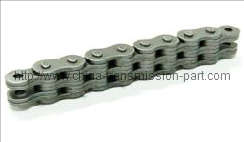
Leaf Chains LH Series BL Series for Forklift Mast and Lifting Applications Leaf chain LH/BL series — link plates and pins only, no rollers — for lifting and hoisting applications

LH Series vs BL Series vs LL Series vs AL Series — What's the Difference?

Leaf chains are classified under a single unified standard, ISO 4347. However, different designation systems exist depending on the region and the original standard from which the chain was derived.

Leaf chain series comparison — LH/BL, LL, AL
Series Standard Equivalent Based On Typical Application
LH (BL) ISO 4347 / ANSI B29.8 LH = BL ANSI roller chain series (ISO 606 A/ASME B29.8) Forklift masts, heavy-duty lifting — most common
LL ISO 4347 / DIN 8152 LL = F series British Standard series (ISO 606 B) High breaking-load-to-weight ratio, low-speed lifting
AL ANSI B29.8 (legacy) — ANSI roller chain pin links, same contour and thickness Legacy applications; new selections should use BL series

LH series and BL series are the same chain — they are synonymously classified. For example, LH0822 = BL422, LH1222 = BL622, LH1622 = BL822.[reference:4]

How to Read the Leaf Chain Part Number

Understanding the part number is the fastest way to confirm whether a leaf chain matches your equipment. The number contains three pieces of information: pitch, series and plate lacing.

LH Series Prefix LH = ISO/DIN designation
BL = ANSI designation
—
12 Chain Pitch 12 ÷ 16 = 0.75 in
= 19.05 mm pitch
—
44 Plate Lacing 4 × 4 lacing
4 outer + 4 inner plates

Example: LH1244 = ISO leaf chain, 19.05mm pitch, 4×4 plate lacing. Equivalent BL series designation: BL644.

For LH series, dividing the first two digits by 16 gives the pitch in inches. For BL series, divide the first digit (or first two digits for pitches ≥1.25 in) by 8. For LL series, the first two digits are rounded up to the next full inch.[reference:5]

Plate Lacing Configurations — 2×2, 4×4, 6×6 and 8×8

Plate lacing describes the number of plates in the outer and inner links. The greater the number of plates, the higher the tensile strength. Choosing the right lacing is critical for matching the chain to your load requirements.

2×2 Light Duty 22.2 kN – 97.6 kN Light-duty lifting and balancing. Common in small forklifts and counterweight chains.
2×3 Light-Medium Duty 22.2 kN – 433.7 kN Slightly higher strength than 2×2. Used where moderate loads require additional plate support.
3×4 Medium Duty 33.4 kN – 322.1 kN Medium-duty lifting. Common in standard forklift mast assemblies.
4×4 Heavy Duty 44.5 kN – 390.3 kN Heavy-duty lifting and pulling. Widely specified for industrial forklifts and draw benches.
4×6 Extra Heavy Duty 44.5 kN – 578.3 kN Extra heavy-duty applications requiring maximum load capacity. Container handling and heavy machinery.
6×6 Very Heavy Duty 97.6 kN – 578.3 kN Very heavy lifting. Used in large forklift masts, automobile parking towers and freight elevators.

The tensile strength range shown is indicative — actual values depend on the specific chain number and material. Send your load requirements for a precise recommendation.

Technical Specifications — LH Series / BL Series

All leaf chains are manufactured to ISO 4347 and ANSI B29.8 standards. The table below shows key parameters for the LH/BL series. For dimensions of specific chain numbers, please refer to the dimension tables below.

LH series leaf chain — key technical parameters
Parameter Value
Chain Type Leaf chain (link plate and pin assembly)
Series LH/BL (American heavy series), LL (European), AL (American light — legacy)
Standards ISO 4347, DIN 8152, ANSI B29.8, JIS B 1804
Pitch Range 12.7 mm (LH08/BL4) to 76.2 mm (LH48/BL24)
Plate Lacing Options 2×2, 2×3, 3×4, 4×4, 4×6, 6×6, 8×8
Min. Tensile Strength Range 22.2 kN (LH0822) to 578.3 kN (LH3244)
Max. Chain Speed 100 ft/min (30 m/min)
Materials Carbon steel, Delta-Tone coated steel, stainless steel
Accessories Clevis pins, connecting links, end fittings, matched pairs
Quality Standard ISO 9001
Customization OEM/ODM chain length, end fittings, lacing configuration, packaging

Dimension Diagram & Product View

The dimension diagram below shows the key reference points for LH series leaf chains. The product view shows the link plate and pin construction — note the absence of rollers.
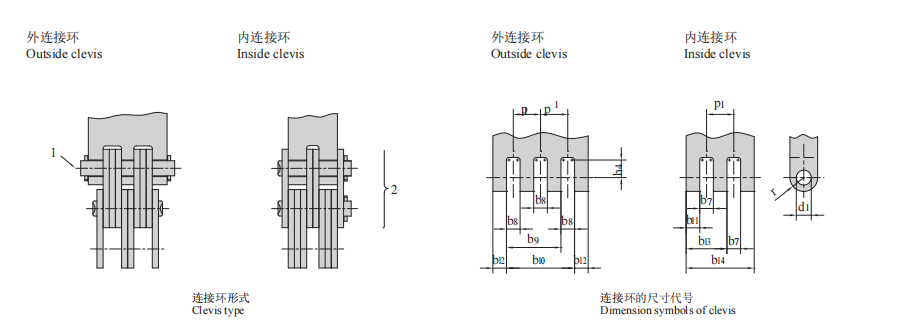
LH Series Leaf Chain Dimension Diagram — ISO 4347 ANSI B29.8 LH series dimension diagram — pitch (p1), pin diameter (d1), plate height (h4), plate thickness and lacing references
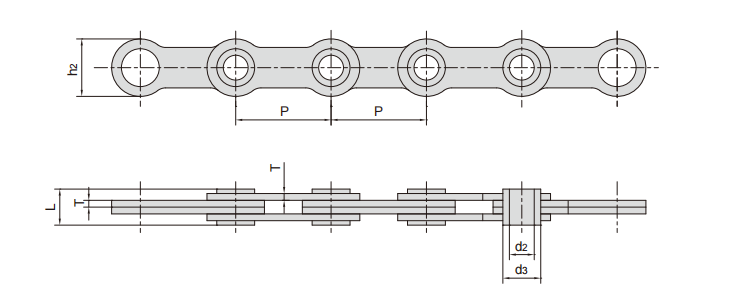
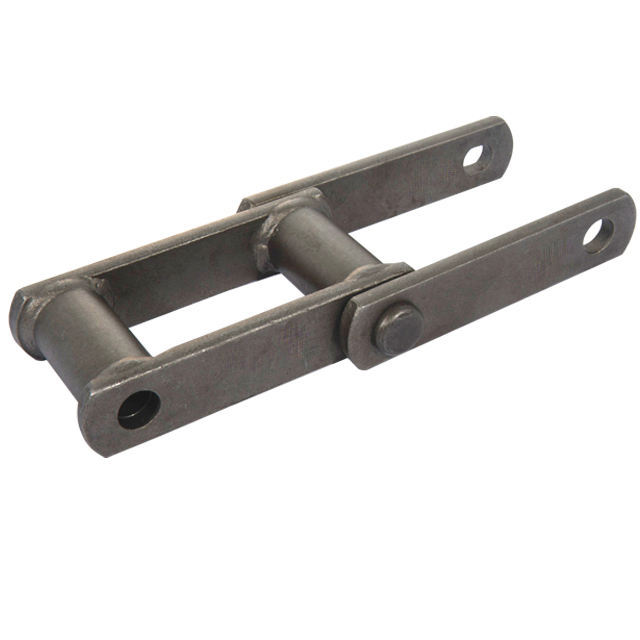
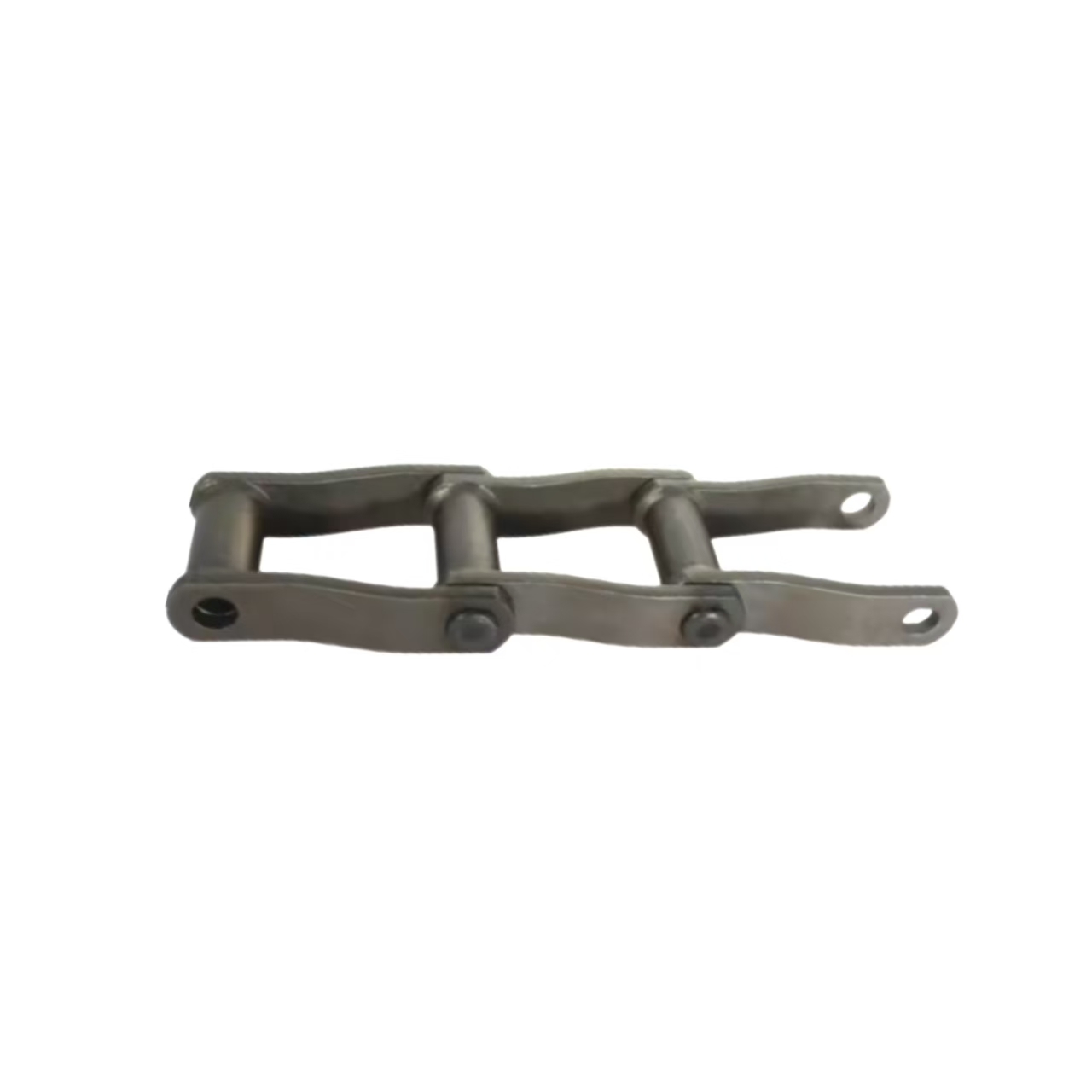
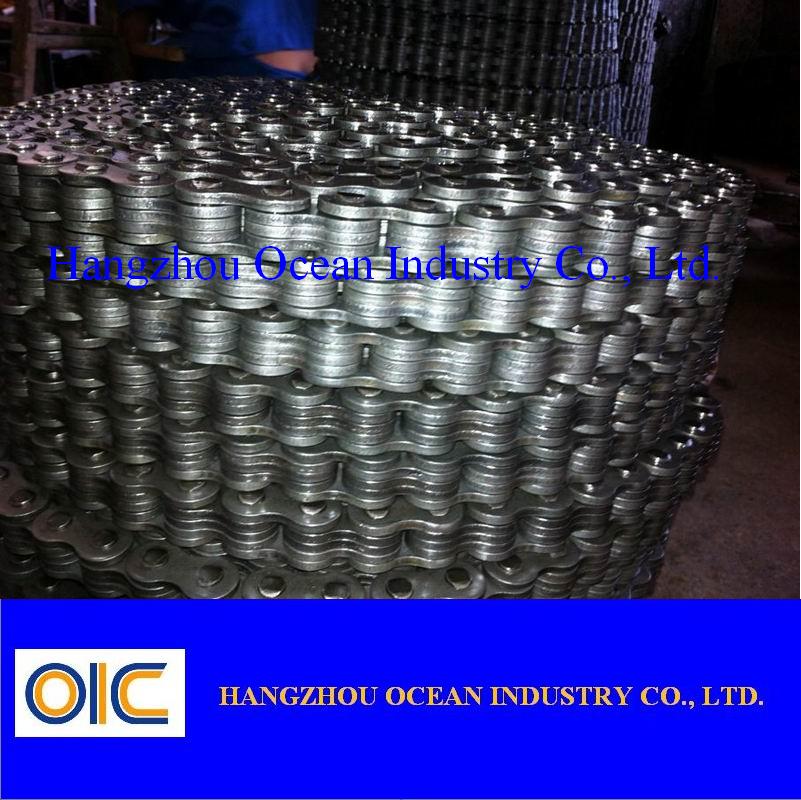
Leaf Chain Construction Detail — Link Plates and Pins without Rollers Leaf chain construction — stacked link plates press-fitted and riveted to pins, no rollers or bushings

Typical Applications — Forklift Masts, Counterweight Chains & Lifting Equipment

Leaf chains are used wherever loads must be lifted, hoisted or pulled and high fatigue strength is critical to function and safety. The most common application is in forklift truck masts, but leaf chains are also found in a wide range of industrial lifting and balancing systems.[reference:6]

Forklift Truck Masts The primary application for leaf chains. Provides the lifting force in counterbalanced and reach truck designs. High fatigue strength is essential for repeated lifting cycles.
Counterweight Chains Used as counterbalance chains in machine tools, balancing the weight of moving components such as spindle heads and slides.
Draw Bench Chains Heavy-duty pulling applications in metal drawing and extrusion processes where high tensile strength is required.
Container Pallet Jacks Lifting and hoisting in container handling equipment at ports and logistics operations.[reference:7]
Automobile Parking Towers Vertical lifting systems for multi-level parking structures requiring reliable, high-strength lifting chains.
Freight Elevators Heavy-duty lifting in freight elevators and industrial lifting platforms where safety and reliability are paramount.[reference:8]

How to Select the Right Leaf Chain — 6-Step Guide

  1. STEP 1 Identify the application and load Determine the maximum load to be lifted or pulled. Leaf chains are rated by tensile strength — ensure the chain's minimum ultimate strength exceeds your calculated maximum tension.
  2. STEP 2 Calculate required tensile strength Use the formula: Minimum Ultimate Strength > Calculated Maximum Chain Tension × Duty Factor × Service Factor. Duty and service factors account for shock loads, start-stop cycles and safety requirements.[reference:9]
  3. STEP 3 Determine chain number and lacing Select the chain number based on pitch and required tensile strength. Lacing options range from 2×2 (light duty) to 8×8 (heavy duty). Higher lacing = higher strength.[reference:10]
  4. STEP 4 Choose material and coating Carbon steel for standard applications; Delta-Tone coated for enhanced corrosion resistance; stainless steel for maximum corrosion resistance in wash-down or outdoor environments.
  5. STEP 5 Specify end fittings and clevis pins Leaf chains connect to clevis blocks using clevis pins with cotters. Specify male or female ends based on your equipment. Even-pitch chains have one male and one female end; odd-pitch chains typically have two male ends.[reference:11]
  6. STEP 6 Confirm quantity and delivery Provide chain number, lacing, length, quantity, destination port and whether OEM branding or matched pairs are needed.

Why Choose Raydafon Leaf Chains?

High Fatigue Strength Construction Leaf chains consist only of pins and plates — no rollers or bushings — giving them very high fatigue strength values. Chain plates are precision-formed and heat-treated with tapered and shot-blasted surfaces for high contact ratios. Pins are smooth with an extra-hard surface for increased wear resistance.
ISO 4347 / ANSI B29.8 Compliant All leaf chains are manufactured to ISO 4347, DIN 8152 and ANSI B29.8 standards. LH series and BL series are synonymously classified. Clevis pins and end fittings are available to match the chain number.
Multiple Material Options Available in carbon steel (standard), Delta-Tone coated steel for enhanced corrosion resistance, and stainless steel for maximum corrosion resistance. Environmental protection surface treatment technology can be selected according to the use environment.
Full Customization & Accessories Custom chain lengths, special connectors, clevis pins, end fittings and matched pairs for parallel operation. Send your drawing for engineering review.

Ordering & Supply Information

What to send for a fast quotation
  • Chain number (e.g., LH0822, LH1244, LH1622)
  • Plate lacing (2×2, 4×4, 6×6, etc.)
  • Required chain length or number of pitches
  • End fitting type (male/female, clevis pin size)
  • Material preference (carbon steel, Delta-Tone, stainless)
  • Quantity, destination port and OEM branding requirements
Supply terms
  • Sample and trial orders accepted for fitment verification
  • MOQ depends on stock status — confirm per order
  • Export packing: carton + pallet or wooden case
  • Material certificates and dimensional inspection reports available
  • Matched pairs available on request for chains working in parallel
  • Lead time: 7–15 days for samples, 25–35 days for mass production

Frequently Asked Questions

What is a leaf chain and how does it differ from a roller chain?
A leaf chain consists only of link plates and pins — no rollers or bushings. Compared to roller chains, leaf chains have higher tensile strength and much higher fatigue strength, making them suitable for high-load and high-impact lifting applications. However, this comes at the expense of wear resistance because leaf chains do not have the classic pin and bush bearings common to roller chains. Leaf chains are used for straight-line pulling and lifting, running over sheaves rather than sprockets, while roller chains are designed for rotational power transmission.
What is the difference between LH series and BL series leaf chains?
LH series and BL series are the same chain — they are synonymously classified under ISO 4347. LH is the ISO/DIN designation and BL is the ANSI designation. For example, LH0822 corresponds to BL422, LH1222 corresponds to BL622, and LH1622 corresponds to BL822. Both use link plate dimensions from ANSI standard roller chains, but the pin diameter and plate thickness correspond to the next larger chain size.
How do I read the leaf chain part number?
The prefix LH (or BL) is followed by a four-digit number. For LH series, the first two digits represent the chain pitch in sixteenths of an inch (divide by 16 to get inches). For example, LH12 = 12/16 = 0.75 inch = 19.05mm pitch. The last two digits denote the plate lacing configuration. For example, LH1244 means 4×4 lacing. For BL series, the pitch in inches is obtained by dividing the first digit (or first two digits for pitches ≥1.25 in) by eight.
What materials and coatings are available for leaf chains?
Leaf chains are available in carbon steel (standard), Delta-Tone coated steel for enhanced corrosion resistance, and stainless steel for maximum corrosion resistance. Environmental protection surface treatment technology can be selected according to the use environment. Never electroplate an assembled leaf chain — plating could result in failure from hydrogen embrittlement.
How do I select the right leaf chain for my application?
Use the formula: Minimum Ultimate Strength > Calculated Maximum Chain Tension × Duty Factor × Service Factor. Determine the chain number based on pitch and lacing requirements. Common lacing configurations include 2×2 (light duty), 4×4 (medium duty) and 6×6 or 8×8 (heavy duty). Maximum allowable chain speed for leaf chains is 100 ft/min (30 m/min). For matched pairs operating in parallel, specify this at the time of order.

Get Your Leaf Chain Quote

Send chain number, lacing, length and quantity — our engineers confirm the correct configuration and return a quotation within 24 working hours.

Request Price & Fitment Match Chat on WhatsApp
Hot Tags: leaf chains, LH series leaf chain, BL series leaf chain, forklift mast chain, ISO 4347 leaf chain, ANSI B29.8 leaf chain, leaf chain manufacturer, counterweight chain, lifting chain, LL series leaf chain, AL series leaf chain, high fatigue strength chain
Send Inquiry
Contact Info
X
We use cookies to offer you a better browsing experience, analyze site traffic and personalize content. By using this site, you agree to our use of cookies. Privacy Policy
RejectAccept